Reply To:
Name - Reply Comment
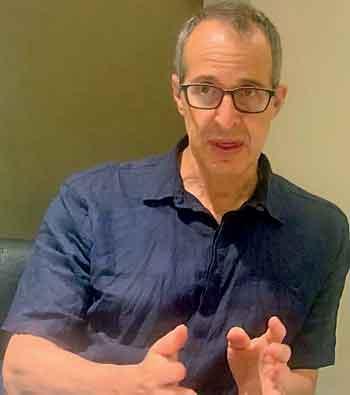
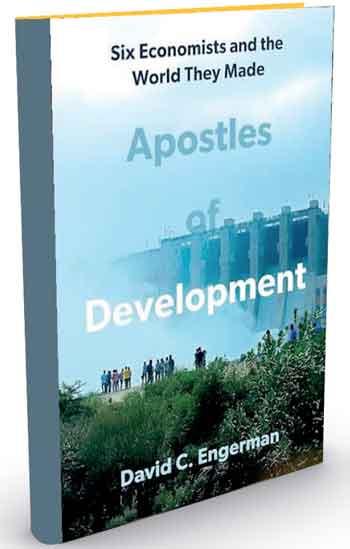
 David C. Engerman, an interdisciplinary professor at the Department of History at Yale University, the United States, spoke to Daily Mirror in an interview. He is the author of the book “Apostles of Development: Six Economists and the World They Made’. He has identified six South Asian economists including Dr Lal Jayawardena of Sri Lanka. The book examines the emergence of development economics in the decades following the Second World War through the lives and ideas of six influential South Asian economists: Dr. Lal Jayawardena of Sri Lanka, Amartya Sen, Manmohan Singh, Jagdish Bhagwati, Mahbub ul Haq, and Rehman Sobhan. Educated together at Cambridge University in the 1950s, they went on to become globally influential voices in economic policy and development thinking. The book is a corrective to histories that have treated development mainly as a Western-led project. Dr. Jayawardena’s inclusion is of particular significance to Sri Lanka. A distinguished economist and public servant, he served as founding Director of the United Nations University World Institute for Development Economics Research (UNU-WIDER), Secretary to Sri Lanka’s Ministry of Finance and Planning, Economic Adviser to the President, and Sri Lanka’s Ambassador and High Commissioner to the European Union and the United Kingdom. Dr. Jayawardena was the son of Deshamanya N. U. Jayawardena, Sri Lanka’s first Governor of the Central Bank and one of the country’s foremost builders of economic institutions.
 QIn your book, you have looked at a Sri Lankan. How do you see his contribution?
I looked at the South Asians who were studying economics at Cambridge in the 1950s. Dr. Lal R. Jayawardena was included in it. I was particularly glad to look at the economists. There were six of them studying at Cambridge in the 1950s. Three of them were Indian.
Two were Pakistani and one helped create Bangladesh, though. It was fortuitous in that sense to include Sri Lankan.
QHow relevant is the title of this book?
It’s a bit of a Cambridge in-joke that there is an organisation, a student club called the Conversazione Society, which dates back to the 19th century. When it was first formed, it had only 12 members. It was nicknamed the Apostles. It is a bit of a Cambridge joke to call it the Apostles of Development.
It turns out that two of the six economists I write about were actually members of the Conversazione Society, including Professor Amartya Sen and Dr. Lal Jayawarena.
QHow do you read the contribution?
He had multiple contributions. One would be in an international vein, and another in a domestic one. Internationally, he had two major impacts. One, in terms of policy, was representing Sri Lanka at what was called the Committee of 20, which is part of the IMF in the early 1970s. It was agitating for a more equitable international financial system and a more democratic IMF.
He also helped create, actually, as the founding director of a UN development think tank in Helsinki called WIDER, (World Institute for Development Economics Research).
He had those two impacts internationally. Domestically, he was most important. I think, in the 1970s, where he helped initiate the first Sri Lankan five-year plan under the Sri Lanka Freedom Party. He, then, helped lead the liberalisation in 1977 under then President J.R. Jayewardene.
He also represented Sri Lanka internationally, serving in Brussels as the European Economic Community was taking shape, what’s now the EU, and then serving briefly as High Commissioner in London in the 90s. So he had a varied career with a domestic component and an international component. He was distinguished in both of those.
 QAs a professor of history, how do you look at the evolution of global or international history?
It’s a very different world, and as a historian, I’m usually content to sit back in the past.
I would say that some of the issues Sri Lanka is facing now such as the balance of payments have been perennial issues, dating back to before Sri Lanka became Sri Lanka- when it was still Ceylon in the 50s and 60s. There were repeated crises over balance of payments, especially for imported food. It is now repeated. Fuel is driving the concerns.
QHow do you look at the nature of these conflicts in the world today?
Historians tend to believe that everything is related, and I am no exception. For instance, Iran and the U.S. conflict, I think of that as something that has a very long and important history.
The Islamic revolution, after all, in 1978 was a revolution against the Shah of Iran, who had been both installed and supported by the U.S. in sponsoring a coup against Prime Minister Mohammad Mosaddegh in 1953.
The emergence of the Islamic Republic of Iran owes a great deal to the U.S., not in a dialectic form. It’s not a surprise as someone who lived through the revolution and then the hostage crisis.
It not a surprise that the revolutionaries called the U.S. the Great Satan, because they blamed the U.S. for the continuation of the Shah’s rule. Since 1979, the conflicts between the U.S. and the Islamic Republic of Iran have really ebbed and flowed, but there have never been good relations.
QWhat do you think about the current situation? Where will this lead to?
Well, the great thing about being a historian is looking at the past, not the future. It is hard to know.
I think that the planning horizon of the U.S. government today is on a two to three day span, not longer, and their long-term planning goes for a week. I don’t really feel that the U.S. has a clear strategy in Iran. They don’t have clear goals that they were trying to achieve.
They’re limited. They have, obviously, massive air power advantage. But they have been limiting their engagements to air power. It is not entirely clear what victory would mean for the U.S..
It is hard to know where the future goes because it seems to depend rather more on whim than on calculation.
QYou mentioned that historians basically look at the past, not the future. But when you look at the past events, the way they have evolved, then you must be able to make a prognosis about the future as well. What do you think?
I am asking about that. It is hard to imagine the scenario in which there are no tensions between Iran and the U.S., unless the U.S. actually enacts regime change.
I have no enthusiasm for Ayatollah Khamenei, both the older and now the younger. But I also certainly wouldn’t endorse the kind of notion that the U.S. could come in on its own without any endorsements from any other body like the UN and try to change the regime in Iran. So, as long as the current regime remains in Iran, it seems hard to imagine a moment without tensions.
At the same time, it’s hard to imagine the war actually continuing as a war. It certainly slowed down from its peak in late February, March. I think it was the Secretary General of the UN who said that a ceasefire is not really a ceasefire.
QThe U.S. played a leading role in creating and sustaining the global order, from President Woodrow Wilson’s vision of the League of Nations onward. Has the U.S. now stepped back from that responsibility, and if so, why?
It is important to temper our enthusiasm for the U.S creating the liberal world order, because it did so specifically in order to benefit. It had a much longer time horizon. The notion was regarding building after World War II. The notion was that a more prosperous world would make possible a more prosperous U.S..
So, the US was pursuing its own interests, but it was doing so over a long game, not the immediate, not something that would affect this year’s balance of payments or next year’s imports, but something that would create prosperity for the U.S. over years and decades. I think we’ve seen that time horizon shrink, as I mentioned, to being from decades to being days.
What benefits the U.S. tomorrow is different from what would benefit the U.S. in 10 years.
QWhat is your view about the clashes of civilizations in the world?
When Samuel Huntington published the Clash of Civilizations in the early 1990s, I was very sceptical of that argument. I tend to look at countries pursuing their own interests. They do so within their own civilisational matrix.
But I don’t think that the goal of the U.S. is to promote American civilisation as much as it is to promote American interests. There are very different perspectives around the world and very different civilisations. But many times, military power acts as a universal measure.
QIs it still possible for the U.S. to maintain its global hegemony or something like that in the current context?
I don’t think it will happen in the current context. Any U.S. government, even one that has more foresight and planning than the current one, would be facing unprecedented challenges. The U.S. has gone from absolute supremacy. We talk about the two superpowers of the Cold War, the U.S. had economic supremacy; that the Soviet economy was quite small compared to the U.S. economy, even in the heyday of Cold War competition.
Now with China, it’s facing a kind of full-spectrum threat that involves scientific knowledge, military power and economic power. There are a few countries in the world that aren’t deeply enmeshed in trade and investment China. The Belt and Road Initiative shows the extent of Chinese involvement financially. But even more importantly, the flows of goods from China affect every country in the world.
QPeople say history repeats itself. What is your view as a historian?
I don’t believe that history repeats itself. I think that each moment is different.
It’s important to understand the history. But the post-World War II order is so different from today. I’m not sure what repeating itself would look like. There was no way for any power, including the Soviet Union, to exert the force that the U.S. did in the aftermath of World War II, when its allies as well as its enemies were facing massive wartime dislocation and destruction.
The Soviet Union, its adversary, was also facing mass destruction. The Soviet population was about 150 million at the beginning of World War II, and as many as 27 million Soviet citizens and soldiers were killed. So there was no family in the Soviet Union that wasn’t affected directly by the war.
It was a condition well suited to the assertion of American supremacy. I don’t see that the current moment, for the very reasons you suggest- rising powers, China, India, the BRICS, I don’t see an opportunity for the U.S. to assert itself in the same way that it did after World War II. But if I talk about the normal events, normal happenings, maybe, the countries pursue their national interests.
QThe European Union is widely regarded as a successful model of regional integration, whereas South Asian cooperation has remained weak. Considering that Europe managed to overcome deep historical rivalries, particularly between France and Germany, why has South Asia been unable to achieve a similar level of unity and integration?
In some ways, building the EU was a decades-long process that began in the early 1950s with the European Coal and Steel Community, which actually started to bring France and Germany together. NATO, of course, plays a big role. The joke about NATO was that it was designed to keep the Russians out of Europe, the Americans in, and the Germans down - to prevent the rearmament of Germany.
Over the decades, it was a very successful process. It built up, rebuilt, and then even deepened trade between the major European countries, especially UK, France, and Germany. By rebuilding that trade over decades, it was possible to build the strength of the alliance that the EU constitutes.
We should be careful in judging something like SAARC. SAARC has been around now for a few decades I guess now is the time we might start to see results. It also has yet to be solved. If there was a core conflict in Europe that was resolved over those decades, it was involving France and Germany.
The core conflict of South Asia is between India and Pakistan. It seems no closer to resolution now than it did 40 years ago. That’s less than a challenge when we compare it with the German-France one. It could be less of a challenge, except it goes back to the founding of both countries, and the partition. The French and German had plenty of wars prior to the EU-Franco-Prussian war, World War I, World War II. But both of those countries were not created at that moment. They date back further.
QNow we see in the western part of the world, there are so many protests against these immigrants, anti-immigrants. How do you see the story?
I see it as a blowback from globalization, a blowback that was a reaction against the globalisation of the 1990s, of hyper-globalisation, in that the bargain of globalization. From an American perspective, it was that it would raise the American standard of living by the flood of cheaper goods from China - not just from China but Japan, Vietnam, Bangladesh and India.
The price of that would be the decline of American industry. Those who were employed by American industry don’t see this as a victory for them.
Immigration is in some ways a response both to the more open borders of the 1990s and the more open and deepening trade relations. The bargain of globalisation had, not surprisingly, had winners and losers.
Those who benefited the least and suffered the most from globalisation are the backbone of populist movements, not just in the U.S., but in the UK, in France, and in Germany, whether it’s national rallies in France, Alternative for Deutschland in Germany, UK reform. All of them are facing versions of the same kind of populist backlash.