 KELUM BANDARA
 Reply To:
Name - Reply Comment
 It demands strong institutions, independent oversight, digital governance, transparent procurement, financial accountability, a culture of integrity across public administration
Any transition into government comes with a learning process
Bangladesh committed to revive SAARC
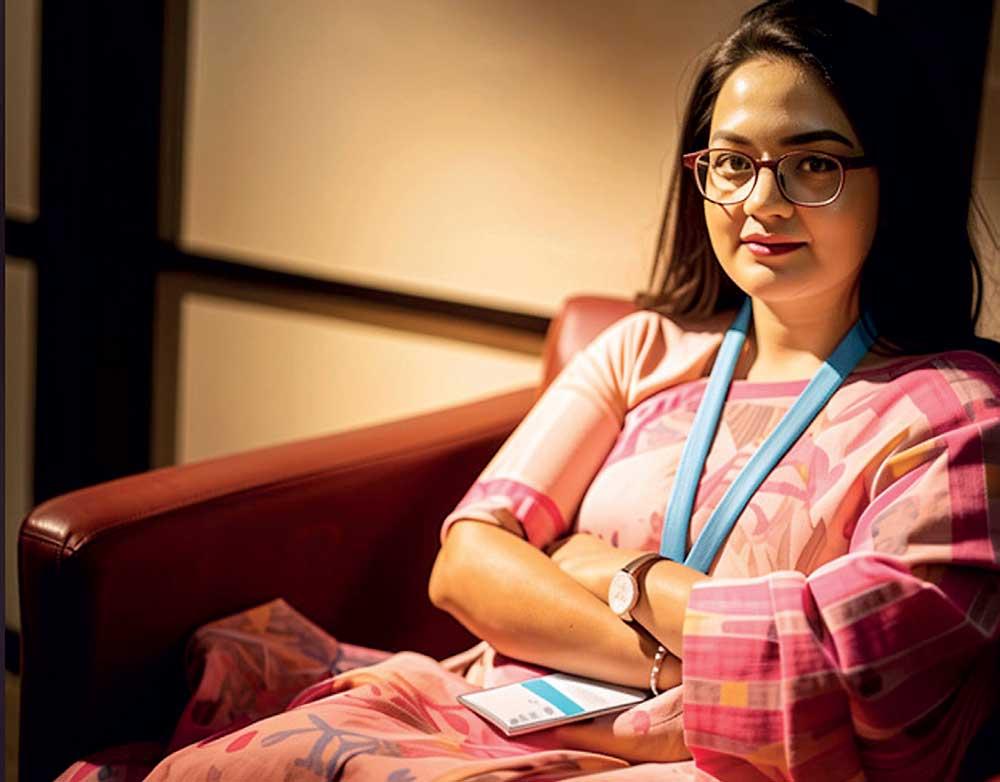
State Minister for Social Welfare of Bangladesh Farzana Sharmin who was in Sri Lanka recently shared her thoughts on political transition , social welfare , regional cooperation and anti-corruption. She was a member of the Anti-Corruption Commission reform commission of the Muhammad Yunus led interim government during 2024–2026. She is also on its Foreign Affairs Advisory Committee, Human Rights Committee, and Media Cell Committee at BNP. He father Fazlur Rahman Potol was a State Minister for Youth, Sports, and Communications and a four-time elected MP.
Excerpts:-
 Q Sri Lanka and Bangladesh have both emerged from periods of political unrest. When you compare and contrast the situations in the two countries, how do you see the challenges ahead? Based on your experience in government, what lessons can be drawn?
Each country carries a unique political journey, political history, however there are few common lessons and messages to receive. Both Bangladesh and Sri Lanka have experienced periods when citizens demanded greater accountability, economic stability and stronger democratic institutions. The real challenge after any political transition is to restore public confidence while maintaining economic momentum.
Basically, democratic governance, the rule of law, institutional independence and inclusive economic opportunities are fundamental to long-term stability. Political differences should always be resolved through constitutional and democratic means.
Governments must closely and deeply connect with the rights of citizens, legitimate demands of youth, and ensure that public institutions remain transparent and responsive.
Q How does the Family Card Project contribute to economic development?
The Family Card Project is designed not merely as a welfare programme but as an investment in human development. The government considers Family as one of the main components of the entire economic and cultural development of the country.
When families receive targeted economic and social protection, they are better able to invest in education, healthcare and skills development. This reduces long-term dependence on assistance and contributes to a more productive workforce. Social welfare should be viewed as a pillar of sustainable economic growth rather than simply government expenditure.
Our government’s Family Card Program is a large-scale social protection initiative designed to explore the impact of direct cash transfers on poverty and inequality. The program provides an unconditional monthly payment of 2,500 Bangladeshi Taka (approximately $20.50) to selected marginalized households in both rural and urban areas where each household’s female head is designated as the primary recipient.
During its pilot phase, more than 67,000 families were enrolled and issued digital cards. These cards use a combination of contactless chip technology, QR codes, and Near Field Communication (NFC) to enable secure and convenient transactions.
The programme is set to begin full enrollment on July 1, initially targeting the bottom three income quintiles ultra poor, poor, and lower middle class households comprising an estimated 16.1 million families, with middle and higher income groups excluded at this stage. Based on the Household Income and Expenditure Survey (HIES) 2022, the total eligible population across Bangladesh stands at approximately 41 million families, though this figure may be revised in subsequent years as new survey data become available. Plan is for a phased expansion to extend coverage progressively toward this full target population by 2030. To support the rollout, the Government of Bangladesh needs to allocate BDT 133,530 crore (approximately USD 10,877 million, or US$10.88 billion) over four fiscal years, inclusive of data collection, data processing, administrative costs, and beneficiary allowances. By directing cash transfers to women and leveraging digital payment systems, the initiative aims to strengthen financial inclusion and reduce gender based economic disparities.
Q Are these programmes mainly targeted at people living below the poverty line?
The primary beneficiaries are households facing economic hardship and as I mentioned earlier this ‘Family Card’ is a universal project which is issued to the elderly women members of the family who don’t have an income source and are incapable to work.
The programmes are designed to support those economically and morally while ensuring that assistance reaches deserving beneficiaries through transparent and accountable mechanisms.
Q In Sri Lanka, almost one-fourth of the population fell below the poverty line after the economic crisis. What is the situation in Bangladesh?
Well, the situation is a bit different here. Bangladesh has made considerable progress in poverty reduction over several decades. We faced challenges due to the long absence of democracy, systematic destruction of Institutions, global inflation, supply chain disruptions and economic uncertainty.
Our priority is to protect vulnerable groups while creating opportunities for employment and entrepreneurship. Sustainable poverty reduction depends not only on social assistance but also on economic growth, investment, quality education and skills development. We are committed to strengthening social protection alongside broader economic reforms.
Q Your party remained out of power for more than two decades before forming the government. Sri Lanka’s present administration has also faced criticism for lacking governing experience because many of its members are serving in government for the first time. What has been your own experience?
Well, for new and positive change you need new thoughts, new vision and new plans. Any transition into government comes with a learning process. However, experience is not measured only by years in office but also by commitment, professionalism, and the ability to work with experienced civil servants and stakeholders. Our focus has been on building effective institutions, listening to experts, and making evidence-based policy decisions while remaining accountable to the people.
Q Corruption has become an entrenched problem across South Asia, including Sri Lanka. In fact, the recent political movements in Sri Lanka were largely driven by public anger over corruption and fraud. You also served in the Anti-Corruption Commission. What has been your experience in tackling corruption in Bangladesh?
Corruption is one of the greatest obstacles to development because it undermines public trust, discourages investment and diverts resources away from those who need them most. Fighting corruption which I meant to say both economic corruption and intellectual corruption requires more than investigations and prosecutions. It demands strong institutions, independent oversight, digital governance, transparent procurement, financial accountability and a culture of integrity across public administration.
No country can eliminate corruption overnight, but strong political commitment and will, institutional reforms and public participation can significantly reduce opportunities for abuse.
Q During your visit to Sri Lanka, have you had the opportunity to meet your Sri Lankan counterparts or government officials?
Yes. I have had the opportunity to meet the Prime Minister of Sri Lanka during the inauguration of the South Asia Ministerial Conference on Ending Violence Against Children (EVAC) held in Colombo on 23-24 June 2026. I also met the Sri Lankan government representatives. Our conversations focused on social welfare, poverty reduction, community-based services, disability inclusion and opportunities for closer bilateral cooperation.
These exchanges allow us to learn from each other’s experiences and identify practical areas where our two countries can work together for mutual benefit.
Q During the previous government, Bangladesh placed greater emphasis on BIMSTEC. Do you believe it is practically possible to revive SAARC, considering the regional rivalries?
Our present government under the leadership of Prime Minister Tarique Rahman strongly believes in regional cooperation as a means of promoting peace, stability, and shared prosperity in South Asia. In fact, the concept of institutionalized regional integration in South Asia was first actively advanced by Late President Ziaur Rahman. His vision and strong emphasis on establishing a regional framework for cooperation played a significant role in the eventual creation of the South Asian Association for Regional Cooperation (SAARC). These efforts culminated in the establishment of SAARC, and the first SAARC Summit was held in Bangladesh in 1985.
Bangladesh believes in regional cooperation that delivers tangible benefits to our people through trade, connectivity, disaster management, climate resilience, public health and people-to-people exchanges. Our government is committed to revitalize SAARC to build a visible, functional and resilient regional platform for the welfare of over two billion South Asians. At the same time, Bangladesh remains committed to fostering trust, inclusivity and collaboration among BIMSTEC member states. We believe BIMSTEC offers significant opportunities for practical cooperation across the Bay of Bengal region, particularly in trade, connectivity, energy, disaster management and people-to-people exchanges.
Q What was the response from the Sri Lankan side?
The discussions were positive and constructive. We found considerable common ground on strengthening social protection, expanding economic cooperation and enhancing regional connectivity.
There is a shared understanding that countries in South Asia benefit more through cooperation than confrontation.
Q Will Bangladesh now come forward with such an action plan?
Bangladesh is committed to working closely with regional friends and partners on practical initiatives that promote economic growth, social development and regional stability.
Any specific action plan would naturally emerge through consultation among member states, based on mutual interests and consensus. Our objective is to contribute positively and meaningfully to initiatives that benefit the entire region.
Q What do you think about the role of women politicians in South Asia, particularly in Bangladesh?
South Asia has produced many distinguished women leaders, demonstrating that women can lead effectively at the highest levels of political office. In this context, Begum Khaleda Zia, as the country’s first woman Prime Minister and one of the earliest democratically elected female heads of government in the Muslim world, represents a significant milestone for Bangladesh, South Asia, and the broader global movement toward women’s political empowerment.
Our government is committed to creating opportunities for women to participate meaningfully at every level of decision-making, including local government, public administration and political leadership. Women’s economic empowerment, education and equal access to opportunities remain essential for sustainable development.
Q Finally, how do you assess Sri Lanka-Bangladesh relations? How important are bilateral ties between our two countries?
Bangladesh and Sri Lanka enjoy warm and longstanding relations based on mutual respect, friendship and shared regional interests.
There is considerable potential to deepen cooperation in trade, investment, tourism, education, healthcare, pharmaceuticals, agriculture, digital innovation and social welfare. We also share common interests in maritime cooperation and the sustainable development of the Indian Ocean region.
I believe our partnership can become even stronger in the coming years through regular high-level dialogue, greater business engagement and increased people-to-people exchanges. A prosperous and peaceful South Asia depends on stronger cooperation among neighbours, and Bangladesh values its friendship with Sri Lanka very highly.