Reply To:
Name - Reply Comment
 |
 |
 |
 |
| Bille Tsien | Nela De Zoysa | Yew Kee Cheong | Buddhika Hewawasam |
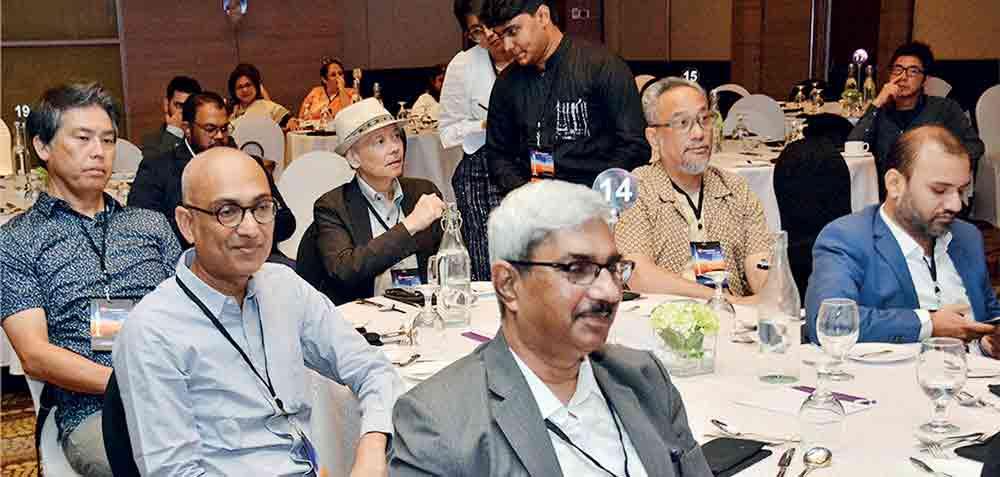
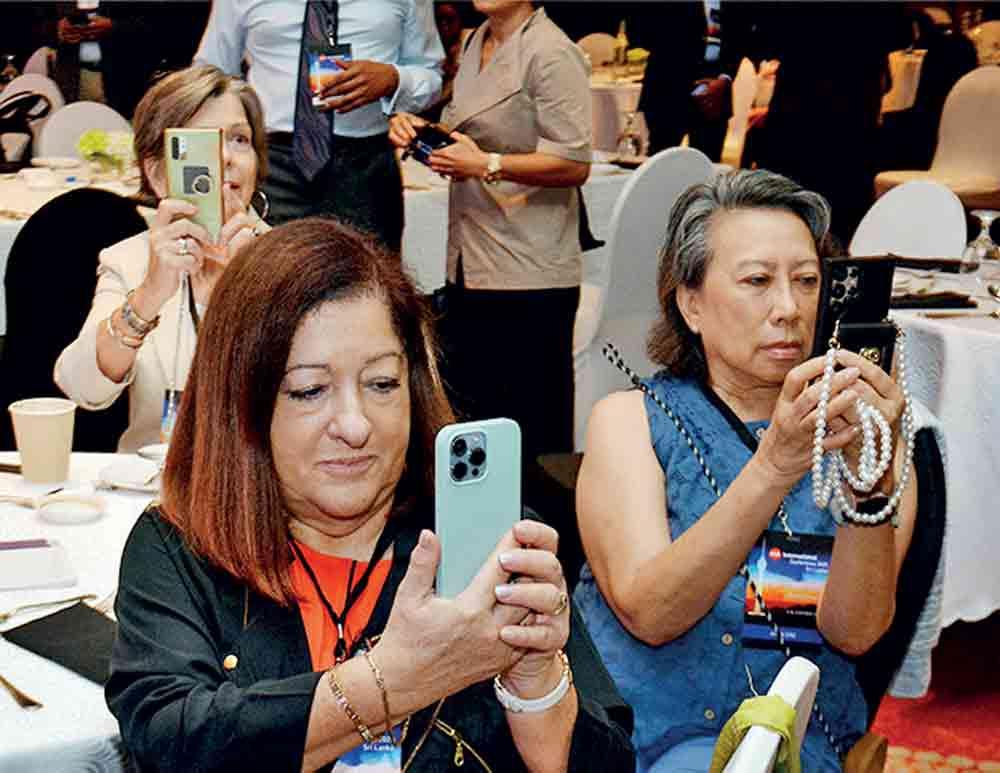
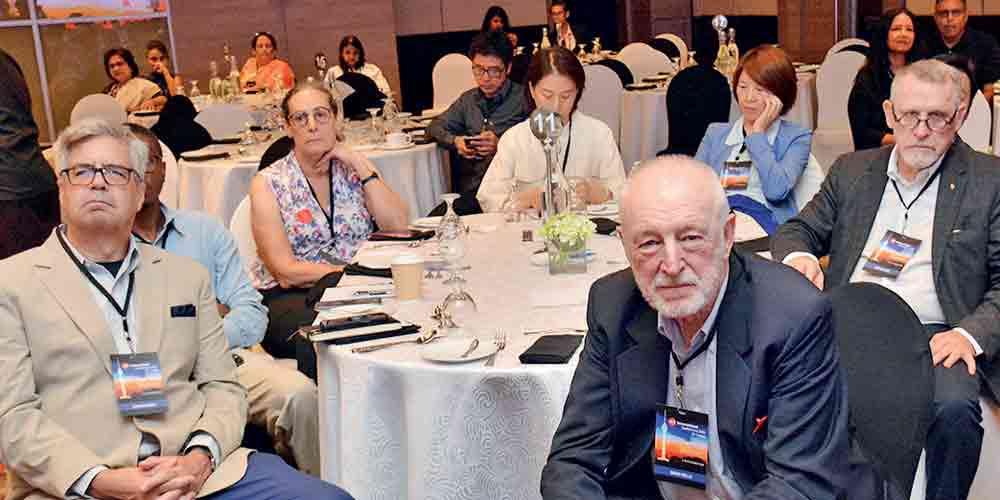
Colombo last week transformed into a confluence of ideas, inspiration, and innovation as the world’s architectural elite convened for the American Institute of Architects (AIA) International Conference 2025.
Under the theme ‘The Art within Architecture’, the three-day conference, held from October 9–11 at the Cinnamon Grand Colombo, marked the second time Sri Lanka has hosted this prestigious global gathering.

The event not only spotlighted Colombo on the international architecture map but also celebrated how art, sustainability, and cultural consciousness can redefine the built environment.
The inauguration brought together an illustrious audience that included the Mayor of Colombo Vraie Cally Balthazaar and former President Ranil Wickremesinghe as Guests of Honour, along with ambassadors, international dignitaries, and leaders of the AIA.
Building with conscience: A call from AIA’s Evelyn Lee
 |
| Evelyn Lee |
Setting the tone for the event, AIA National President Evelyn Lee urged architects to confront the urgent realities of climate change and human wellbeing in design.
“It’s hard to talk about Sri Lanka’s incredible natural and cultural landscape without thinking about how fragile these gifts are, and how much responsibility we have as architects,” she said. “Rising sea levels, extreme weather events, and the depletion of natural resources are not abstract challenges; they are real. Their realities shape our work right now.”
Lee reflected that the architectural profession, while powerful in influence, was lagging behind on climate action, stressing that the future must be designed with both urgency and optimism. She called for buildings that minimise carbon impact while protecting human health, underlining the role of architects as stewards of the planet’s future.
Rethinking the mega city: Moshe Safdie’s vision of gardens in the sky
 |
| Moshe Safdie |
The keynote by globally acclaimed architect Moshe Safdie, titled “Garden Typologies for the Mega City,” resonated deeply with the conference’s theme.
Drawing on six decades of pioneering work, Safdie explored how the rapid rise of megacities has eroded the quality of life, disconnecting people from nature and open space. “As density has increased, the quality of life has decreased,” he observed.
From Habitat ’67 in Montreal, a radical experiment that reimagined urban living through modular structures and private gardens, to contemporary icons like Marina Bay Sands and Jewel at Changi Airport, Safdie’s message remained consistent: that architecture must restore the human connection to nature.
“The new mega-city typologies are designed to bring nature back to the city at every level,” he explained.
“Parks on the ground and in the air, gardens within structures for workspaces, residential spaces, for the marketplace, for recreation.”
Safdie’s reflections served as both critique and inspiration — a call to reimagine the urban fabric as a space that nourishes life, not just accommodates it.
Light, gesture, city: The art within architecture by Massimiliano Fuksas
Italian maestro Massimiliano Fuksas brought poetic precision to the discourse with his lecture, “The Art Within Architecture: Light, Gesture, City.”
Arguing that art is not an embellishment but the driving force of design, Fuksas walked the audience through his celebrated works, from Terminal 3 at Bao’an in Shenzhen to La Nuvola in Rome, revealing how light, air, and human motion can shape emotion and meaning in architecture.
“In Shenzhen, a porous skin modulates light and shadow, guiding movement with minimal signage,” he said. “At Fiera Milano, a long glass canopy becomes an artificial sky, converting infrastructure into a landscape for encounter.”
Through examples spanning continents, Fuksas illustrated a profound truth: art inhabits architecture when light, air, time, and the body becomes
design matter.
“The result,” he noted, “is not spaces that seek effect, but resonance — places that offer instruments of freedom.”
An architecture of co-existence: Sri Lanka’s enduring message
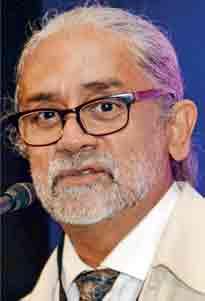 |
| Channa Daswatte |
Representing Sri Lanka on the international stage, Channa Daswatte presented a keynote that drew applause for its reflection on the nation’s architectural soul.
In his talk, “An Architecture of Co-existence,” Daswatte revisited the legacy of Minette de Silva and Geoffrey Bawa, who transformed modernism by weaving in climate, culture, and ecology.
“Sri Lanka’s contribution to world architecture lies in its ability to adapt modernity to suit our context — long before such thinking became fashionable,” he said.
Daswatte emphasised that as environmental degradation accelerates, architects must revisit this tradition of sensitivity. “It is imperative,” he urged, “that our engagement with the environment through design must take a direction that enables coexistence — not dominance — of humanity over nature.”
Redefining architecture’s role
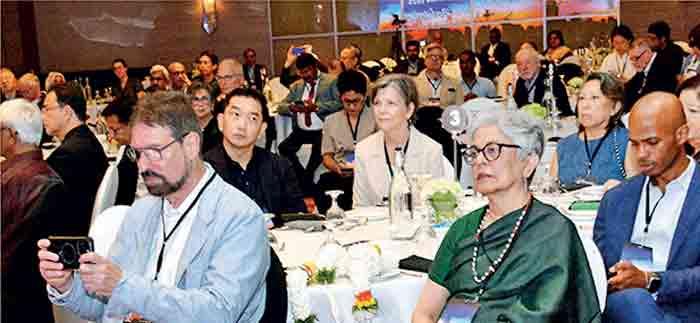
As the curtains closed on the AIA International Conference 2025, the conversations it sparked lingered. From the urgency of sustainability to the poetics of space, the event reaffirmed that architecture’s future lies not in grandeur, but in responsibility, empathy, and imagination.
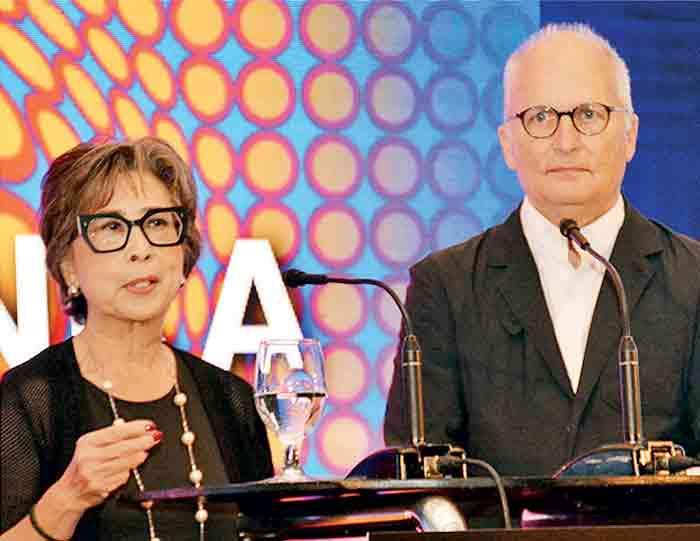
Elizabeth Chu Richter and David Richter
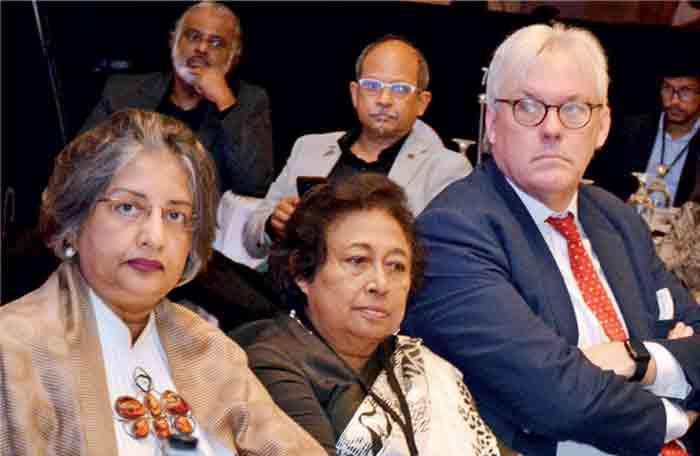
A dialogue of minds and movements
The 2025 conference featured a stellar roster of speakers including:
Sri Lanka Tourism Development Authority Chairman Buddhika Hewawasam also addressed delegates, highlighting the nation’s emerging potential in architectural and cultural tourism.
Bringing AIA to Colombo
For AIA International Country Representative Nela De Zoysa, hosting the AIA International Conference in Colombo was the culmination of years of persistence.
She recounted the challenges of organising a global event without an established AIA chapter in Sri Lanka, noting that the local team had to navigate limited funding and logistical hurdles.
“Despite limited resources and numerous setbacks, it was the dedication of our committee and volunteers that made this conference possible,” she said.
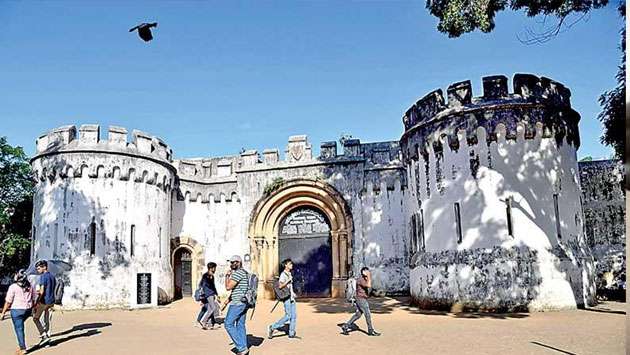
De Zoysa also ensured that visitors could experience Sri Lanka’s architectural diversity first-hand, with curated tours of UNESCO World Heritage sites, tropical landscapes, and the iconic works of Geoffrey Bawa, one of Asia’s most influential modern architects.
A leadership platform beyond borders
Reflecting on the event’s wider significance, AIA International President Yew Kee Cheong said the theme ‘The Art within Architecture’ resonated powerfully in Colombo’s dynamic, sometimes chaotic, but always expressive urban landscape.
“This flagship event is a leadership platform,” he said. “Each conference leaves behind a different legacy and develops approaches relevant to its culture and context.”
Cheong added that the AIA International Conference has strengthened the organisation’s global brand, promoting visibility in every region where it is hosted and cultivating dialogue between diverse design cultures.