Reply To:
Name - Reply Comment
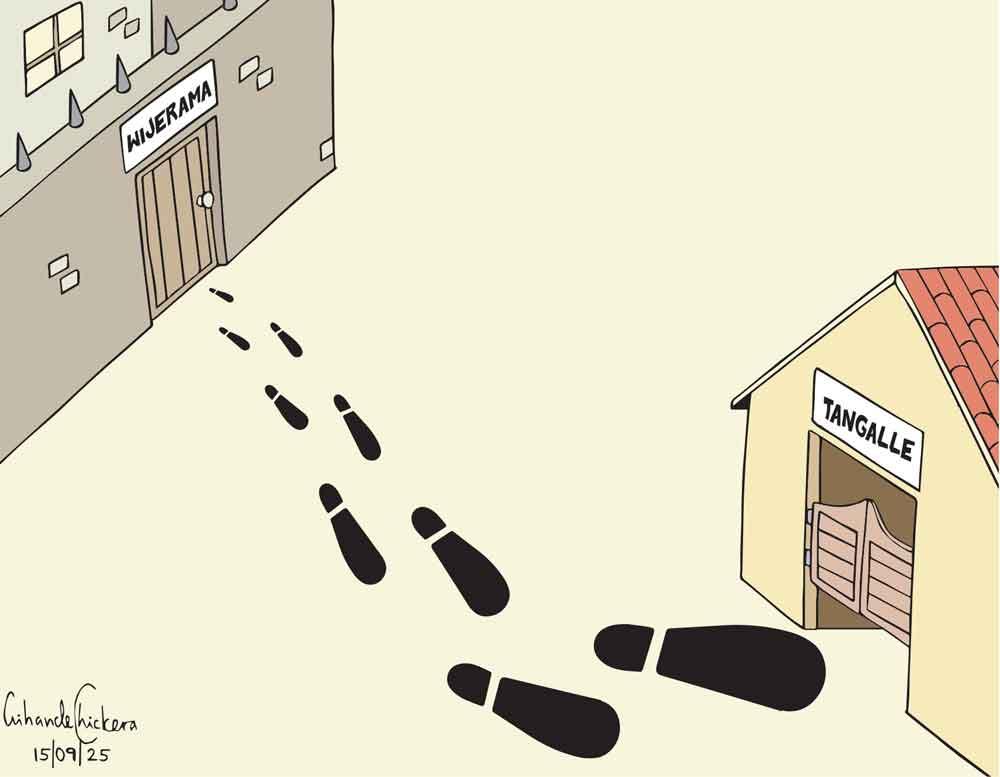
The cartoon strips away all clutter, leaving only footprints and two doors to tell its story. On one side stands Wijerama—a place synonymous with political power, prestige, and leadership. On the other, Tangalle—known for its prison. The trail of footsteps shows a one-way journey: from the halls of privilege to the gates of incarceration.
The symbolism is razor-sharp. The footprints suggest accountability catching up with those who once walked freely in the corridors of power. The transition from Wijerama to Tangalle is not accidental—it is a commentary on how political leaders, long shielded by influence, may finally be forced to face justice.
What makes the cartoon so effective is its silence. There are no faces, no slogans, just the stark inevitability of steps taken. It suggests that no matter how high one rises, the path can still end at the prison door. The heavier, darker footprints near Tangalle imply gravity—the weight of judgment, the inescapable consequence of corruption, abuse, or betrayal of public trust.
This is more than satire; it is a moral geography. Wijerama symbolizes unchecked power, while Tangalle symbolizes the reckoning that follows. The space between them is the journey of justice—often slow, often resisted, but once begun, impossible to deny.
The broader insight is clear: in a democracy under strain, accountability is the bridge between power and the people’s demand for justice. Leaders may believe their footsteps only echo in palaces, but history has a way of redirecting them toward prison gates when the weight of their actions becomes too heavy.
The cartoon leaves us with a haunting thought: these are not just footsteps of one individual, but a pattern—a reminder that every leader walking into Wijerama must also be mindful of the path that leads, inevitably, to Tangalle.