Reply To:
Name - Reply Comment
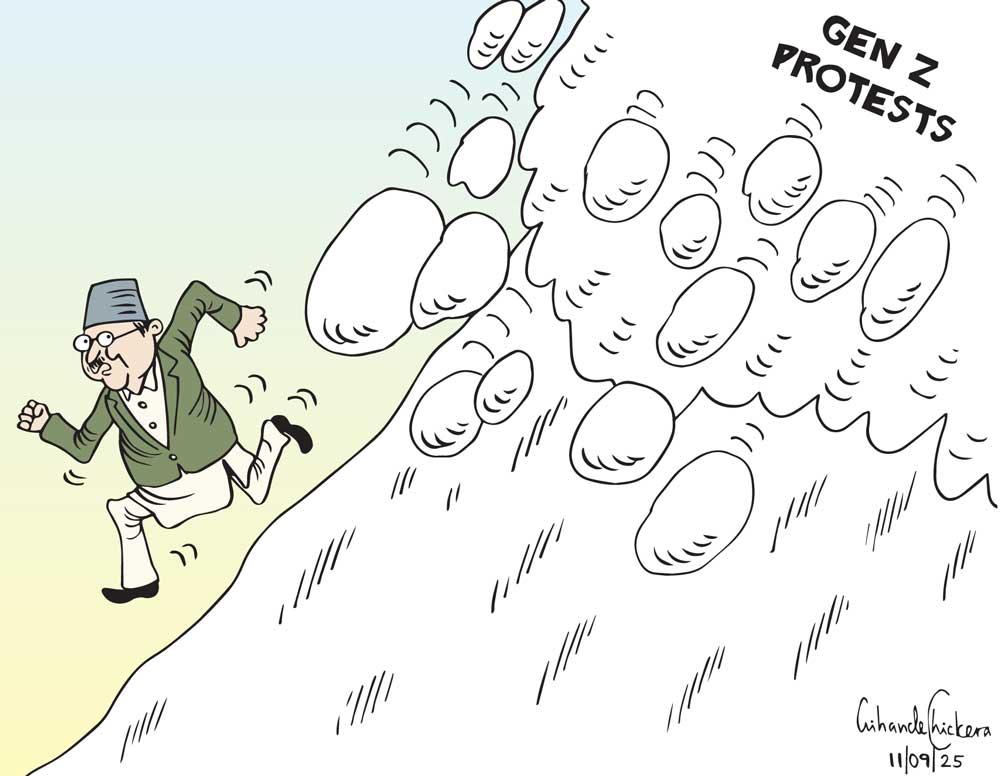
This cartoon distills a generational clash into one vivid image: a lone politician fleeing down a slope while a massive avalanche of boulders—each shaped like a footprint—thunders down behind him. The avalanche is labeled “Gen Z Protests.”
The symbolism is layered and sharp. The footprints represent the collective power of a generation that has grown up digital, globalized, and unafraid to question authority. Unlike isolated dissent of the past, these protests gather momentum like an avalanche—once triggered, they are unstoppable. What begins as footsteps becomes a force of nature.
The politician’s frantic retreat captures the anxiety of a leadership class unprepared for this wave. Dressed in outdated attire, he embodies the old guard: traditional, hierarchical, and increasingly irrelevant to the energy of youth. His running suggests not just fear, but also impotence—institutions that once controlled narratives now struggle to keep pace with the sheer speed of digital mobilization.
The cartoon also highlights the shift in political culture. Gen Z is less patient with rhetoric and symbolism; their protests are rooted in lived frustrations—economic precarity, corruption, climate collapse, lack of opportunity. The avalanche metaphor suggests that these are not minor grievances but systemic ones, accumulated over years. Once released, they sweep away anyone in their path.
What makes the cartoon biting is its inevitability. An avalanche cannot be negotiated with or bribed—it can only be acknowledged, prepared for, or buried by. The message is clear: if leaders continue to dismiss youth unrest as noise, they risk being engulfed by it.
The deeper insight here is generational: Sri Lanka’s (and the world’s) politics is being rewritten by those who refuse to inherit a broken system quietly. For the old guard, the question is not whether the avalanche will come—but whether they will adapt before it buries them.