Reply To:
Name - Reply Comment
Transportation, consumer food & retail operations among major contributors
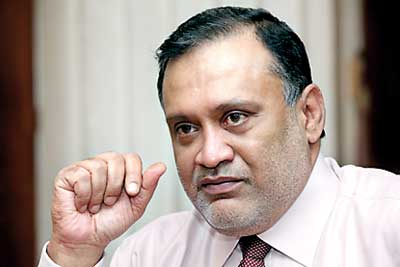 Sri Lanka’s premier blue chip John Keells Holdings PLC (JKH) saw its net profit for the September quarter (2Q16) increasing 31 percent year-on-year (yoy) to Rs.3.47 billion amid improved performance of the group’s transportation and consumer food & retail operations.
The basic earnings per share improved to Rs.3.05 from Rs.2.34 a year earlier.
JKH’s total assets as at September 30, 2015 stood at Rs.226.2 billion, up from Rs.218 billion six months ago. The company’s market capitalisation was Rs.201.9 billion as at yesterday’s trading close.
The consolidated revenue for the quarter under review rose 5 percent yoy to Rs.22.67 billion while cost of sales also rose at a similar percentage to Rs.16.12 billion, resulting in a gross profit of Rs.6.54 billion, up 7 percent yoy. The operating profit for the quarter rose 19 percent yoy to Rs.2.71 billion, amid the company keeping administrative expenses in control, which just edged up 1 percent yoy to Rs.2.64 billion.
The 51 percent yoy rise to Rs.542.9 million in other operating income also helped operating profits positively.
Finance costs fell 34 percent yoy to Rs.99.9 million, while finance income rose 11 percent yoy to Rs.2.29 billion.
JKH’s transportation and consumer foods & retail were the star performers during the quarter under review. The transportation sector after-tax profit rose to Rs.786.9 million from Rs.528.5 million yoy amid sector revenue hitting Rs.3 billion from Rs.2.6 billion.The improved performance is attributable to the group’s ports and bunkering businesses.
“The bunkering business witnessed an improvement in volumes on the back of an increased demand for supplies over Colombo and maintained its market leadership position,” JKH Chairman Susantha Ratnayake said.
The consumer foods & retail segment more than doubled its after-tax profits at Rs.772.1 million, with the segment revenue increasing significantly from R.7.1 billion to Rs.8.8 billion.
“The performance of the industry group was buoyed by the sustained growth in consumer spending where volumes continued to demonstrate encouraging growth,” Ratnayake said. The leisure segment was a major let down for JKH with post-tax profit falling to Rs.764.3 million from Rs.1 billion mark. The segment revenue however improved slightly to Rs.5.7 billion from Rs.5.5 billion.
Ratnayake attributed the negative performance to the partial closure of the Cinnamon Lakeside for renovation.
“Whilst the depreciation of the rupee will have a positive impact on the foreign currency denominated revenue streams emanating within Sri Lanka, the Sri Lankan resorts sector had a negative impact on the translation of its foreign currency denominated debt during the quarter,” Ratnayake noted.
“The tourist arrivals in to the Maldives witnessed only a marginal increase and this coupled with the increased supply of rooms resulted in a significant increase in overall competition,” he added.
Apart from its two five start properties, JKH owns and manages eight Sri Lankan resorts, one business hotel and three Maldivian resorts.
JKH’s property segment also saw depressed results with after-tax profits falling to Rs.260.9 million from Rs.322.5 million. The revenue also fell to Rs.926.5 million from Rs.1.1 billion.
Ratnayake said the pre-sales of the first residential tower and commercial space of the Waterfront Project is currently underway and progressing satisfactorily.
During the period under review, the Group’s shareholding in Rajawella Holdings Limited (RHL) was increased from 17 per cent to 51 percent.
The total cost of this investment of Rs.1.04 billion, comprising of a partial buyout from existing shareholders, an infusion into RHL and the release of an existing sublease of land held by the JKH Group in exchange for shares, will be made over three years.
“RHL operates an 18-hole, Donald Steel designed, Golf Course in Digana, which, coupled together with the overall development potential of the land bank, complements the Group’s leisure and property portfolios. A “Land Use” Plan has been commissioned,” Ratnayake said.
The post-tax profit of the financial services segment also saw a profit decline yoy to Rs.205.2 million from Rs.318.2 million. The segment revenue also fell to Rs.1.77 billion from Rs.2.6 billion.
“The decline profits is mainly attributable to the performance of Nations Trust Bank as a result of mark to market losses on its bond portfolio due to an increase in the long end of the yield curve and lower than anticipated growth in its loan book,” Ratnayake said.
“Whilst the Life Insurance business recorded an encouraging growth in gross written premiums, the lower PBT from Union Assurance PLC (UA) is due to the divestment of its General Insurance business during the fourth quarter of the financial year 2014/15 which is now accounted for as an associate company,” he added.
The information technology segment saw its after-tax profit falling drastically to just Rs.8.1 million from Rs.91 million, despite the revenue hitting Rs.2 billion mark from Rs.1.8 billion.
“Whilst the Office Automation business witnessed a steady growth in demand for smart phones, the lower PBT is mainly attributable to the Software Services business due to the profit reversal of the sale of “Zhara HS”, which is a web-based hotel management software,” Ratnayake said.
Other operations which include plantation services saw its post-tax profits grow more than 300 percent yoy to Rs.983.4 million despite the revenue falling to Rs.816.6 million from Rs.1 billion. According to Ratnayake the increase in segment profits is mainly on account of exchange gains recorded at the company on its foreign currency denominated cash holdings.
“Revenue and profitability in the Plantations Services sector were negatively impacted as tea prices continued to remain at low levels,” he said.