Reply To:
Name - Reply Comment
Sri Lanka’s trade deficit widened to nearly US $ 4.7 billion in the first five months of 2026, dragging the country’s external account back into deficit, as the soaring fuel costs and a sharp rise in vehicle imports outpaced the growth in exports and remittance inflows.
The Central Bank data released this week showed the merchandise trade deficit expanded to US $ 4.66 billion during the January-May period, from US $ 2.73 billion a year earlier. This is due to the import expenditure expanding 29 percent to US $ 10.42 billion, while the export earnings grew 7.6 percent to US $ 5.76 billion.
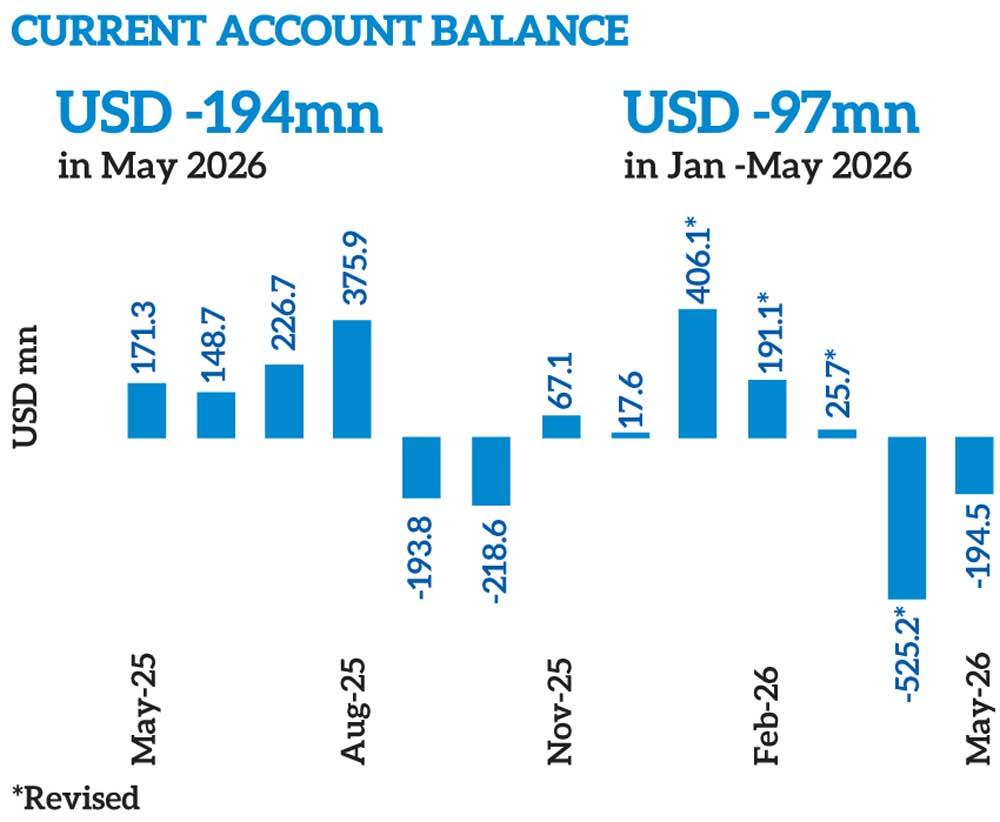
The widening trade gap pushed the current account into a deficit of US $ 97 million during the first five months of the year, reversing a surplus of nearly US $ 1.3 billion recorded in the corresponding period of 2025.
In May alone, the current account recorded a deficit of US $ 194 million.
The Middle East conflict has altered Sri Lanka’s external sector dynamics, with the higher energy costs, stronger import demand and softer foreign exchange earnings from services beginning to erode the gains made over the past two years.
The fuel imports remained the single largest source of pressure. The expenditure on the fuel imports more than doubled to US $ 536 million in May compared with a year earlier, as the global oil prices and import volumes increased following the regional conflict.
At the same time, the vehicle imports continued to accelerate, following the reopening of the sector. The spending on motor vehicle imports rose 20 percent from April to US $ 250 million in May, bringing the cumulative import bill to US $ 1.07 billion in the first five months of the year.
Although the workers’ remittances continued to provide a crucial buffer, the inflows were insufficient to offset the widening trade imbalance. The remittances rose 32 percent from a year earlier to US $ 847 million in May, while the cumulative inflows increased 26 percent to US $ 3.9 billion during January-May.
The services account also weakened, with its surplus contracting by 36.8 percent year-on-year to US $ 143 million in May, as the services-related outflows grew faster than the inflows. The cumulative services surplus declined 20.8 percent during the first five months of the year.
Tourism presented a mixed picture. While the tourist arrivals grew 9.6 percent in May and surpassed one million visitors during the first five months of the year, the tourism earnings fell 11.9 percent to US $ 1.36 billion over the same period, suggesting weaker spending by the visitors.
Meanwhile, the foreign investors remained the net sellers in both the government securities market and Colombo Stock Exchange during May, adding to the external financing pressures.
Despite the deterioration, the gross official reserves stood at US $ 6.9 billion at end-May, supported by the receipt of the IMF programme disbursements.
The Central Bank said the rupee had depreciated 7.9 percent against the US dollar by end-June, amid the pressures stemming from the Middle East conflict and broader external developments.