Reply To:
Name - Reply Comment
By Shabiya Ali Ahlam
|
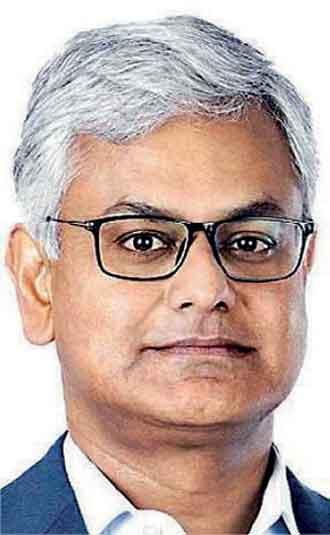
Krishan Balendra
|
Business leaders have repeatedly called on the government to prioritise policy stability, but their concerns have gone unheard for decades.
One of Sri Lanka’s largest and most diversified conglomerates that operates across several industries put the spotlight on this pressing issue, by pointing out that the frequent changes in regulations are one of the key factors hindering investments and economic growth.
John Keells Holdings Chairman Krishan Balendra said that if there is one reform he could advocate for, it is policy consistency. The reason being that, over the years, Sri Lanka has developed numerous policies across different industries but has not stuck to them.
“With every change in government, minister, or key officials, policies keep shifting. If we establish a policy for a particular sector, it’s crucial to secure the buy-in of all stakeholders, including political parties, and commit to it for an extended period,” said Balendra in response to a question during a panel discussion at The Sri Lanka Economic Summit.
He asserted that when conducting feasibility studies for investments, stability within the policy framework is essential. He pointed out that tax policy is a prime example. Over the last 15 to 20 years, Sri Lanka has seen frequent changes in revenue taxes, income taxes, and personal taxes.
“I’m not suggesting that taxes shouldn’t exist—they absolutely should—but we need consistency in tax rates over a prolonged period,” asserted Balendra.
The head of the diversified conglomerate pointed out that investors are not necessarily looking for tax holidays, but they need assurance that the prevailing tax rate will remain stable for 15 to 20 years.
“That kind of certainty makes investment decisions much more straightforward,” he said, noting that the same applies to broader sector policies.
“If we can ensure stability in the fundamental aspects of a sector’s regulatory framework for a set period, it would greatly facilitate investment planning. Without that, and given the constantly shifting targets we’ve seen in recent years, conducting feasibility studies and committing to large-scale investments becomes extremely challenging,” said Balendra.