Reply To:
Name - Reply Comment
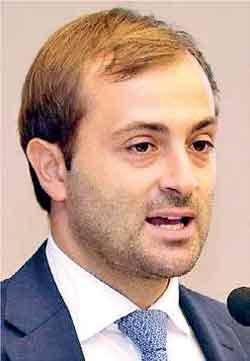 |
| Dr. Alberto Arcidiacono |
Despite ranking as Sri Lanka’s 14th-largest tourism market, Italy’s potential remains largely untapped. Dr. Alberto Arcidiacono, Deputy Head of Mission at the Italian Embassy, emphasised the critical need for direct flights, free visa and targeted marketing to bridge this gap.
Speaking at the “Winning & Retaining Italian Tourists” forum, organised by the Sri Lanka-Italy Business Council, the Embassy of Italy and Cinnamon Life, Dr. Arcidiacono highlighted the current challenges. “To place Sri Lanka prominently on Italian tourists’ itineraries, we must simplify travel,” he said.
“The absence of direct flights is a significant barrier. Introducing direct air connectivity, coupled with a robust marketing campaign and potentially visa-free entry, similar to successful strategies in Thailand, Vietnam, and China, would position Sri Lanka as a compelling holiday destination.”
Sri Lanka’s diverse attractions, including eight UNESCO World Heritage Sites, pristine beaches, abundant wildlife, and compact geography, make it an ideal destination. Recently recognised by BBC Travel as a top 10 place to visit in 2025, Sri Lanka, however, only received 39,000 Italian tourists in 2024, compared to the Maldives’ 144,000. Even smaller European nations like the Netherlands and Poland surpassed Italy in Sri Lankan tourist arrivals numbers.
“If Italians appreciate Thailand’s beaches and culture, they would undoubtedly love Sri Lanka—if they were more aware of it,” Dr. Arcidiacono remarked.
He emphasised that Italian travellers prioritise safety and peer recommendations. “They follow the paths of their friends. We need to elevate Sri Lanka’s visibility as a preferred choice.”
Dr. Arcidiacono identified distinct Italian traveler segments: budget-conscious individuals seeking cultural immersion through home stays and public transport, high-end tourists drawn to luxury resorts and seamless service, and the significant mid-to-high-range demographic (40–69 years old), representing 44 percent of Italy’s population, who seek comfortable yet adventurous experiences, such as boutique stays and curated private tours.
He also highlighted the growth potential of adventure tourism, citing initiatives like the Pekoe Trail, featured in TIME Magazine’s 2025 list, which appeals to Europeans seeking unique destinations.
To capitalise on the strong Italian demand for the Maldives, a top-five source market, Dr. Arcidiacono suggested promoting dual-destination trips, combining Sri Lanka’s cultural tours with Maldivian beach retreats. He also recommended leveraging digital platforms like Instagram and TikTok for targeted social media campaigns, collaborating with influencers and the Sri Lankan diaspora in Italy.
Furthermore, he advocated for aligning marketing efforts with Italian holiday periods (December–February and July–August) to maximise impact.
Dr. Arcidiacono cautioned against overtourism, citing overcrowding in southern Sri Lanka and chaotic safari experiences. He proposed implementing measures such as limiting jeep numbers in wildlife reserves and adopting premium pricing to enhance experiences, aligning with global trends in luxury eco-tourism. With bilateral trade exceeding €800 million and infrastructure improvements like the Bandaranaike International Airport expansion underway, Dr. Arcidiacono expressed optimism. (NF)