Reply To:
Name - Reply Comment
A new baseline study by the Department of Fisheries and Marine Sciences, at Ocean University of Sri Lanka has revealed a thriving ecological marvel beneath the waters of Hambantota International Port (HIP).
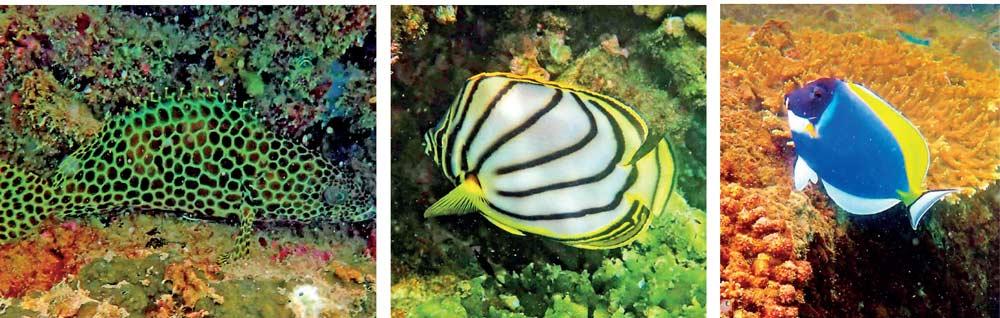
Despite being an artificial breakwater, the reef at HIP now supports the highest diversity of reef-associated fish in Southern Sri Lanka, outperforming natural sites like Weligama, Polhena, and Thalaramba.
The conditions have created a productive food web that supports everything from small ornamental species to larger commercial fish. Over 8 species were found unique to the Hambantota InternalPort bay, including the Blue Green Chromis (Chromisviridis), Redfin Butterflyfish (Chaetodon lunulatus), and economically important species such as trevallies and emperors were also present, along with lobsters, highlighting the reef’s role in supporting both biodiversity and fisheries.
Local fishers have experienced high catch rates around HIP, suggesting that the reef may also serve as a breeding and nursery ground for marine life.
One of the clearest indicators of HIP’s ecological health is the mix of fish feeding types, a concept known as “trophic balance.” In simple terms, it means having the right mix of plant-eaters, meat-eaters, and those that eat both.
HIP shows an impressive balance where 34 percent of its fish are herbivores, 58 percent are carnivores, and 40 percent are omnivores. This spread supports a strong, stable food webwhere energy flows smoothly between species, just like in a healthy natural ecosystem.
The reef has coral cover between 30 percent and 35 percent, a high percentage for the region. This diversity and balance help different species coexist and strengthen the reef’s ability to bounce back from environmental stress.
“We now have a scientific baseline that positions HIP as a model for integrating ecological principles into coastal infrastructure,” the research team said. “It’s an opportunity to rethink how ports, tourism, and fisheries can coexist with conservation goals.”
This study could influence how future coastal projects are planned, not only in Sri Lanka but globally. Rather than viewing development and conservation as conflicting goals, HIP shows they can work together.