Reply To:
Name - Reply Comment
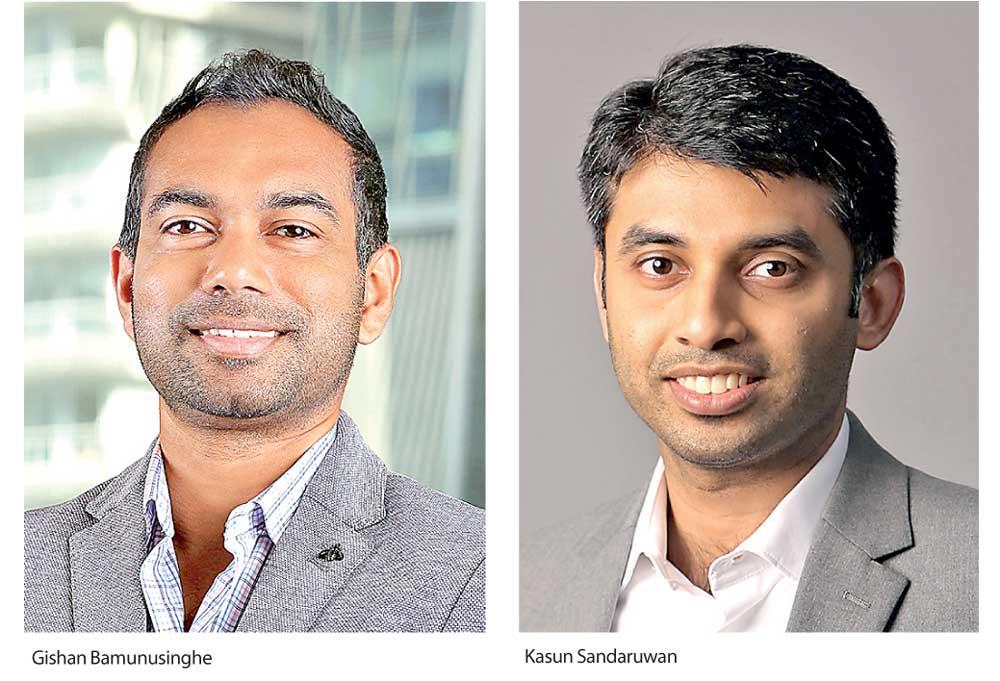
When discussing leadership in the modern business world, it’s impossible to overlook those who have risen from humble beginnings, transitioned across industries and led their teams with vision, empathy and a relentless drive for innovation. Two such leaders are Gishan Bamunusinghe, COO of Fortude in ANZ and Kasun Sandaruwan, COO of Fortude in the Americas.
Their stories are not just about professional success but personal growth, overcoming challenges and shaping the future of digital transformation.
Their journeys explore their shifts from graduate trainees to regional leaders, challenges and strategies that have helped them build thriving, diverse teams at Fortude.
Gishan Bamunusinghe: From accounting to ERP
When Gishan Bamunusinghe first entered the corporate world, he didn’t expect to end up in technology. After completing his A-Levels at Royal College in Sri Lanka, he pursued a Bachelor’s degree in Business Accounting at Monash University in Melbourne.
Gishan reflects on this early decision: “I didn’t enjoy accounting because it felt monotonous. Every day was the same. But moving into the world of ERP systems at Fortude gave me a new challenge. It was dynamic and every day brought something new.”
His transition from finance to technology was not just a career shift but a complete change in how he viewed work. This new exposure to ERP systems sparked his interest in the contract manufacturing space and despite having no prior experience, Gishan dove in, eager to learn.
“I wanted to gain insight into how it works and experience it firsthand, even though I didn’t aim to become a merchandiser. That initial exposure was a key factor in joining Fortude,” he said.
Kasun Sandaruwan’s rise from Consultant to COO
Kasun Sandaruwan’s journey at Fortude began from an engineering background. After graduating from the University of Moratuwa with a degree in Electronics and Telecommunication Engineering, Kasun joined Fortude as a trainee consultant. His rapid rise through the ranks—from associate consultant to consultant to senior consultant and solution architect—demonstrates his technical proficiency and leadership potential.
By 2023, Kasun had become COO of the Americas region, a role that brought new challenges.
“The transition from a techno-functional consultant to a leadership role was challenging. I had to shift from focusing on day-to-day tactical tasks to thinking strategically. Managing people, delegating tasks and prioritising became a new skill set I had to develop,” Kasun shared.
His growth was a testament to his ability to adapt and lead with vision.
Shift in leadership styles: Gishan’s transformation
As Gishan moved up within Fortude, his understanding of the company and leadership style evolved.
“When I joined, we were still learning as we grew,” Gishan recalled, reflecting on the company’s shift from a product-based to a service-oriented model.
“We didn’t have well-defined processes but over time, we started focusing on external customers and that’s when we really began to build our reputation.”
Through his leadership, Gishan has become a key player in Fortude’s success in the ANZ region. He emphasised the importance of learning and evolving as a leader.
“You have to be adaptable. The challenges we faced early on shaped how I approach leadership now. It’s about setting a vision, trusting your team and being open to change.”
Kasun’s strategic vision: Building trust in a new market
When Kasun moved to the U.S. to establish Fortude’s operations in the Americas, one of the biggest challenges was gaining trust in a new market. Establishing credibility was crucial for a young team in a region known for experienced consultants.
Kasun said, “At first, it was difficult because consulting in the U.S. is often associated with senior professionals. We had to prove that our youth didn’t mean lack of experience. We had the skills to deliver results.”
Kasun’s strategy was to take small, incremental steps—starting small with resource augmentation and gradually building relationships with reputable clients.
“Once we had those references, it became easier to build trust with new customers,” he shares. Despite the initial hurdles, this “land and expand” strategy helped Fortude grow in the Americas.
Adapting to new regions: Fortude’s global strategy
For both Gishan and Kasun, establishing Fortude in new regions required hard work but also an understanding of the cultural nuances and market demands. Gishan noted the challenge of working in Australia, a market with fewer customer references.
“The strategy was simple: we started small, worked on resource augmentation and gradually built our reputation. It wasn’t about jumping into multi-million-dollar projects immediately but establishing relationships.”
Both leaders emphasised the importance of adapting to regional demands and challenges.
“When you enter a new region, it’s not just about the product or the service you offer—it’s about understanding the customer needs and becoming their trusted partner,” said Kasun.
Fortude’s focus on regional adaptation and customer relationships has been a critical driver of its success.
Building customer relationships: A trust-based approach
One of the pillars of Fortude’s success in both the ANZ and Americas regions has been the focus on building strong customer relationships. Whether through resource augmentation in Australia or building credibility in the U.S., both Gishan and Kasun emphasise the importance of trust.
“In the end, it’s all about relationships,” said Gishan.
“Once you have a good reference base, it becomes easier to build new relationships and expand your business.”
For Kasun, building trust wasn’t just about offering technical expertise but comprehensive business knowledge and an ability to see things from a customer’s perspective.
“We had to convey that we weren’t just a bunch of techies; we understood business needs and pain points and could offer real business solutions,” he explained.
The challenge of overcoming perceptions was significant when Kasun led Fortude’s expansion into the Americas. Fortude’s young Sri Lankan team faced scepticism early on due to their age and background. But Kasun and his team were determined.
“We had to prove that we had the experience and knowledge to compete with the larger, more established players in the U.S. market,” Kasun reflected.
By focusing on quality and building strong client relationships, Fortude was able to break through these barriers.
Diversity at Fortude: A key to success
One of the driving forces behind the success of both Fortude’s ANZ and Americas teams is their diverse workforce.
“Australia is one of the most multicultural countries and our team reflects that,” said Gishan.
Fortude’s diverse team, with members from various nationalities, has been critical in connecting with customers. The team’s varied backgrounds offer unique insights and perspectives, making it easier to understand and meet the needs of different markets.
Both leaders agree that digital transformation has been a gamechanger for Fortude. The rise of ERP systems, cloud services and digital consulting has allowed Fortude to stay ahead of the curve in an ever-evolving market.
“We’re not just providing ERP solutions; we’re helping our clients navigate digital transformation,” Kasun said.
With the acceleration of cloud adoption, AI and automation, Fortude is positioning itself as a leader in the digital space.
Expanding reach in a niche market
Fortude’s growth strategy has centred on expanding the reach of niche ERP solutions like Infor M3 in the ANZ and Americas regions.
“In Australia, Infor M3 is a niche market but it’s growing,” Gishan explained.
“By becoming an official Infor M3 channel partner, we can sell licenses, not just provide implementation services. This is a significant opportunity for us.”
This vertical expansion strategy in niche markets has helped Fortude expand its reach, cementing its role as a trusted partner in ERP and business process consulting.
The pandemic accelerated the shift towards digital solutions. For both Gishan and Kasun, it’s been a double-edged sword. On the one hand, it created an urgent demand for digital solutions but it also created challenges for teams working remotely.
“We had to adapt to the changing landscape and shift quickly,” said Gishan.
This fast-paced environment challenged both leaders to innovate and stay ahead of the curve.
Leadership insights from Gishan and Kasun
Both Gishan and Kasun emphasise the importance of adaptability, resilience and people-focused leadership.
Gishan said, “As a leader, you need to inspire and create a clear vision but you must also trust your team. I believe in giving my team autonomy to make decisions.”
Kasun concurred, adding, “Trust and integrity are key. As a leader, your job is to set a clear vision and empower the team to function well without constant oversight, to achieve the shared vision.”
Both Gishan and Kasun have ambitious plans for Fortude’s future.
“We’re expanding into new regions and continuing to innovate,” Gishan said.
“There’s a huge opportunity for growth, especially in digital transformation.”
Kasun echoed this, noting the strategic importance of scaling Fortude’s digital offerings in critical global markets.
They share a common journey of technical growth into strategic leadership. Their stories testify to the importance of adaptability, continuous learning and a commitment to people-first leadership.
Gishan and Kasun’s leadership journeys reflect the power of determination, trust and adaptability in building successful global teams. As they continue to lead Fortude into new regions, their influence will shape the company’s success and the broader digital transformation landscape. Their stories are a powerful reminder that leadership success is not just about what you achieve but how you lead and inspire others to achieve with you.