Reply To:
Name - Reply Comment
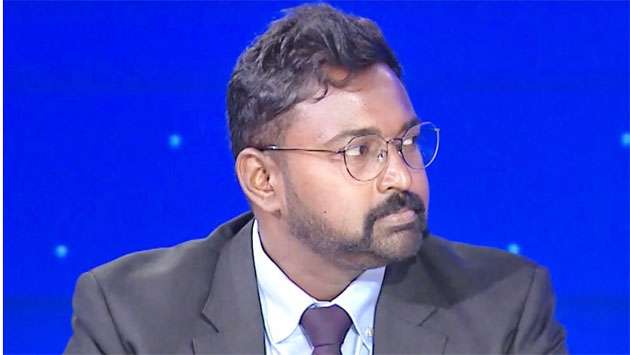
Colombo, Jan. 28 (Daily Mirror) - Barath Arullsamy, Vice President of the Democratic People’s Front - Tamil Progressive Alliance (TPA), in a statement, questioned whether the government’s “Rebuild Sri Lanka” initiative is translating into real change on the ground or remaining largely at the level of words and announcements.
President Anura Kumara Dissanayake’s visit to the Gampola electorate yesterday under the “Rebuild Sri Lanka” initiative was rich in symbolism and strong in words. He laid the foundation stone for the reconstruction of a temple and delivered a wide-ranging speech on soil erosion, watershed management, education reform, and the protection of the Central Highlands.
He also announced that a new Act and a new Authority will be established to protect the Central Highlands, that Grade 1 education reforms will commence from February, and that plantation workers will receive a historic daily wage of LKR 1,750 from this February. He further reminded us, quite rightly, that a good society must be built on positive human relationships. All this sounds very promising. And to be fair, it deserves appreciation.
But as citizens who live on the ground, we are entitled to ask a gentle, slightly uncomfortable question: are we rebuilding Sri Lanka, or are we mainly rebuilding speeches?
Take the announcement about creating a new Authority. One cannot help but admire our national talent for inventing new institutions. Unfortunately, we already have something called the New Villages Development Authority for Plantation Region, which was created precisely to handle resettlement, housing and many such tasks. Curiously, it was almost invisible in the last budget and seems to be on an extended sabbatical while new authorities are being proposed. It is a little like announcing a new hospital while the existing one has no doctors, no medicine, and no electricity.
Then there is the famous “Rebuild Sri Lanka” fund. We are told by the Treasury Secretary that Rs. 8.5 billion has already been collected for this purpose. Some leading economists and even members of Parliament have raised questions about the nature and structure of this fund, but let us assume, in good faith, that the money is real and well-intended. If so, the obvious question is: where is the rebuilding?
Because if you travel just 5 to 10 kilometres around the location the President visited yesterday, you will find landslide- and flood-affected areas in Nayapana, Attabagé, Nellambe, Dolosbage, Mahavila, and several other plantation regions. Entire villages were erased. Families lost their loved ones, homes, livelihoods, and security. Many are still in limbo.
Some have reportedly been forced to return to the same unsafe areas after signing forms saying they will “find a rented house”, which is a fascinating administrative solution when the entire village no longer exists. Here is the irony:
We talk about watershed management, soil erosion, and environmental protection, but the people who suffered because of these failures still do not have safe land to live on. We talk about new authorities, but the authority that already exists to build new villages has neither money nor urgency. We talk about Rebuilding Sri Lanka, but the citizens most in need of rebuilding are still waiting.
To be very clear, this is not a complaint about the President’s intentions. His focus on reform, wages, and long-term structural issues is welcome and necessary. The plantation wage increase, in particular, deserves genuine credit.
However, Barath Arullsamy stated that this is fundamentally a question of political willingness and administrative priority. Because housing the disaster-affected is not a complex policy puzzle. It is a matter of releasing land, allocating funds, and executing projects. If thousands of houses can be built in other regions, it is reasonable to wonder why the same urgency does not apply to the Central Plantation Region.
During the last general election, many people in these areas voted not for candidates they knew, but for the trust they placed in President Anura Kumara Dissanayake. That trust still exists. But it is now mixed with confusion and quiet disappointment.
The Tamil Progressive Alliance has shown, during our period of governance we built thousands of houses with full infrastructure that can be built if there is focus and commitment. So the problem is not feasibility. It is priority. Our Party Leader Mano Ganesan MP has therefore requested a meeting with the President together with Malayaga political parties and civil society organisations, not to argue, but to help design a strategic, serious, time-bound solution.
So perhaps the real question is this: We have the speeches. We have the authorities. We even have the money.What we are still waiting for is the decision to act. And in the end, Rebuilding Sri Lanka will not be measured by how many new institutions we announce, but by how many families finally sleep under safe, permanent roofs.