Reply To:
Name - Reply Comment
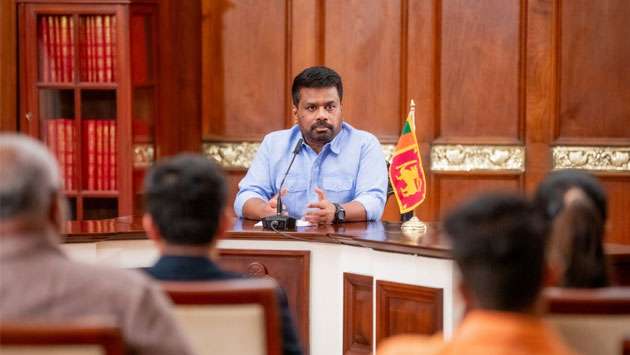
Colombo, March 17 (Daily Mirror) – President Anura Kumara Dissanayake yesterday said the reintroduction of the QR code fuel distribution system is a necessary step to manage limited energy supplies caused by the ongoing conflict in the Middle East, while assuring that the Government has taken extensive measures to prevent shortages of fuel, gas and coal in the country.
Speaking at a special media briefing held at the Presidential Secretariat, the President said the QR code system was introduced as a precautionary mechanism to ensure fair distribution of fuel at a time when global supply chains are being disrupted due to the war situation in the Middle East. He stressed that the Government’s priority is to protect the economy while ensuring that the daily lives of the people continue without interruption.
The President acknowledged that the current global situation has created fear and uncertainty among the public, especially because the country has experienced severe economic difficulties in recent years. He said many citizens are worried about their ability to carry out daily activities, continue their businesses, send their children to school and obtain essential food items.
“The concerns of the people are understandable. Our citizens have faced similar crises in the recent past, so it is natural for them to feel anxious when they hear about possible disruptions in fuel and energy supplies,” he said.
President Dissanayake also reiterated that Sri Lanka will maintain neutrality in the ongoing conflict and will not take any action that could harm the country’s international relations.
“Our position is very clear. We remain neutral. All our decisions are guided by the need to safeguard this neutrality and protect the interests of our country,” he said.
Explaining the reason for the current difficulties, the President said the crisis has mainly arisen due to disruptions in the global energy market. According to him, attacks on oil storage facilities, transport vessels and ports, as well as threats to major shipping routes such as the Strait of Hormuz, have affected production, storage and distribution of fuel worldwide.
“Our main energy sources are fuel, gas and coal. Even a single delay in a shipment can disturb the entire system because we manage the energy sector with limited reserves,” he said.
He revealed that two crude oil shipments carrying nearly 90,000 metric tonnes have been delayed, while at least one shipment expected through the private sector has also not arrived on schedule, creating a shortfall in supply.
The President said the Government has already taken steps to call emergency tenders and hold discussions with friendly countries to secure additional fuel supplies.
He explained that the QR code system was introduced to manage the available fuel carefully until the normal supply schedule is restored. The Government could not suspend fuel distribution to prepare for the system as done previously, because the economy must continue to function without interruption.
“With a clear understanding that certain difficulties may arise, we decided to introduce the QR code system while continuing normal operations. That is why the system was launched on a Sunday,” he said.
According to the President, nearly five million QR codes have already been registered and the remaining technical issues are being resolved quickly.
“This is the first time the QR system is being used directly at the point of fuel distribution. Two expert companies in Sri Lanka voluntarily assisted us in developing and implementing this system,” he said.
He added that the current fuel stock must be used carefully until new shipments arrive, and the QR code system will help ensure fair distribution among all users.
“We must manage the available fuel properly. If the planned supplies arrive on time, we will be able to relax these controls very quickly. Until then, the QR code system is necessary,” the President said.
He admitted that the system may cause difficulties for some sectors, but said special arrangements have already been made to ensure that essential services will not be affected.
The health sector has been given priority, and emergency fuel reserves have been secured to maintain hospital services, ports and airports even if the present supply is delayed.
Special fuel allocations are also being provided to agriculture, fisheries, industry and food distribution networks. The President said the current QR quota is not sufficient for harvesting and cultivation activities, and therefore additional fuel will be provided to farmers.
Arrangements are also being made to supply fuel to multi-day fishing vessels as well as small fishing boats operating from harbours.
The President further stated that exporters and the tourism sector have been temporarily allowed to import fuel using US dollars in order to reduce pressure on national supplies. About 30 exporters have already registered under this scheme, and fuel distribution through private storage facilities will begin immediately.
“This is one of several steps we have taken to make sure the country’s energy needs are met,” he said.
He also assured that there will be no shortage of gas or coal, as additional shipments have already been secured. The Government has increased gas imports for March and placed urgent tenders to obtain more coal to ensure uninterrupted electricity generation.
To reduce fuel consumption, all ministries have been instructed to cut fuel usage by at least 25 percent. As part of this plan, Wednesdays have been declared a holiday for government offices, while work-from-home arrangements will be allowed in institutions where online systems are available.
“This method allows the public service to continue functioning while reducing fuel consumption,” the President said.
He said an Economic Monitoring Committee is meeting regularly to review the situation and take quick decisions based on updated reports from the Central Bank and other institutions. Another committee has also been appointed to study the impact of the crisis on the public and recommend relief measures if necessary.
President Dissanayake said the Government is focusing on four key areas — energy supply, public service operations, essential goods distribution and relief for vulnerable groups — to ensure the country continues to function normally despite the global crisis.
“We cannot overcome this situation alone. We need the cooperation of public servants, the private sector, the media and the people. With everyone’s support, we are confident that we can manage this challenge,” he said.
He assured the public that the QR code fuel system is only a temporary measure to manage limited supplies and that the situation is expected to improve once delayed shipments arrive and new procurements are completed.
“We are closely monitoring the situation every day. A strong mechanism is in place, and we will take every step necessary to protect the people and the economy,” the President said.