Reply To:
Name - Reply Comment
By Shantha Chandrasiri
It has become a matter of serious concern that waterfalls in Nuwara Eliya - once described as “torrents of foreign exchange” for their tourism value - are now drying up.
Once gushing year-round, they now swell only during the monsoon rains. Environmentalists warn that unchecked human activity has caused extensive damage to the ecosystem, diminishing these vital water sources.
Environmentalists say the illegal tapping of water for vegetable cultivation and the clearing of forests in the upper regions have badly affected the flow of both Lovers’ Leap and Glenfall waterfalls. They accuse the authorities of allowing these activities to continue unchecked for years.
Lovers’ Leap waterfall carries with it a romantic legend. According to local lore, a prince and a village maiden leapt to their deaths after their love was forbidden by the king and queen. Others dispute this story, arguing that no king ever ruled from Nuwara Eliya. Instead, they recount the tale of an Englishman and his lover, a young woman who slipped from a boulder into the waterfall. In his attempt to save her, he too fell to his death—giving the site its enduring name.
Glenfall Waterfall, originating from the Single Tree Mountain range, faces a similar crisis. The haphazard clearing of forests and other unsustainable practices have reduced these waterfalls—once prized foreign exchange earners—to fragile trickles.
Experts have voiced concern about the lethargic attitude of the authorities, who have failed to provide adequate protection for these natural treasures. Environmentalists stress that urgent steps require to be taken, even at this late stage, to safeguard the water resources that feed Nuwara Eliya’s waterfalls and preserve the town’s future as a premier tourist destination.
Nuwara Eliya town and its surrounding areas, rich in scenic beauty and biodiversity, form one of the country’s premier tourism zones. History records that this picturesque city was founded in the 19th century by British explorer and hunter Samuel Baker. Since then, it was used by the British as a pleasure retreat and hunting ground.
The British called it “Little England” due to its cool climate somewhat resembling that of their homeland, and they gave the city the character of an English town through its architecture and layout.
In colonial times, hunters roamed the jungles, hunting elephants, sambur, and jackals. One such hunter, Maj. Thomas William Rogers, is said to have killed 1,500 wild elephants. Local belief holds that lightning strikes his grave every year. The British also planned the town carefully, adding playgrounds, gardens, and the famous lake that remain attractions to this day.
From its inception, Nuwara Eliya has been both a tourist destination and a health resort, particularly valued for its salubrious climate. Thousands visit during the season to restore their health and enjoy the festive atmosphere. With its cool weather, frost, and mist-covered hills, it remains the only region in Sri Lanka to experience such a climate.
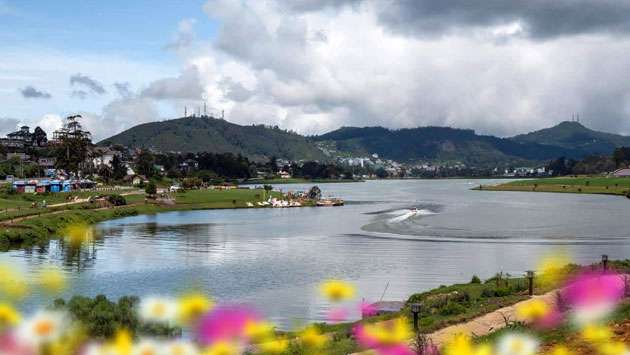
Among its many attractions are Lake Gregory and the Park, constructed in 1874 by Governor Sir William Gregory; Victoria Park, established in 1897 to mark the Diamond Jubilee of Queen Victoria’s coronation; and the Hakgala Botanical Gardens, founded in 1884 by botanist Dr. George Henry Kendrick Thwaites. The iconic red-brick post office, built in 1894 in Victorian style, is another landmark. Complementing these are the Lover’s Leap and Glenfall waterfalls, natural wonders that enhance the beauty of Nuwara Eliya.