Reply To:
Name - Reply Comment
By Charithya Kumarasiri
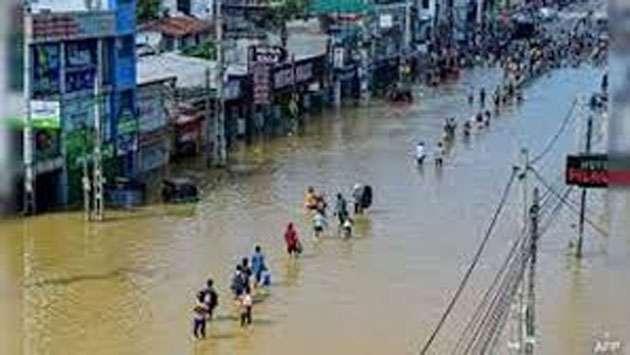
Colombo, Feb. 27 (Daily Mirror) - Sri Lanka continues to grapple with the aftermath of Cyclone Ditwah, with nearly 4,700 people still living in temporary safety centres following severe flooding and landslides, according to a recent assessment by the Shelter, Land and Site Coordination Sector.
The report, based on research co-led by the International Organization for Migration (IOM) and the International Federation of Red Cross and Red Crescent Societies (IFRC), reveals that 4,729 individuals from 1,332 families remain housed in 45 active safety centres across six districts Badulla, Kegalle, Nuwara Eliya, Colombo, Matale and Kandy.
Cyclone Ditwah affected all 25 districts, forcing thousands of families to seek shelter in schools, temples, community halls and other public buildings. Although many temporary shelters have since closed, 45 centres remain operational out of 80 locations assessed.
The demographic breakdown shows women account for 27 percent of the displaced population, men 25 percent, children under 18 make up 26 percent, and elderly persons represent 14 percent.
Pregnant and lactating mothers were identified in 64 percent of the open sites, making them the most commonly reported vulnerable group. Persons with chronic illnesses were reported in 53 percent of locations. Although persons with disabilities make up around one percent of the displaced population, more than half of the centres host at least one individual with a disability. However, 60 percent of the sites are not fully accessible to them.
The report highlights several protection and infrastructure concerns. Around 35 percent of centres lack specific measures to prevent violence or harassment, such as security patrols or formal rules of stay. Dedicated breastfeeding spaces are available in only 27 percent of locations.
Sanitation facilities are also under pressure. Across the 45 active sites, 202 toilets serve the displaced population an average of 23 persons per toilet exceeding the internationally recognised SPHERE emergency standard of 20 persons per toilet. Only a limited number of toilets are adapted for persons with disabilities.
Health services remain inconsistent. While health workers regularly visit 64 percent of the sites and referral pathways to hospitals are communicated in most centres, only 40 percent have a first aid kit or health post on-site. Nearly a quarter of the sites report difficulties in accessing medicines, and psychosocial support services are available in just over half of the centres.
Most centres are managed by the government, and all internally displaced persons are registered upon arrival. However, nearly half of site representatives remain uncertain about how long the facilities will remain open. Some centres, particularly in Badulla and Kegalle, are expected to operate beyond three months, while others may close within one to three months as relocation plans are implemented and schools and religious institutions resume normal activities.