Reply To:
Name - Reply Comment
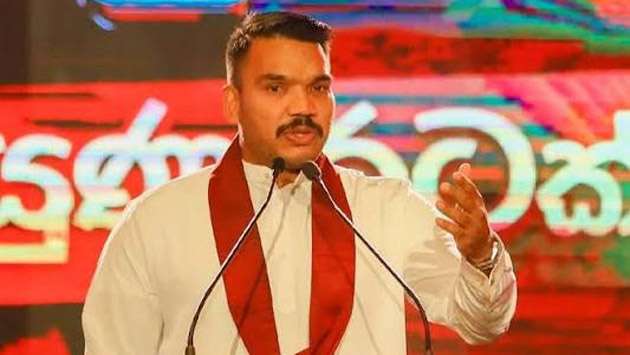
Colombo, July 8 (Daily Mirror) - MP Namal Rajapaksa, National Organizer of the Sri Lanka Podujana Peramuna (SLPP), Namal Rajapaksa, said the government’s response to the Negombo prison tragedy demonstrates that the promised “system change” has failed, arguing that true accountability would have required the subject minister to resign.
Speaking during the parliamentary debate on Tuesday, Rajapaksa said, “If the system had changed, the minister would have stepped down. This is not the system change the people voted for.”
He maintained that the subject minister must accept responsibility for the incident, which claimed the lives of 27 people, including seven prison officers, while around 150 others were hospitalized.
“The minister cannot simply say, ‘I take responsibility and will look into it later,’ and walk away. Responsibility demands action,” Rajapaksa said.
He also criticized the government for failing to make a formal statement in Parliament accepting responsibility for the tragedy.
“Twenty-seven people have died and around 150 are in hospital. Yet, to date, no responsible statement has been made to this House. The government owes Parliament and the country an explanation,” he said.
Rajapaksa argued that the prison unrest was the result of long-standing structural failures that the current administration had failed to address despite being in office for nearly two years. He said recommendations made after the 2020 prison incident—including expanding prison capacity, recruiting additional prison officers, rehabilitating minor drug offenders, and constructing a new prison—had been ignored.
He noted that while Sri Lanka’s prison system was designed to accommodate around 10,000 to 12,000 inmates, it is currently holding nearly 40,000 to 45,000 detainees, creating severe overcrowding and increasing the risk of violence.
Rajapaksa further questioned what concrete measures the government had taken to speed up forensic reports, reduce the number of remand prisoners, appoint a permanent Commissioner General of Prisons, and strengthen prison administration.
Beyond the prison crisis, he accused the government of failing to respond effectively to a series of national challenges, including the aftermath of Cyclone Ditva, the worsening dengue outbreak, shortages of essential medicines in hospitals, and delays in supplying fertilizer to farmers.
He claimed that more than 50 people had died from dengue this year while hospitals remained overcrowded with patients, adding that preventive action was being delayed until outbreaks reached critical levels.
Turning to agriculture, Rajapaksa said farmers continued to struggle with fertilizer shortages despite repeated government assurances, forcing many to buy fertilizer from the private sector at significantly higher prices. He also criticized the government’s rice import policy, saying it undermined local farmers while imported rice was being distributed to public servants on an installment basis.
Concluding his speech, Rajapaksa urged the government to abandon political rhetoric and demonstrate genuine accountability.
“The people voted for a system change built on responsibility and accountability. What they are witnessing today is not a new system, but a continuation of the old one. The minister must accept responsibility, make a full statement to Parliament, and be held accountable for this tragedy,” he said.