 Jamila Husain
Reply To:
Name - Reply Comment
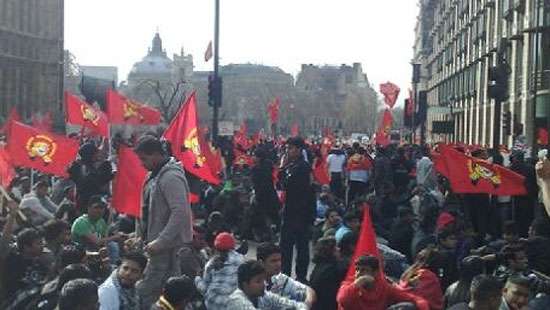
Colombo, Feb 25 (Daily Mirror) - Every time a Sri Lankan leader lands in a Western capital, a predictable yet hypocritical drama unfolds. A small but vocal segment of the Tamil diaspora gathers outside, waving the flag of the LTTE and chanting slogans about justice and human rights. They accuse. They condemn. They disrupt.
But what they refuse to confront is their own silence and their own selective outrage. Thereby only proving that they are nothing but hypocrites in their so called call for justice.
The LTTE terrorists did not only wage war against the Sri Lankan state. It controlled, intimidated and brutalised the very Tamil community it claimed to represent. Mothers watched in horror as their children were taken away for forced recruitment. Young boys and girls who should have been in classrooms were instead trained to carry guns. Childhood was sacrificed at the altar of a violent dream.
Pregnant women were indoctrinated and sent on suicide missions. Teenagers were denied their youth and pushed into the battlefield. Those who questioned the leadership faced threats, punishment or death. Tamil politicians and intellectuals who dared to disagree were assassinated. Fear ruled daily life in areas under LTTE control.
And yet today, from the comfort of London, Toronto and other western cities, some diaspora activists wave the Tiger flag as though it represents liberation and dignity. That is a tragic comedy.
Where were their protests when Tamil children were dragged away from their homes. Where were their rallies when families were torn apart by forced conscription. Where were their cries for human rights when dissenting Tamils were silenced permanently.
Even in the final stages of the war in 2009, civilians were trapped in shrinking territory. The LTTE prevented many from leaving, using them as human shields while its leadership tried to secure its own survival. Ordinary Tamil men, women and children bore the brunt of those decisions.
LTTE leader Velupillai Prabhakaran demanded unquestioned loyalty and sacrifice. Thousands gave their lives. Thousands of families were shattered. Yet his own family was shielded for much of the conflict. While cadres were sent to the front lines, celebrations continued in private. The contrast is painful and undeniable.
This is the history that some choose to ignore when they wave that flag.
It is also important to ask a difficult question. What do these repeated protests achieve for the Tamil people living in Sri Lanka today. Do they improve livelihoods in the North and East. Do they create jobs. Do they build schools or hospitals. Do they support reconciliation among communities who still carry deep scars.
The uncomfortable truth is that many of these diaspora groups appear more interested in keeping their own agendas alive than genuinely caring for the Tamil people on the ground. The flag becomes a symbol not of service, but of relevance. It keeps fundraising networks active. It keeps old narratives alive. It keeps certain individuals politically visible in their adopted countries.
Meanwhile, Tamils in Sri Lanka are trying to rebuild their lives. They are focused on education for their children, economic opportunities and stability. They are navigating daily challenges that have little to do with symbolic protests thousands of miles away.
Human rights must never be dismissed. Accountability must never be avoided. Sri Lanka still has much work to do in addressing the grievances of all communities. But justice cannot be selective. It cannot focus only on one side of a brutal conflict while ignoring the suffering inflicted by the LTTE on its own people.
Western governments too must examine their stance. Many have designated the LTTE as a terrorist organisation. Yet during official visits by Sri Lankan leaders, LTTE flags are often displayed openly. The right to peaceful protest is fundamental in any democracy. But glorifying a movement responsible for suicide bombings, child recruitment and political assassinations sends a confusing message.
Recently even leaders such as Tilvin Silva have faced such protests during visits abroad. The pattern is consistent regardless of which party is in power. It reveals that this is not about policy differences. It is about a refusal by some to let go of an armed struggle that inflicted immense suffering on the Tamil community itself.
If these diaspora activists are truly committed to human rights, then their activism must be honest. It must acknowledge every victim. It must recognise the Tamil families who lived under fear of forced recruitment. It must speak for the parents who lost their children to a war they did not choose.
Waving a flag is easy. Living with the consequences of war is not.
Sri Lanka’s path forward requires maturity and courage from all sides. It requires confronting uncomfortable truths, not rewriting history to suit personal narratives. It requires rejecting violence in all its forms, regardless of who carried it out.
Those who genuinely care about the Tamil people in Sri Lanka should focus on constructive engagement, economic support and reconciliation efforts. They should amplify voices that seek healing rather than division.
Nearly seventeen years after the guns fell silent, our nation cannot afford to be held hostage by selective memory and personal agendas abroad. The Tamil community deserves better than to be used as a symbol in protests that do little to improve their daily lives.
Hypocrisy will not bring justice. Flags will not feed families. Only truth, accountability and a sincere commitment to the wellbeing of all Sri Lankans can move this country forward.