Reply To:
Name - Reply Comment
By Huzefa Aliasger
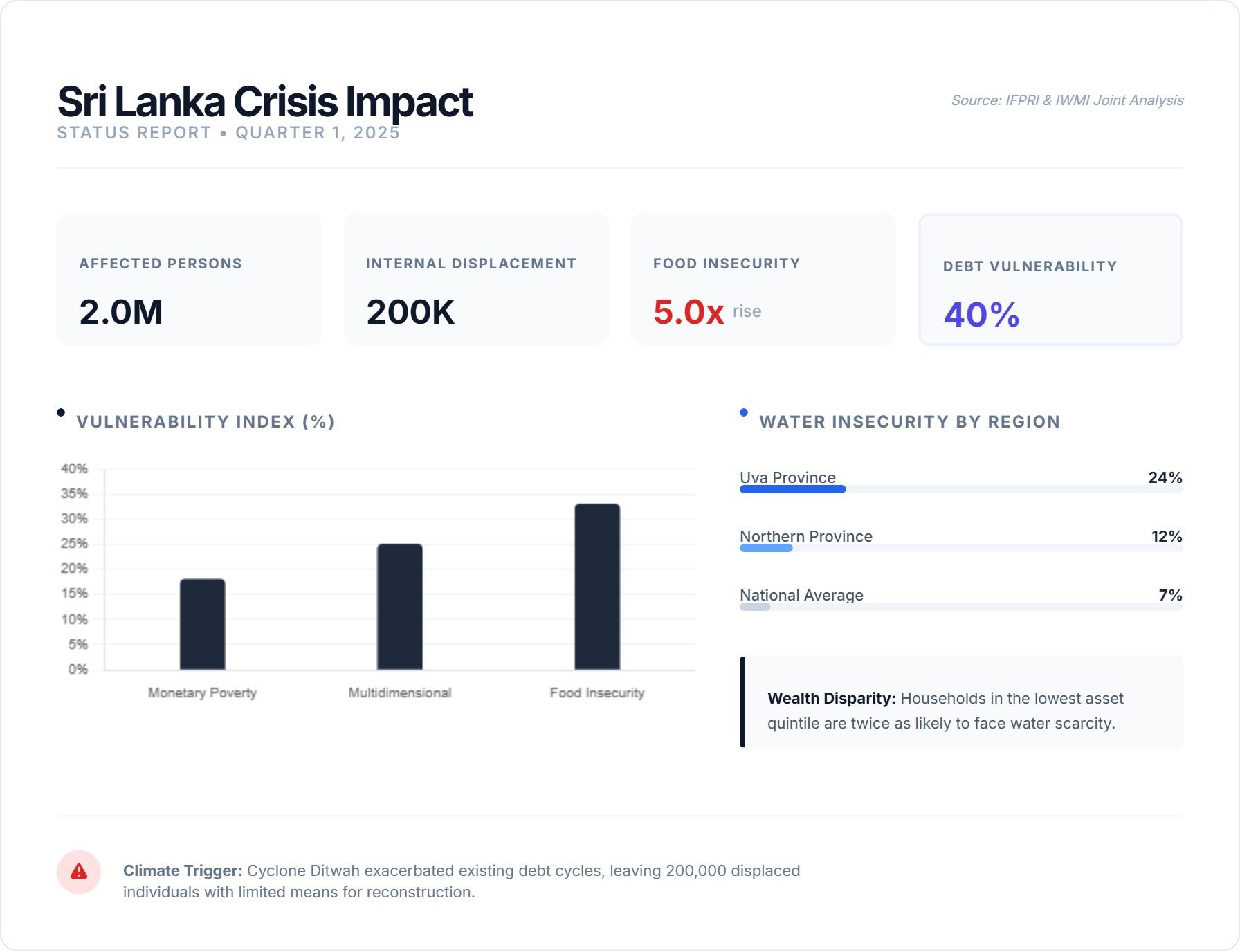
Colombo, March 13 (Daily Mirror) - Recent economic and natural disasters in the past five years have affected the country’s food security with 2 million individuals having been affected by severe damages to homes, crops, food supplies and critical infrastructure.
Entire communities have been left isolated or without basic services, and over 200,000 people were displaced from their homes. Food insecurity increased more than fivefold from 2019 to 2025, while rates of monetary poverty tripled over the same period, according to a study from the International Food Policy Research Institute (IFPRI).
The survey which was conducted recently in 2025 by IFPRI and International Water Management Institute (IWMI) said that “Around 18 percent of Sri Lankans were monetarily poor based on district-level expenditure-based poverty lines set by the Department of Census and Statistics.
However, monetary poverty only captures part of the picture, as 25 percent of households were multidimensionally poor, meaning they experienced several simultaneous deprivations such as low living standards, limited education or health constraints. Experience-based food insecurity was even more prevalent, with roughly 33 percent of households reporting moderate or severe insecurity.”
The report mentions that these findings are particularly concerning given that Cyclone Ditwah has hit many of Sri Lanka’s most vulnerable households particularly hard. Moreover, the ability of poorer households to cope with the Cyclone’s impacts is limited. Over 40 percent of households reported being in debt, with many households indicating that repayment would be difficult.
According to IWMI Water security was a central component of the survey because of its connection to household well-being. “Even before the cyclone, the seemingly low national rate of water insecurity masked significant variation. Uva Province stood out, with 24 percent of households experiencing water insecurity, which is twice the level of the Northern Province— the next most affected province and six times higher than the least affected. Household wealth also shaped exposure. 14 percent of households in the lowest asset quintile were water insecure, a rate double that of better-off households. These underlying vulnerabilities create the conditions for more severe impacts during extreme events such as the recent flooding and landslides.”

 0
0