Reply To:
Name - Reply Comment
By Nishel Ferando
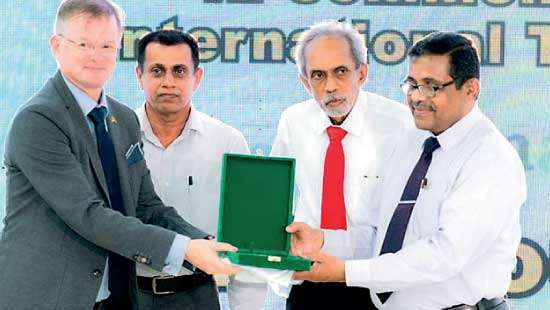
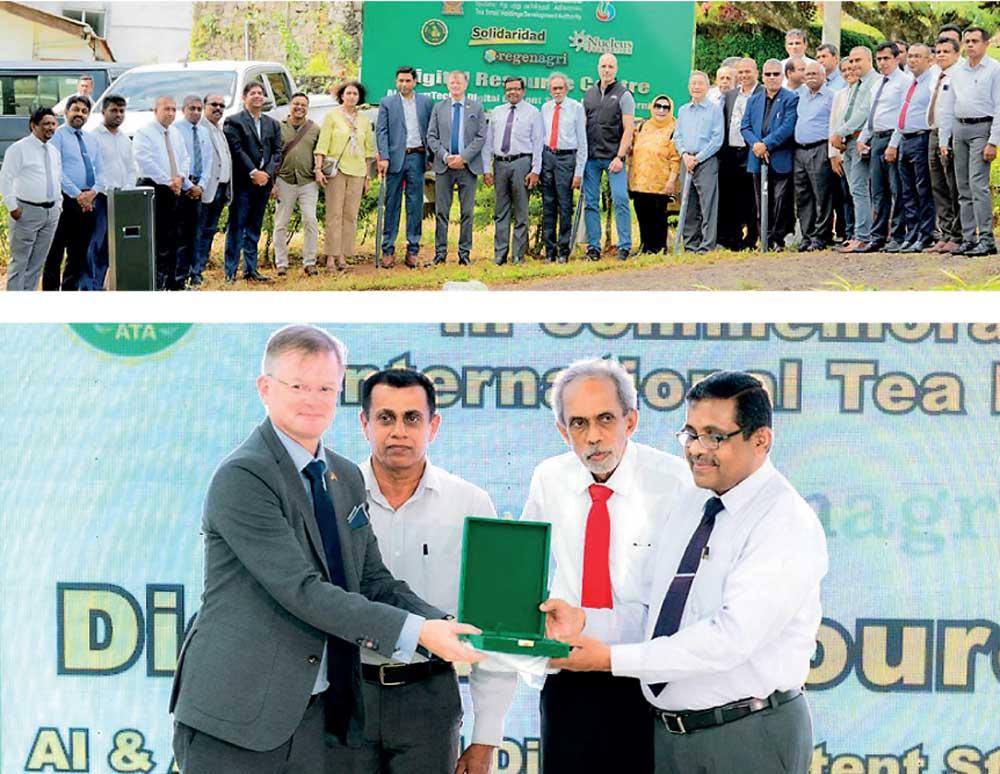
Taking a major step towards digital transformation, Sri Lanka’s traditional tea industry witnessed the inauguration of a digital tea resource centre at the Ratnasiri Wickramanayaka International Training Institute in Hantana.
The cutting-edge facility, established by the Tea Small Holdings Development Authority alongside Solidaridad Asia, RegenAgri and the Nucleus Foundation, aims to connect the tea smallholders with modern digital technology and the exchange of scientific knowledge.
The launch coincides with the International Tea Day and marks a crucial pivot towards modernising one of Sri Lanka’s oldest export industries.
The newly established facility is designed to serve as a comprehensive knowledge hub, enabling the tea growers to access vital, real-time information. Through integrated digital platforms and social media networks, the farmers can now obtain guidance on cultivation practices and actively identify specific problems within the industry. Several similar digital resource centres have already been established in other tea-growing regions under the first phase of this ongoing project.
The urgency for this digital shift stems from fundamental structural changes in the local tea sector over the decades.
Addressing the gathering, Solidaridad representative Shatadru Chattopadhyay noted that after 150 years of a plantation-dominated system, 70 percent of Sri Lankan tea production is now driven by approximately half a million smallholders. While this shift has successfully put power into the hands of the grassroots producers, he pointed out that significant challenges remain, including suboptimal productivity levels averaging around 1,600 kilos, quality concerns and an ageing workforce. Overcoming these hurdles requires decisively adapting the growers to artificial intelligence and smart agricultural tools.
Chattopadhyay further highlighted that while historic sustainability models and certifications have laid important groundwork, they have reached the limits of their scalability and cannot easily encompass half a million individual growers. To sustainably transform 100 percent of Sri Lanka’s agricultural supply chain, he stressed that the future relies heavily on smart digitalisation.
He added that mere idealism is insufficient to sustain the rural livelihoods, emphasising that adopting these digital tools is essential to secure access to high-value international supply chains and markets such as the European Union. Speaking at the event, Tea Small Holdings Development Authority and Asian Tea Alliance Chairman Nimal Udugampola stated that technological exchange programmes with member countries can now be conducted seamlessly through the new digital hub.
He described the initiative as a historic milestone for the sector, emphasising that these knowledge hubs would adapt the tea smallholders to modern technology and improve communication between the grassroots growers and industry experts.
Echoing the sentiment that no single organisation or government can change a supply chain alone, the project highlights the power of collaborative partnerships to drive innovation.
The launch event was held under the patronage of Acting Ambassador of the Netherlands to Sri Lanka Iwan Rutjens and was attended by high-profile officials including Plantation Industries Ministry Secretary Gunadasa Samarasinghe. Rutjens has been actively championing the shift towards climate-resilient and ethical practices within the global tea industry.
Acknowledging the Dutch government’s crucial role, Chattopadhyay praised the provision of seed funding for the project, describing it as vital risk capital necessary to incubate such a massive digital revolution for the smallholders. International Supervisory Board President and Solidaridad Asia Region Chair Shahamin Zaman also echoed these sentiments, highlighting the critical role of modern innovations in transforming agricultural efficiency.
Reflecting on the launch, Zaman noted that the integration of artificial intelligence and digital solutions would support the farmers not only in Sri Lanka but globally. By bridging these advanced technological tools with tangible operational benefits, the stakeholders are optimistic that the local tea sector can turn climate-related crises into strategic commercial opportunities, securing a resilient and prosperous future for the smallholders.