Reply To:
Name - Reply Comment
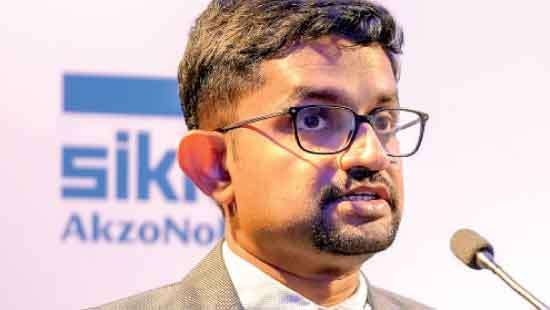
 |
| Shiran Fernando |
By Nishel Fernando
The government must stop treating the automotive industry as a reactionary tool to hit short-term fiscal targets and instead recognise it as a core driver of national industrial development, Ceylon Chamber of Commerce Secretary General and CEO Shiran Fernando said.
Delivering the keynote speech at the Annual General Meeting of the Ceylon Motor Traders Association (CMTA) held in Colombo last Friday, Fernando warned that both the state and industry must abandon the outdated mindset that treats the vehicle market strictly as a source of quick customs collections.
With vehicle imports progressively opening up, he urged the local motor traders to strategically reposition themselves to protect the sector from punitive, ad hoc taxation whenever the state coffers run low.
According to Fernando, the bureaucrats have historically looked at the automotive trade through a narrow fiscal lens, stalling its potential to contribute meaningfully to the country’s broader manufacturing ecosystem.
“The government and bureaucrats sometimes view this sector purely as an easy target when they need more tariff revenue,” Fernando said, adding that the officials often believe they can simply raise the tax rates to hit the revenue targets.
He noted that this recurring tendency to artificially hike the tax rates as a default mechanism to meet the state revenue targets disrupts business operations and damages investor confidence.
To counter this, Fernando asserted that the motor trade must actively transition up the economic value chain to shift the state policy from arbitrary exploitation to mutual partnership. He explained that the current post-ban phase offers a vital window for the local companies to establish a deep industrial footprint rather than remaining simple trading entities.
“The association needs to strategically pivot away from this mindset and demonstrate to the government how it can be a true partner in value creation and overall industrial development,” Fernando stated.
He pointed out that Sri Lanka’s automotive trade is currently in a nascent stage regarding vehicle assembly, component manufacturing and aftermarket services, alongside the early stages of an electric mobility transition and broader skills development. On this last point, Fernando said the industry is well placed to build on the country’s existing vocational training institutions to develop technical talent locally, rather than relying solely on imported expertise.
By aggressively advancing into these technical segments and spearheading the country’s electric mobility journey, Fernando said the sector can prove its structural worth to the national economy. This would compel the state to recognise the automotive industry as a critical pillar for long-term skills development and value creation rather than a mere revenue tap.
Drawing a regional comparison, Fernando pointed to Vietnam’s experience of attracting Samsung as an anchor investor in the 2000s and 2010s, noting that the move now accounts for roughly 30 percent of Vietnam’s total exports. He argued that securing a similar anchor investment, paired with policy consistency and reduced regulatory conflict, could allow a sector like automotive to catalyse a much wider supply chain in Sri Lanka, rather than growing only incrementally.
Beyond expanding its technical footprint, Fernando highlighted that future-proofing the automotive industry against global environmental shifts offers a distinct structural opportunity to attract global funding. He challenged the sector to think beyond simple emission mitigation, such as standard vehicle electrification and focus heavily on long-term climate adaptation.
“For businesses, the focus has always been on mitigation but what industries such as this need to look at is climate adaptation, which is really about future-proofing your businesses against whatever shocks may arise from the climate,” Fernando said.
He explained that while climate adaptation may not show immediate commercial results on a balance sheet, it positions the trade to exploit substantial international funding pools.
Fernando said that by integrating adaptation into their long-term operational plans, the motor traders can pull in fresh capital to build operational resilience.
“If we can, as a country and as sectors and industries, work with multilaterals like the ADB and World Bank to attract some of these finance sources, particularly on adaptation finance, that could become part of our resilience story,” Fernando said.
Fernando concluded that change in the automotive sector was no longer a question of if but how, pointing to the five-year import ban as proof that disruption was already a reality for
the trade.
He said the chamber’s role going forward would be to support the CMTA in pushing for progressive policy reforms and helping close structural gaps that have historically held the industry back from operating as a genuine industrial partner to
the state.