Reply To:
Name - Reply Comment
By Nishel Fernando
|
Prof. Ruwan Ranasinghe |
Sri Lanka’s tourism authorities have reassured that the country remains on track to achieve its target of 2.5 million tourist arrivals for the year, aiming for an ambitious revenue goal of between US $ 3.5 billion and US $ 4 billion.
Despite the global challenges and regional geopolitical tensions that led to airspace closures and flight cancellations earlier, the officials from the Tourism Ministry, Sri Lanka Tourism Development Authority (SLTDA) and Sri Lanka Tourism Promotion Bureau (SLTPB) expressed strong confidence in the sector’s recovery momentum.
The optimistic outlook is backed by an upcoming surge in charter flights from Switzerland, Poland and the CIS countries, including Russia, starting in early July, which is expected to generate around 50,000 tourists per month, alongside a major boost from new commercial flights and the ongoing free visa scheme.
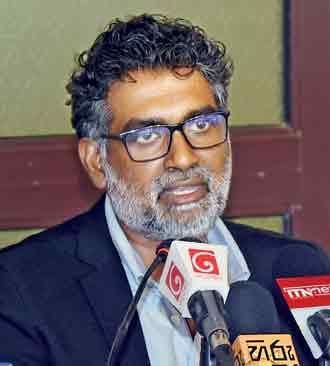
Speaking on the strategic goals, Tourism Deputy Minister Prof. Ruwan Ranasinghe noted that the initial targets were structured to accommodate the shifting global dynamics.
“However, looking at the situation now, we prepared our plans for 2.5 million arrivals in the worst-case scenario, 2.7 million under normal conditions and three million under good conditions. We expect that under normal conditions we will be able to achieve our target of 2.5 million by the end of the year,” Prof. Ranasinghe remarked during a media briefing held in Colombo.
The tourism authorities underscored that maximising economic yields from these arrivals requires a sharp focus on high-spending segments and value-driven tourism rather than just sheer volume.
Highlighting the financial projections, SLTDA and SLTPB Chairman Buddhika Hewawasam stated, “We expect to get an income of between 3.5 and 4 billion under these conditions. That is why I highlighted the importance of tourism value additions, as we see the true value coming from that direction.”
Hewawasam specifically emphasised the vital role of the Indian market, which accounts for 20 to 25 percent of total arrivals, contributing roughly 300,000 tourists out of a 1.2 million base. He noted that the Indian travellers spend an average of over US $ 150 per day—typically ranging between US $ 154 and US $ 157, which sits well above the general tourist average of US $ 148—with an average length of stay spanning five to six days, making them a highly lucrative segment for local operators.
The arrival momentum is expected to accelerate significantly with the introduction of new flight routes and a robust expansion of global seat capacity. Commercial airlines like VietJet and Vietnam Airlines are launching new connections, while Jetstar from Australia and French bee have planned new charter services to link Sri Lanka with the emerging global hubs.
The existing major carriers are also stepping up operations; British Airways is scheduled to recommence its flights to Colombo in September, while Emirates is actively expanding its flight frequencies and upgrading capacities to support the winter influx.
This commercial airline expansion is heavily complemented by the strategic entry of charter flights from Eastern Europe and the CIS region, specifically targeting the high-potential markets like Poland and Russia to secure a steady baseline flow of holidaymakers during the upcoming months.
Furthermore, the ongoing free visa scheme is playing a pivotal role in lowering the entry barriers and attracting a broader demographic of international travellers. Implemented as a six-month pilot programme to evaluate its long-term performance, the scheme is designed to enhance aggregate economic returns, despite the immediate waiver of the visa fees that would otherwise flow directly to the state Treasury. Discussing the rationale behind the policy, Prof. Ranasinghe explained, “With this decision, if the tourism inflow keeps on increasing from those countries, we are planning to, you know, generally for the economy, the inflow of receipts will be greater. So, that was the assumption and this will be monitored after six months and review.”