Reply To:
Name - Reply Comment
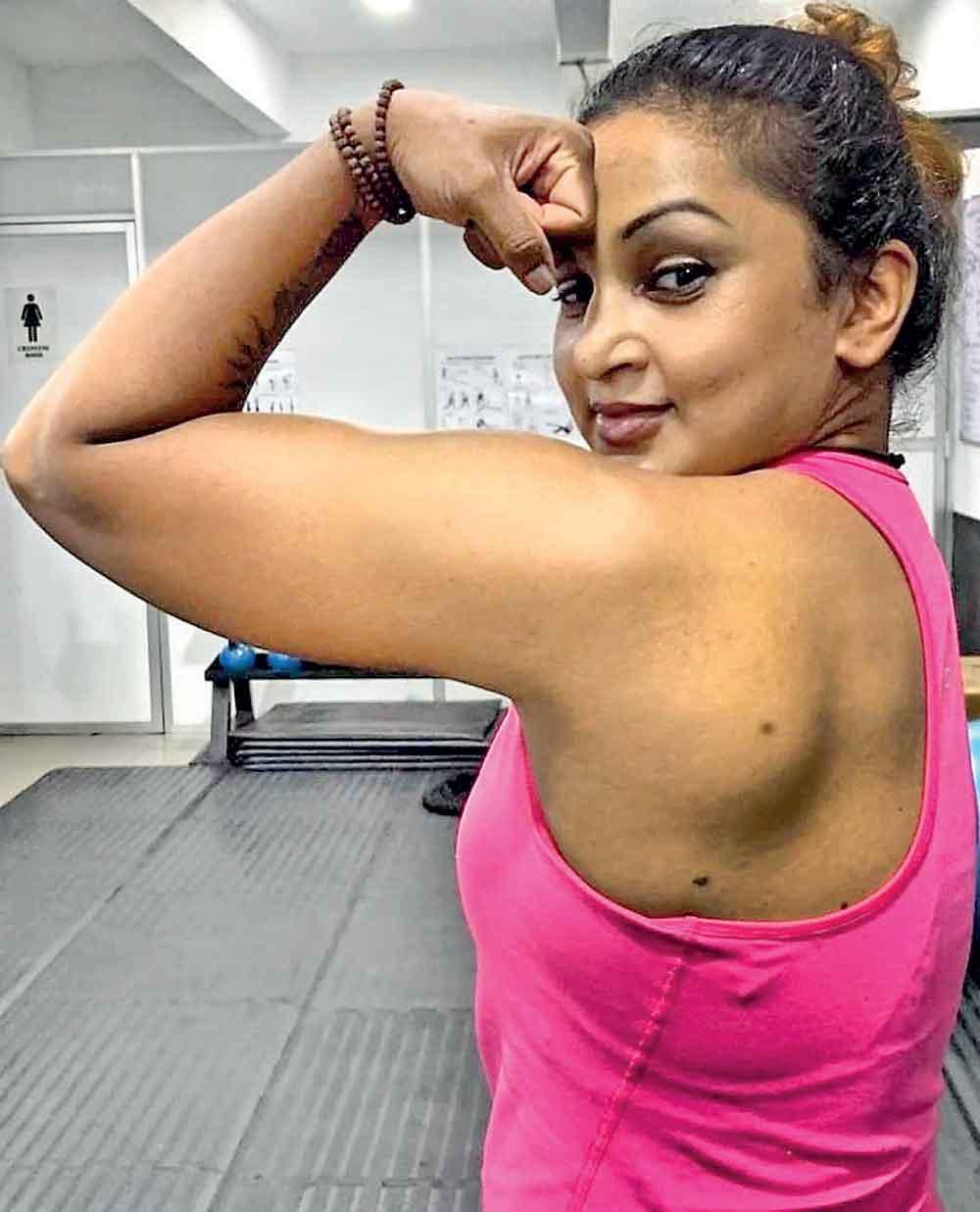
Umaya flexing her muscles
By Allaam Ousman
In a society where women are expected to conform, Umaya Gethmini is choosing to challenge. Armed with grit, grace, and growing academic firepower, she is transforming from a national bodybuilding champion to a beacon of fitness, empowerment, and resilience - all while pursuing a Master’s degree in Exercise and Sports Science and preparing for her PhD.
“I want to show women they can break the mould,” she says with conviction. “You can be strong. You can be smart. You can look different and still be powerful.”
In a family rooted in the banking industry, Umaya’s decision to carve a life through sports was unconventional. “Everyone expected me to follow a corporate path. But deep down, I knew I wanted to be something else. Something more physical, purposeful, and impactful.”
Today, she is not only a professional personal trainer, sports science researcher, and nutritionist, but also the founder of FIT Division, a wellness brand aimed at educating both women and men on the importance of a healthy lifestyle.
Behind her confident smile and chiselled physique lies a battle few saw - one against hormonal issues, obesity, and personal heartbreak.
“After leaving school, I took a job and gave up sport. I became obese and started facing health issues. That’s when I turned to powerlifting - not to compete, but just to feel strong again,” she said.
But one lift led to another. Inspired by international physique athletes, Umaya ventured into competitive bodybuilding, eventually becoming second runner-up in the Mr. Sri Lanka women’s event and a champion in provincial meets.
Her struggles with hormonal imbalance and possible endometriosis symptoms led her down another path - research. Today, she is reading for her Master of Exercise and Sport Science offered by Universidad Azteca (Mexico) through the European City Campus in Sri Lanka. Her thesis, titled “The Influence of Exercise on Endometriosis Symptoms: Exploring Experiences and Practices among Colombo-Based Members of the Endometriosis Support Group in Sri Lanka”, was presented at an international research conference.
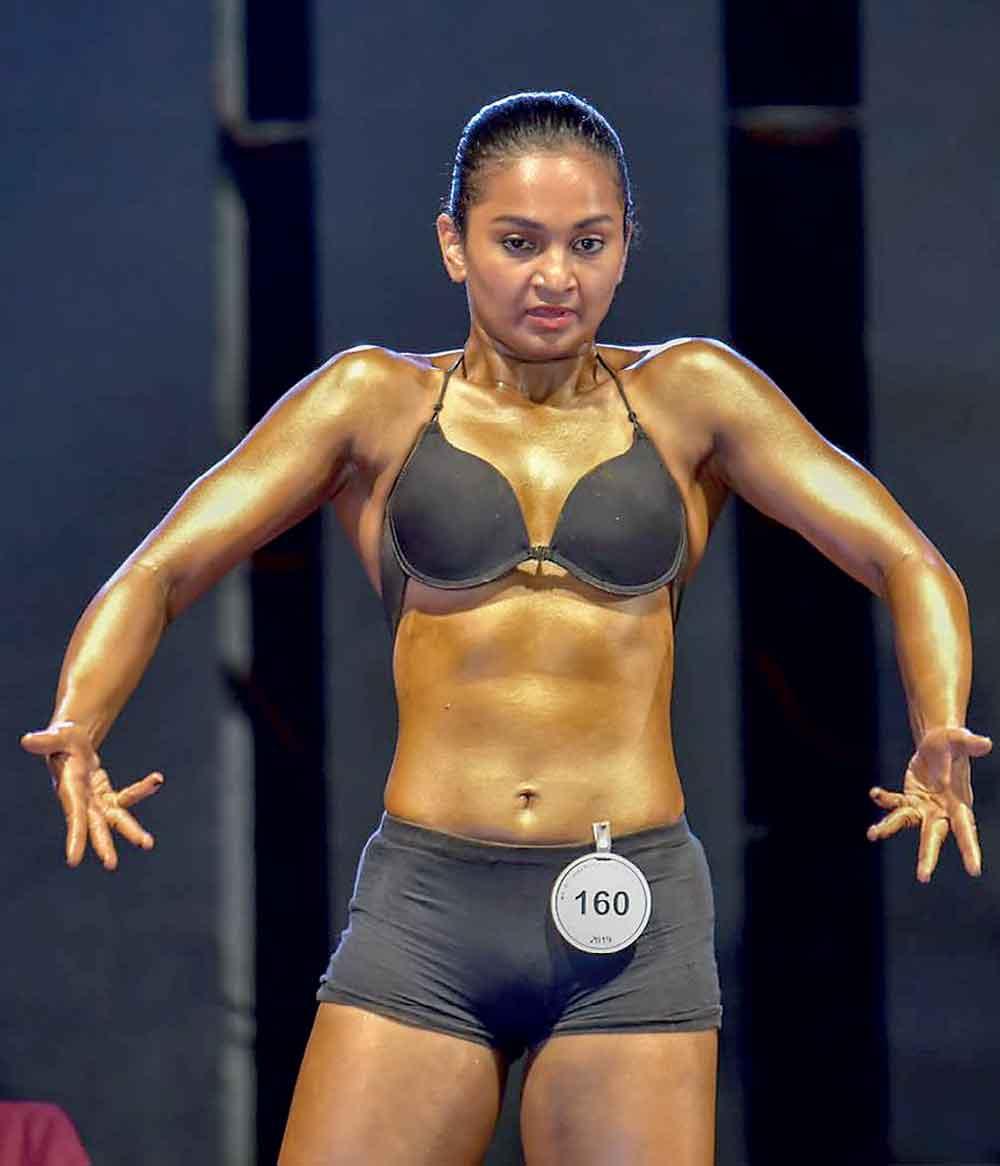
Umaya plans to get back on the stage
She credits her success to a blend of hard work, spiritual grounding, and academic mentorship. “Dr. Piumi Perera was instrumental in shaping my research. The support from Mr. Pradeep (CEO of CSBM), Ms. Janani (Head of Academics), and the entire CSBM team made this journey possible.”
With plans to pursue a Master’s in Sports Science or Exercise Physiology, she is determined to keep learning-and contributing.
“If there’s one thing I’ve learned, it’s this: movement is medicine. Whether you’re an elite athlete or a mother with chronic pain, how you move matters. And with the right guidance, it can transform your health, your confidence, and your life.”
Her research focuses on a condition that is widely misunderstood in Sri Lanka: endometriosis. Characterised by chronic pelvic pain, fatigue, and infertility, the condition affects an estimated 1 in 10 women globally.
“The problem is, many women suffer in silence. They are told it’s ‘just part of being a woman.’ But it’s not. Exercise, when applied mindfully, can significantly improve their quality of life,” she said, referencing interviews with members of the Endometriosis Support Group Sri Lanka for her study.
Participants reported that regular low-impact movement, such as walking, stretching, and resistance training, helped reduce inflammation and ease pain. “This isn’t just anecdotal. There’s growing evidence that exercise can regulate estrogen levels and reduce inflammatory markers-something we must talk more about in women’s health circles.”
“I lived that pain. And I saw how movement, when guided properly, became a tool for healing - not just for me, but for many women.”
“This was never just about a degree. It was about answering a question I had as a coach and as a woman: how does movement truly heal?” she said.
Sport was never just a hobby - it was her foundation. Starting with school-level athletics, she eventually found her calling in powerlifting and bodybuilding, disciplines that combined strength, discipline, and inner focus.
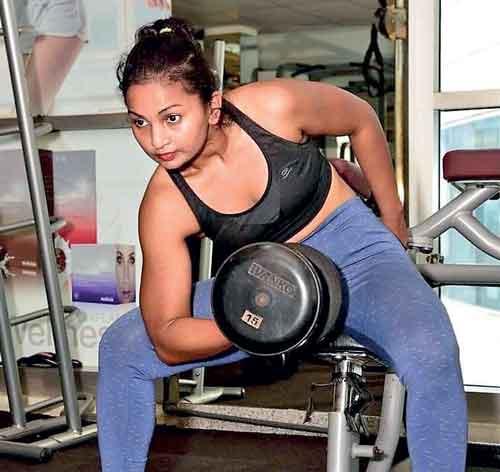
Umaya lifting weights
“I was drawn to powerlifting because it taught me how to anchor myself through adversity. There’s something transformative about feeling physically strong-it spills over into every part of your life.”
Her journey into competitive bodybuilding was inspired by a desire to challenge both social norms and personal limits. “People think women shouldn’t lift heavy or develop muscle. I wanted to prove otherwise-and in doing so, I found not only physical transformation but emotional clarity.”
But the road wasn’t easy. Behind her accomplishments was a long struggle with hormonal imbalances, chronic fatigue, and undiagnosed health conditions. Instead of stepping away, she chose to step deeper into the science.
“I had days where I couldn’t get out of bed - my body felt like it was betraying me. Doctors often dismissed it as stress or overtraining,” she recalled. It was only later that she discovered her symptoms mirrored those of endometriosis and other hormone-related inflammatory issues.
Rather than stay silent, she decided to use her academic journey to explore the connection between exercise and women’s health. Her undergraduate research focussed on real-life stories from women in the Endometriosis Support Group Sri Lanka, exploring how movement helped them manage symptoms such as pain, bloating, and fatigue.
“What we found was consistent: light, structured exercise reduced symptoms, improved mood, and gave them a sense of control. And yet, few medical professionals recommend it as a first line of relief. That’s the gap I want to help close.”
As a sports coach and health advocate, she is driven by a strong belief: sports science must be accessible. “In Sri Lanka, we often separate athletic training from health. But the science of movement-sports physiology, biomechanics, hormone regulation-has life-saving potential, especially for women.”
She wants to build bridges between fitness, education, and medicine. “I’m not here just to make people look fit. I want to make them feel well-from the inside out.”
Her dream? To establish a women-centred wellness and sports performance centre that integrates strength training, hormone-aware coaching, mental wellness programmes, and children’s physical literacy. “I see it as a safe space where girls and women can learn to move confidently, train intelligently, and understand their bodies without fear or shame.”
Alongside her academic work, she coaches a group of children in foundational fitness, instilling not just skills, but values. “Children don’t just need PE classes-they need movement that boosts confidence and emotional resilience. I want to plant those seeds early.”
She believes this early engagement with sport and movement can prevent lifelong health issues and promote strong identities. “Many kids, especially girls, stop being active by their teens. That’s a tragedy. Sport saved me - and it can save them too.”
Though her focus has shifted to research and education, her passion for competitive sport remains strong. She hopes to return to the bodybuilding stage in the near future - this time, equipped not just with muscle, but with the full power of knowledge.
 |
 |
| Balance nutrition diet including protein and right amount of carbohydrates and fibres etc | Time saving easy cooking nutrient rich diet for weight loss and lean gains |
Through FIT Division, Umaya conducts personal coaching sessions, including home visits for adults, special needs children, and individuals dealing with lifestyle diseases such as diabetes and hypertension.
“I’ve helped clients reduce medication, reverse early-stage diabetes, and regain confidence. Fitness is not just about how you look - it’s about how you live.”
As a former athlete who did track and field at Holy Cross College, Gampaha, Umaya believes Sri Lanka needs to embrace sports science at grassroots level.
“We can’t expect world-class athletes if we don’t start training our children right - with the right diet, right form, and long-term planning,” she said. “We need to stop pushing kids into the ‘popular’ sports and instead find what they’re genetically and physically suited for.”
She speaks passionately about muscle fibre analysis, training periodisation, and natural physique development, arguing that science - not just tradition - must lead the next generation of Sri Lankan sport.
After a hiatus due to health and personal challenges, Umaya is training again for competitive bodybuilding - this time, on her own terms.
“I want to come back to the stage next year, naturally - without steroids, with proper planning, and with all the knowledge I’ve gained. I believe muscle maturity is my strength now. I’m stronger, mentally and physically.”
While she continues to coach children and guide others on their wellness journey, she hasn’t given up her own competitive ambitions. “I still want to return to bodybuilding, but this time with a deeper understanding of what’s happening inside. I want to compete smarter, not just harder.”
She plans to undergo a structured comeback, integrating everything she’s learned about hormone cycles, inflammation, and sports nutrition. “This time, I won’t just be stepping on stage as an athlete. I’ll do it as a sports scientist.”
In her words, sports science in Sri Lanka is still “an underused asset.”
“We have talent, especially in school and university athletes, but we lack structured knowledge. Sports science can prevent injuries, prolong careers, and improve performance. We need to integrate it into national programs, coaching education, and even medical curricula.”
She believes the solution lies in collaborative systems. “Why aren’t sports doctors working closely with coaches? Why aren’t fitness coaches being trained in menstrual health or mental wellness? These are questions I want to explore in my future research.”
Despite financial struggles in the past - “even affording protein was hard” - she’s now a successful entrepreneur, supporting herself through coaching and ready to invest in her dream: opening a dedicated wellness and training centre.
“This centre will be about healing. About reversing body age. About making health affordable. And training more trainers - so we can spread this message across the country.”
The eldest of two siblings, Umaya credits her father, D.G. Mahinda, for igniting her sporting passion. “He played rugby and cricket. He believed in me, even when society didn’t.”
Her story, she insists, isn’t about glamour or glory - it’s about grit. “I’ve fallen. I’ve gained weight. I’ve been depressed. But I’ve always found a way to get back up. That’s the spirit I want to pass on.”
Now looking ahead to a PhD, and continuing her mission to merge sports, science, and social transformation, Umaya Gethmini is redefining what it means to be a strong woman in Sri Lanka.
“Women’s pain is real. And so is their strength,” she says with quiet conviction. “Through movement, science, and compassion, we can change lives. I’m just getting started.”
With her unique blend of athleticism, empathy, and academic discipline, Umaya Gethmini represents a new wave of fitness professionals-ones who don’t just train bodies, but transform lives through knowledge and care.