Reply To:
Name - Reply Comment
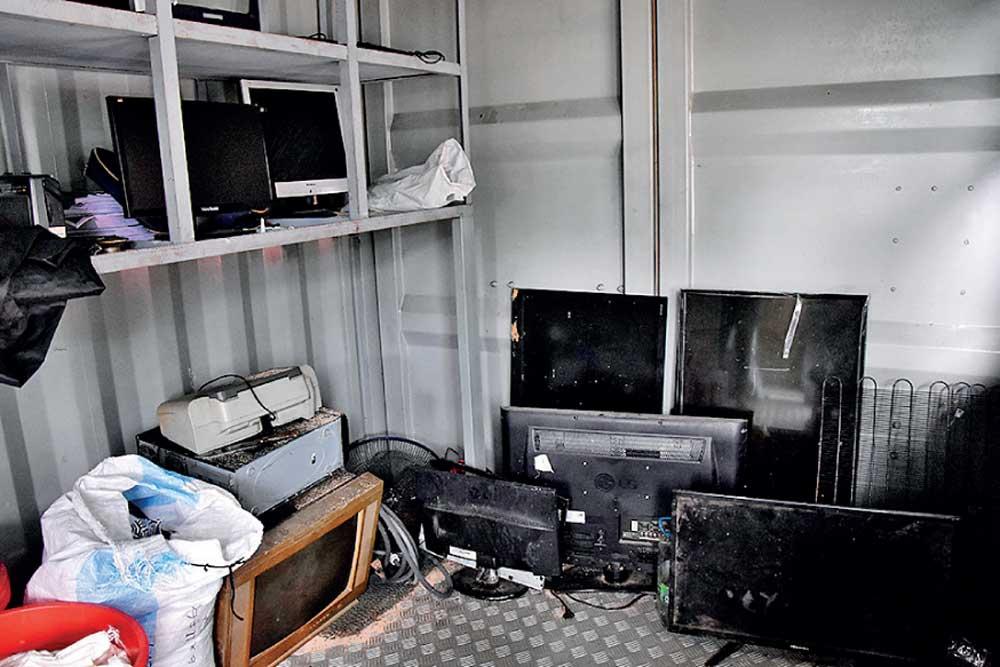
Discarded devices including computers, mobile phones, televisions, and other electronic equipment are piling up at an alarming rate
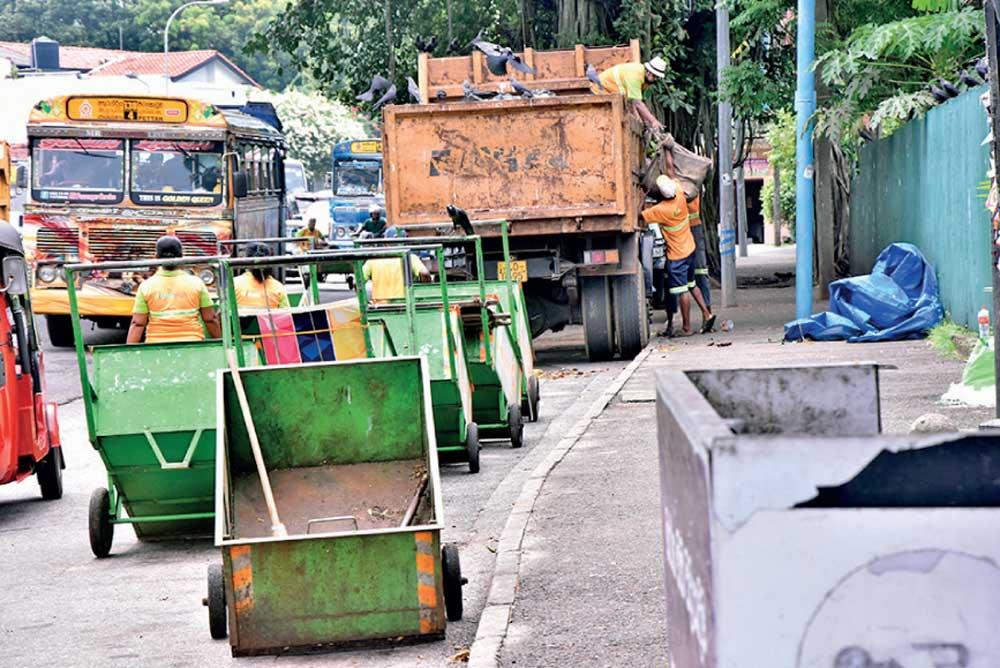
Clean Sri Lanka should revolve around circular economy and a zero-waste policy, starting with individual waste segregation
By Zainab Hussein
Despite its growing impact, the Electronic waste or E-waste problem in Sri Lanka remains largely under-recognised and downplayed. This environmental concern receives less public awareness and government attention when compared to issues such as plastic pollution or deforestation. As Sri Lanka continues to adopt new technologies, discarded devices including computers, mobile phones, televisions, and other electronic equipment are piling up at an alarming rate.
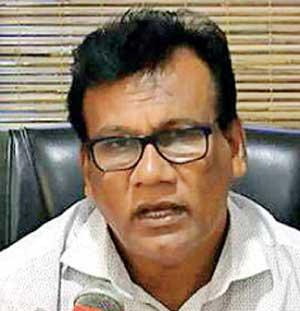 |
| Hemantha Withanage |
In Sri Lanka, approximately 110,000 metric tons of electronic waste are generated annually. This includes discarded batteries, computers, mobile phones, televisions, and other electronic items from both household and industrial sectors. The lack of a proper E-waste collection and recycling system has led to unsafe disposal methods like burning and landfill dumping—turning it into a silent but serious threat to public health and the environment.
When asked about the negative impact of E-waste on the environment, particularly in terms of soil and water pollution, Hemantha Withanage, chairperson of the Centre for Environmental Justice, said “E-waste contains various hazardous chemicals like arsenic, nickel, lead, mercury and cadmium, and when electronics are discarded improperly, these substances seep into the soil, then contaminate water sources, and eventually enter our bodies. Although E-waste may appear to be less compared to other types of solid waste, its environmental impact is severe. E-waste is not limited to just televisions, phones, or computers. Items like batteries, smart watches, and even some toys with circuit boards also fall into this category.”
Lack of proper recycling facilities
According to Withanage, the public in Sri Lanka generally lacks the habit of recycling, largely due to the lack of proper recycling facilities. He also pointed out that even corporate E-waste collection campaigns often fail to follow through with the full recycling process. “For instance, about 15 years ago, Dialog collected around 60 tons of batteries as part of a campaign, but we later learned that they were not properly processed and ended up at a junkyard in Kotahena. Annual E-waste collection initiatives—like those organised on World Environment Day, and other campaigns like E-waste markets, are not enough. These should be continuous, everyday practices since we have a population of around 21 million, but more than 40 million phones in circulation. On average, about 10,000 phones—out of 100,000 electronic devices—become unusable each day, so having a proper collection system in Sri Lanka is crucial.”
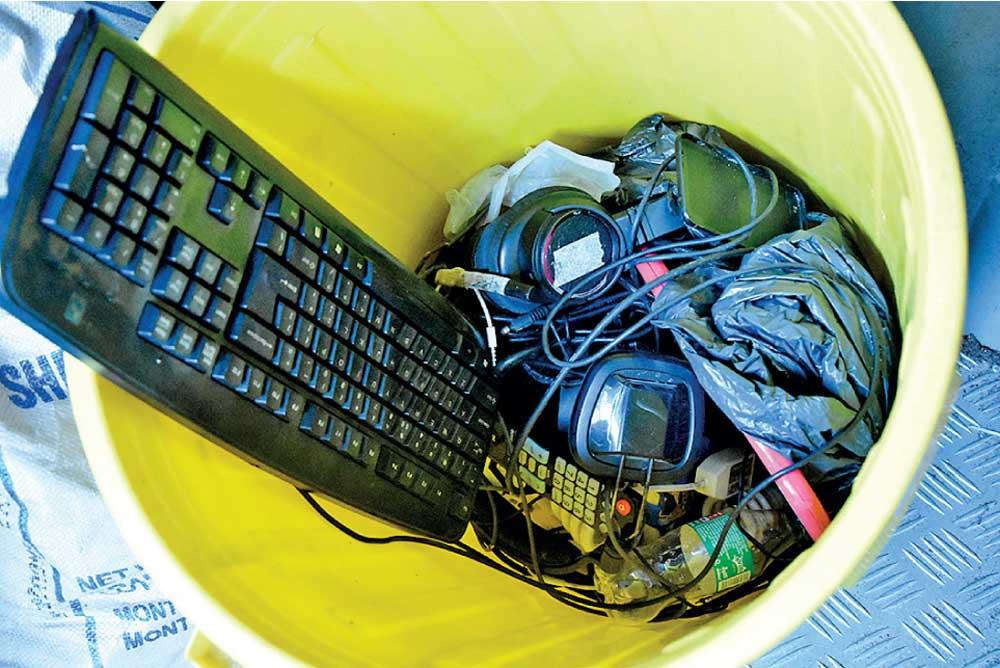
E-waste contains various hazardous chemicals. When discarded improperly, these substances seep into the soil, contaminate water sources, and eventually enter our bodies
Withanage further stated: “The main issue is that the government has not yet implemented an Extended Producer Responsibility (EPR) policy, along with a proper recycling industry. During my visit to several factories in South Korea, I observed how E-waste—including televisions, refrigerators, washing machines, and printers—were carefully separated. Even plastic components were sorted into 13 different types. What stood out most was the enforcement of EPR, where producers are legally obligated to manage the waste generated from their products.
“When a consumer purchases an electronic item, there is an agreement in place for the manufacturer to take it back once it becomes unusable. 40% of recycling costs are covered by the consumer and 60% by the producer. Sri Lanka should adopt a similar approach, currently, none of the manufacturers are held accountable for the waste they generate.
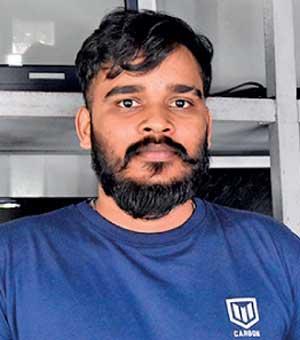 |
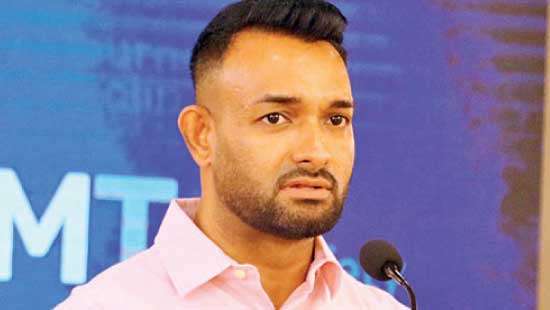
| Viranga Udesh |
“The existing system is purely voluntary, and that will never be effective here. EPR must be part of the business model, it is a simple law that will require a page in the gazette and greatly benefit the environment and the economy. It is estimated that the annual loss for not implementing an EPR law and a proper recycling sector in Sri Lanka, is USD 551 million, along with around 98,000 potential job opportunities.”
As part of the government’s ‘Clean Sri Lanka’ initiative, the Central Environmental Authority (CEA) has proposed a nationwide electronic waste collection programme aimed at improving the collection and recycling of E-waste across the country.
A CEA official stated, “In line with World Environment Day on June 5, we are planning to launch several E-waste collection campaigns. While the Western Province already has a number of ongoing initiatives, our focus this time will likely extend to other regions, particularly the Northern and Sabaragamuwa Provinces. However, we are still in the planning phase, and further details will be announced soon,”.
Many are still unaware of E-waste drop-off centers, where discarded electronic items are collected and sent for recycling. According to an official from the Colombo Municipal Council (CMC): “The CMC does not directly collect e-waste, as our main responsibility under the Municipal Council Ordinance is to manage municipal solid waste. However, we ensure that e-waste is not mixed with regular solid waste, and to promote responsible disposal, we have provided an E-waste collection centre called ‘E-Sampath Piyasa’ located at the Havelock Road –Park Road junction.
“We regularly advise the public to use these facilities, and we also organise ‘Kasala Pola’ (waste markets) to promote waste segregation and reduce open dumping. In Colombo, E-waste is collected and recycled by Cleantech, a registered contractor for E-waste management,” she added.
Daily Mirror visited ‘E-Sampath Piyasa’, a joint initiative by the Solid Waste Management Division of CMC and Waste Management Authority (WP) aiming to provide services for the collection of E-waste that has accumulated in households.
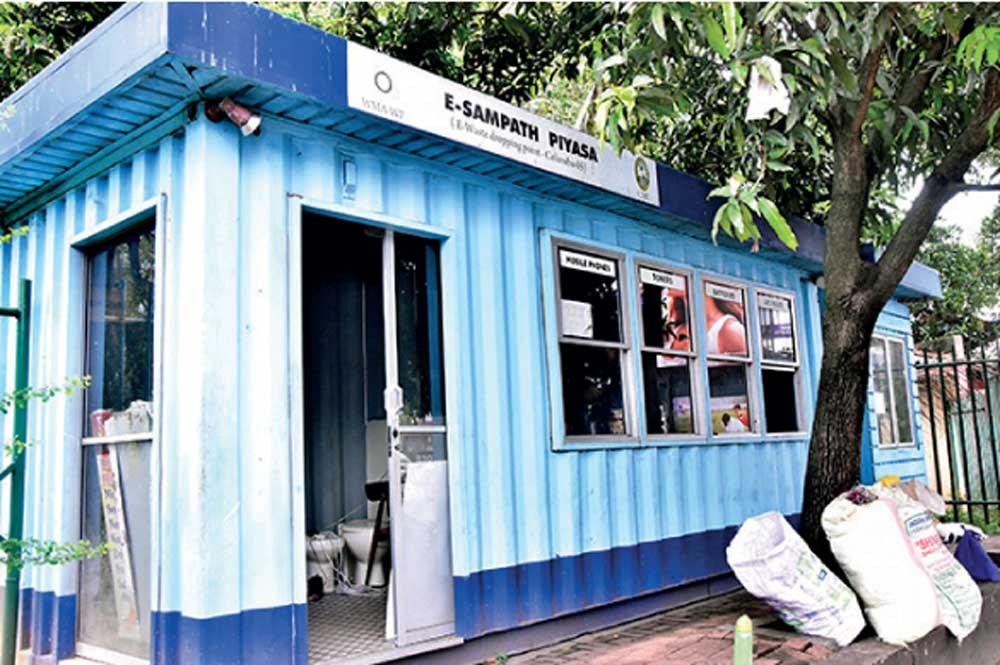
E-waste collection centre ‘E-Sampath Piyasa’ located at the Havelock Road–Park Road junction, Colombo 05.
Pix by Nimalsiri Edirisinghe
Viranga Udesh, who oversees the collections at this centre, explained: “We accept electronic devices that people cannot repair or no longer want. Depending on the condition of the items, we also offer a payment in return. Everything collected here is transported to our main office in Wattala, where the E-waste is recycled. Usually, the collection happens once a week, when a truck is sent to gather the items. We have two other centers in Maradana and Rajagiriya as well. The Rajagiriya center, located beneath the flyover, is well-known, since they not only collect E-waste but also metals and plastics. The public should be aware of this drop-off point too. We operate daily from 6:00 am to 6:00 pm. People are welcome to hand over their old electronics, and we’ll take care of the rest.”
Importance of EPR and shared responsibility
Concluding, Withanage added: “Sri Lanka has around 350 open garbage dumps and over 150 of these are situated in elephant habitats. These animals often die after consuming this waste, yet these issues remain unaddressed. I was hoping this government would bring about change, but it seems the ‘Clean Sri Lanka’ initiative is merely a façade. Beach clean-ups and similar activities offer only temporary solutions. Real progress in ‘Clean Sri Lanka’ must revolve around circular economy and a zero-waste policy, starting with individual waste segregation.” He also expressed concerns over the implementation of EPR regulations, noting: “I don’t see when these regulations will actually be enforced, as there are no clear guidelines yet. I believe, the primary responsibility should lie with the companies to invest in recycling, and the government to create necessary mechanisms. This burden should not fall solely on consumers.”
Withanage lays emphasis on the importance of raising awareness, training personnel, and developing policies and regulations for improved E-waste management in Sri Lanka.