 KELUM BANDARA
Reply To:
Name - Reply Comment
- Sees tangible progress on peace and reconciliation, flags concerns on PTA, PSTA
- There’s a slight uptick in our trade
- There are still some regulatory concerns on our side; that there are some lack of predictability in how things evolve
- We also want to extend our partnerships to new endeavours, industries and issues
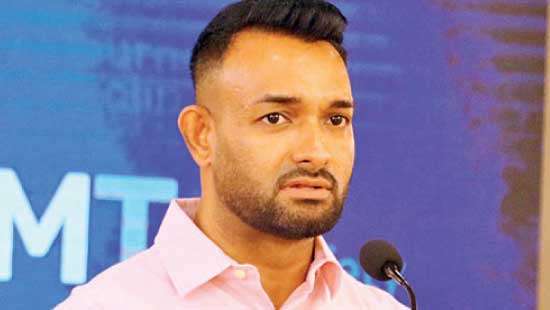
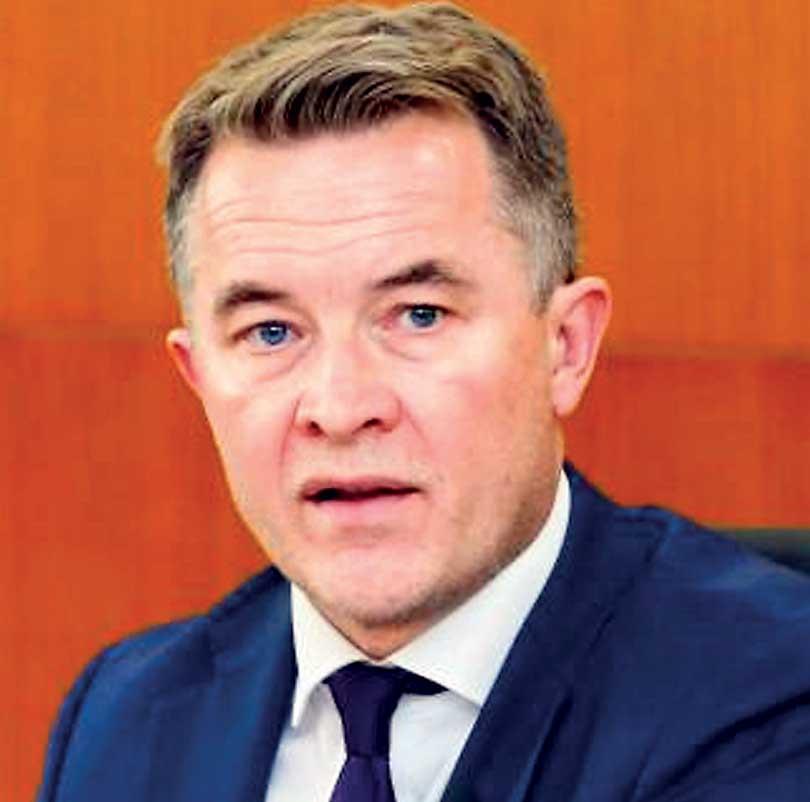
Deputy Foreign Minister of Norway Andreas Motzfeldt Kravik, who was in Sri Lanka, discussed the latest dynamics of bilateral relations with Sri Lanka. In an interview with Daily Mirror, he said Norway looks to enhance ties with Sri Lanka. He was here on the occasion of the 75th anniversary of diplomatic relations. Excerpts:
Q In the wake of the 75th anniversary of diplomatic ties, how do you see the evolution of bilateral relations between Norway and Sri Lanka?
Our starting point is that we have very strong, robust and multifaceted relations with Sri Lanka. We’ve had a long-standing partnership extending over 75 years. We have been involved in development, peace and reconciliation. The development efforts are still ongoing. They are more focused now than in the past. We are prioritising ILO, the UNDP. Obviously, we’re still supporting various civil society organisations. We also want to extend our partnerships to new endeavours, industries and issues.
We are both seafaring nations. We partner and collaborate in fisheries management. Both our commercial communities are looking very hard at how we can overcome the climate crisis, developing new technology, and looking at ways to partner and exchange viewpoints, ideas, and technology in this regard.
One of my roles, as a government representative, is to come here and see how we can be more effective in facilitating relationships between our respective business communities. We have a very strong, robust partnership. It is evolving and being modernized in line with requirements and priorities of the Sri Lankan government at the current moment.
*Sri Lanka is recovering from the economic crisis. In what ways can Norway assist Sri Lanka for growth?
For us, it is important to ensure that we contribute meaningfully to the growth of your economy. My understanding is that Sri Lanka’s economy is currently expanding at around three to four percent annually, which is relatively strong. That is something we would like to help facilitate and further consolidate.
We have observed some of the reform programmes that the government has already put into action, and these will certainly be discussed when I meet with government representatives. We will convey our position clearly.
For the economy to grow further, it is essential to tackle corruption. It is also crucial to implement strong gender equality programmes. Gender equality is a fundamental pillar of achieving robust and inclusive economic growth.
We will also prioritize sectors that can lead to more inclusive growth and where we have experience, such as the blue economy—focusing on how to drive it forward by modernizing and upgrading the sector, and ensuring that the fisheries industry is aligned with international and modern standards.
We will also discuss the importance of having regulatory parameters which are effective and conducive to growth. We have this programme called Norfund, which is investing in various sectors, predominantly in sectors meant to address climate change and offset risk so that companies and investors can allocate capital for the purposes of growing those kinds of industries.
From our vantage point, it’s very important that business operations in Sri Lanka are governed in a way that gives predictability and foreseeability to businessmen here and to investors from abroad. That is something that we will be discussing.
Q Sri Lanka is a victim of IUU fishing. A lot of fishermen from South India poach in Sri Lankan waters. Norway has expertise in tackling IUU fishing. What kind of expertise can Norway extend?
IUU fishing is one of the biggest problems in the fisheries sector- something that needs to be addressed properly. We have spent lots of resources confronting this issue. On the normative side, there is a relatively new treaty called the Poor State Measures Treaty, which we have been instrumental in negotiating and advancing and which has now entered into force. I’m not entirely sure if Sri Lanka is a party to that treaty, but at least that’s something that would be important. That also comes with various kinds of capacity building programmes under the FAO.
From the perspective of normative clarity, it’s very important to have the norms and the necessary legislation in place to ensure that vessels and ships that are engaged in IUU fishing can’t offload their catches in Sri Lankan ports. Then, you have the necessary capabilities in terms of policing your ports and ensuring that it doesn’t happen. There needs to be collaboration also on the technological side.
A problem with IUU fishing is that it’s very difficult to detect because the ocean is large and supervising and monitoring vessels can be difficult. Therefore, international cooperation for the purposes of installing the right technology is extremely important. We have some experience in this regard because we, in our oceans, have had the same problems - issues that we have resolved, or at least try to resolve. We make progress through technological advancement and collaborating with other countries. The Port State Measures Agreement and not least the Fish Stocks Agreement are two treaties that would be important to sign, ratify and implement with diligence.
Q In 2000s, Norway played a role in Sri Lanka’s peace process. Years have rolled by. How do you see Sri Lanka’s reconciliation process at the moment?
Well, I’d say there is real and tangible progress made. It is clear that the elections in 2024 were at least predominantly in line with international and democratic standards. That’s important.
I think that there is real progress being made when it comes to ensuring that minorities are treated with respect and that their human rights are respected by the government.
That’s real progress. But some concerns are still lingering. We have discussed the issue. For instance, there is counterterrorism legislation in place still, which gives too much discretion to the government in terms of utilising that for the purposes of clamping down on activities they might dislike.
We have spoken about land reform. There is potential for more progress, especially in the north and in the east. I think the elections to the provincial councils haven’t transpired. That’s also a challenge. I think there’s still work to be done, but things seem to be going in the right direction. But obviously, these are things that I’m looking forward to raising with government officials in my meetings.
Q Are you referring to the law which is already in place or the one which the government has worked out to be enacted in the future?
Well, I think we have flagged concerns on both of them. I think from our vantage point, the definition of terrorism is overly broad.
I think there is a lack of judicial guarantees in terms of petitioning some of the mandates that come with the legislation for the courts. We have some real concerns around those laws. We fully recognize that states should and have an obligation to protect their own population from terrorism and other kinds of international criminality.
But at the same time, such government activities need to be conducted within the parameters of Human Rights obligations. We find that the authorisations provided to the government through these laws, the current and the proposed, are just too wide.
Q At the 2024 elections, people across the country, including Tamils and Muslims in the North and East, were all voting in one pattern. Most of them voted for the current government. How do you see that electoral pattern cutting across ethnic divisions?
Well, I want to be careful in commenting on the voting patterns of other countries. But generally, I think it is fair to say that it is healthy for any democracy to have a diverse ethnic makeup in terms of who supports various candidates.
If you have a very clear correlation between ethnic groups and political parties or political candidates, that very often leads to sectarianism and lack of reconciliation in society. In general terms, we would think that’s a positive development.
Q How does Norway view Sri Lanka’s strategic position?
I think Sri Lanka is very strategically placed geographically and also for a whole host of other reasons. Obviously, this is an area which is interesting to lots of countries- China, India, the US, Europe. It’s obviously, again, Sri Lanka is situated on the map in a way that attracts lots of interest from other countries.
I think what’s important for Sri Lanka is to use that as leverage in order to grow its economy, to get good deals with other countries, and to ensure that that interest from other countries are translated into solid, robust, and long-term alliances on the security side and in terms of its economics.
It is also important Sri Lanka keeps prioritising adhering to international law and to multilateral institutions such as the UN and the World Trade Organisation and the World Health Organisation. I think for countries such as Sri Lanka and Norway to thrive, we need respect for international law. We need strong, robust, and effective international institutions such as the UN.
Q Now Sri Lanka is seeking investments from different countries. So for development of trade and investment relations between Sri Lanka and Norway, what are the barriers you see?
Obviously there are some generic obstacles that need to be overcome. We come from different parts of the world that can pose some difficulties. There can be language barriers. There can be geographical barriers, and so forth. But, history shows that those can be overcome.
But what’s important is that both our commercial communities feel that they can engage each other on the basis of a transparent and predictable set of rules; that they know what will happen going forward, that there is predictability attached to their business relations, that there is no corruption pertaining to the area in which they are operating, that labour rights are safeguarded, that human rights in general are safeguarded, that women and children are treated with respect and dignity and in line with human rights standards.
These are the requirements that Norwegian businesses should and have a legal obligation to adhere to. If there are problems in Sri Lanka in regards to some of these principles, that will obviously put some limitations as to how much the Norwegian business community can engage their counterparts here in Sri Lanka.
Q Do you have any idea on the current investment climate in the country?
Well, my understanding is that things are going forward. There’s a slight uptick in our trade. I think we should be more ambitious.
My understanding is that there are still some regulatory concerns on our side; that there are some lack of predictability in how things evolve. There can be sudden changes, and sometimes these changes can be implemented in a retroactive fashion, or at least without transitional phases, which is important for businesses. That’s something that will need to be remedied.
At the same time, our business community, and I meet very often back home. They’re very eager to increase their partnerships outside Europe and are looking at markets in India, Sri Lanka and other parts of Asia. There’s lots of potential. Therefore, I think it’s important for us and for my counterparts here in Sri Lanka to do everything we can in order to facilitate a playing field which attracts more business opportunities between our respective commercial enterprises.
Q You have expertise in the blue economy. Sri Lanka has faced a number of issues regarding the entry of foreign research vessels into its waters. In particular, research vessels from countries such as India and China have often become entangled in geopolitical sensitivities when they conduct research activities in Sri Lankan waters. Sri Lanka is now in the process of developing a Standard Operating Procedure (SOP) to regulate such activities. In your view, what kind of framework or approach should Sri Lanka adopt in managing foreign research vessels while balancing scientific cooperation and geopolitical concerns?
I think it’s important also for us to ensure that our universities are collaborating and our learning institutions are closely connected. That is something that we have obviously multiple universities that they want to partner with counterparts in Sri Lanka.
It is a matter of various individuals and institutions getting to know each other and finding ways to collaborate. That is something we are taking very seriously now and trying to facilitate. In order for us to overcome the challenges we are currently grappling with—be it climate change, ensuring healthy oceans, artificial intelligence, or counterterrorism—these issues can only be addressed through strong, robust and resilient partnerships, including with countries in the Global South.
Q Finally, I would like to ask about the current crisis in the Middle East. Oil prices are already rising, and Norway is also an oil-producing country. Is there any possibility for Sri Lanka to cooperate with Norway in this regard?
Regarding the current crisis, the only thing I can say is that what is happening is extremely unfortunate. The tensions involving Iran and the United States have now drawn in a number of countries, and this situation will undoubtedly affect global markets.
This once again shows why the international community needs to move away from a trajectory of increasing violence, conflict and the use of military means between countries. Such an approach is not sustainable. Historically, Norway has prioritised helping countries reconcile their differences, and we will continue to support efforts aimed at peaceful and non-military solutions to conflicts between states.
As for the ongoing hostilities involving Iran, if the situation continues, it is clear that it will have consequences—particularly for the prices of oil and gas. This will affect ordinary people across many markets and many countries, which is extremely unfortunate.
We will do everything we can to help mitigate some of these impacts. However, when several large economies are affected, the repercussions for the global economy are inevitable and largely negative.