31 May 2025 - {{hitsCtrl.values.hits}}
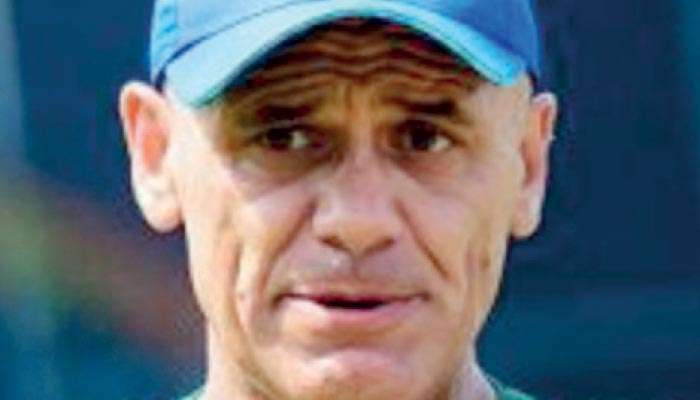
Fouzul Hameed the philanthropist supporting a friend’s foundation
By Allaam Ousman
In a passionate and uncompromising critique of Sri Lanka’s football system, Fouzul Hameed - a respected entrepreneur, philanthropist, supporter of educational matters and lifelong supporter of the sport - has called for sweeping reforms at every level, from grassroots to national and specially school football administration. The former Zahira College football captain and Co-Founder of the AC Milan Academy in Colombo believes the game in Sri Lanka is at breaking point due to chronic mismanagement, lack of professionalism, and a total collapse of structure.
“This message is nothing personal and it’s a wake-up call for Sri Lanka football specially for school football, if we develop a proper school system, definitely we can see at least a decent result in the future,” he declared at the outset of the interview with the Daily Mirror.
After two decades in the trenches of Sri Lankan football, Hameed is issuing a direct and damning verdict: the game has been hijacked by incompetence, corruption, and complete lack of vision.
“For the past 10 to 15 years, I’ve stepped back from supporting football,” Hameed admitted, citing stagnation and a broken pathway for young athletes. “I tell players now: focus on your studies, get a job, and treat football as a hobby. There’s no future, no career, no livelihood in it anymore.”
He laments that what was once the sport of the common man has now become “a rich man’s hobby, controlled by corrupt, self-serving officials who have no clue about football or what it takes to build a national sport.”
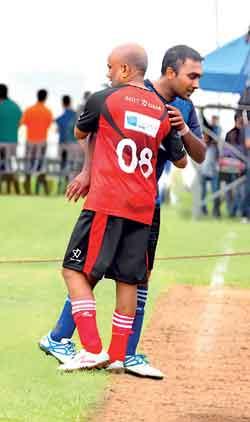 |
| Fouzul Hameed on the playing field with Sri Lanka cricket legend Mahela Jayawardena |
“Football was the poor man’s game. That’s what made it beautiful - it belonged to the streets, to the schools, to the people. Now it’s been hijacked by politics and greed. You need money and influence to even be seen. Talent doesn’t matter anymore,” Hameed observed.
Hameed’s sharpest criticism is directed at the grassroots level - particularly school football. “Our school football structure is practically zero,” he declared. “The people running it often haven’t played the game themselves. There is no structured calendar, no proper coaching programmes, no nurturing of talent. What have we done to the dreams of thousands of kids who kick a ball every day hoping for something bigger? Matches are held at unsafe venues like Pedris Park or Cooray Park, often in extreme heat without proper medical support or security.”
“Just look at how school rugby - or even cricket - is promoted in Sri Lanka. Rugby, in particular, is marketed with such flair and prestige that players feel proud to represent their schools. It has become a glamorous, celebrated sport,” he observed. “In contrast, football finals are played with hardly anyone knowing, and there’s zero media coverage. Why is that? Because the wrong people are running the game - individuals with no vision, no strategy, and no real passion for football.”
“There’s no system. No growth. No development. No ethics. Just people mismanaging and misusing. They come, they ruin, and they go,” he added.
He laments the lack of facilities, professionalism, and respect for players. “Finals are held under the burning sun at 1 p.m, on grassless fields. What kind of system is that? It’s not just mismanaged - it’s disrespectful. There’s no pride, no value attached to being a school footballer.”
“Football is the number one sport in the world. Richest athletes. Biggest crowds. Look at the Newcastle final – can we even dream of that atmosphere here? We can’t even provide a ground for school matches,” he noted.
Hameed, who has managed Cooray Sports Club in Wellawatte for over two decades and played a pivotal role in developing youth football, believes the current custodians of the game are failing the next generation. “You can’t run football the same way you make kothu roti,” he quipped. “There has to be investment, planning, and structure.”
Zahira College, long considered the heartbeat of Sri Lankan school football, has produced nearly 100 national players over the past 50 years. Yet even this legacy is under threat. “We’re seriously considering stepping away,” Hameed warned. “Our football standard is 1,000 times better than what’s being run today, but there’s no healthy competition, no motivation, no system.”
“Why don’t the best schools play football anymore or some schools plays but not given prominent and students don’t want to take it up because there isn’t any glamour or recognition when you’re footballer. The game been destroyed by years of mismanagement. We’re being run by the wrong people,” he noted.
“Even we at Zahira – the kings of football – are thinking of quitting certain tournaments, If it goes on like this, we walk away,” said Hameed, Chairman of the Zahira College Board of Governors, because most of the tournament so badly organised.
“Zahira has produced nearly 100 national players. No school has done more. We have the structure. We know how to run tournaments,” he pointed out. “Give us just one tournament. We’ll show you how it’s done. Give us the grounds. Give us the chance. Or just stay out of the way.”

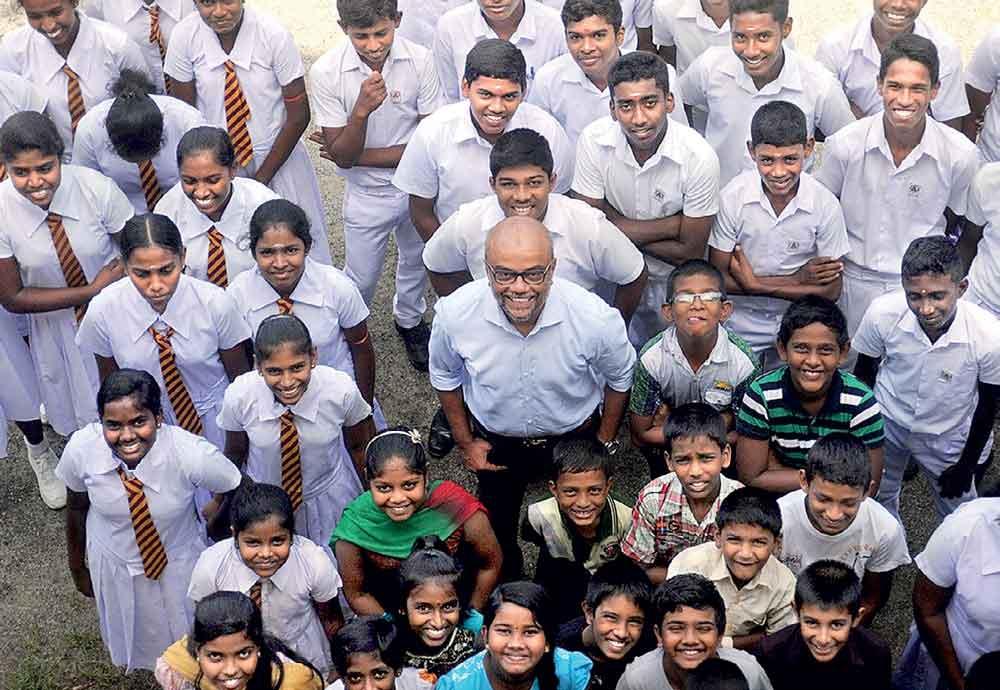
Former Sri Lanka cricketers Chaminda Vaas and Mahela Jayawardena lending their support for a charitable cause initiated by Fouzul Hameed
“There’s no branding, no media, no sponsors, no live coverage. Ruggerites and cricketers are in the papers every day. Footballers? At bus stands.”
“We can rebrand football. Reposition it. We have the passion. But the current people – they’re just addicted to positions. This is enough. It has to stop,” he declared.
He believes the Ministry of Sports must take urgent action. “Take school football out of the hands of these unqualified associations. Give it to those who care, or let us run it. We’ll show you how to organize a real tournament.”
Beyond schools, Hameed blames the decline of national football on poor leadership and misplaced priorities. “Look at whose running football,” he said. “Many have no playing background, no long-term vision. They’re in it for titles and influence - not the game.”
Hameed also questions the integrity of the sport’s leadership. “How many football officials even played the game? What do they know about grassroots struggle, about nurturing raw talent in schools with no boots or proper grounds? They’re too busy playing politics and clinging to positions.”
“Look at the people in charge. Do they have jobs? Do they have any credibility? Are they role models? Most of them are just there to survive. No ethics, no vision,” he quipped.
“This isn’t personal. I’m not attacking anyone. But let’s be honest – football is being run by people who are unfit. They’re not football people. They don’t care about the sport,” he said.
“Other countries have surged past us – Maldives, Bhutan, even Nepal. They’ve gone forward. We’ve gone back,” he lamented. “We need decent people with values. Appoint people with ethics. Sports is about character. Without the right people, you can’t build anything.”
Recent humiliations, like Sri Lanka’s 8-0 loss to India, reflect systemic failure. “That’s the football equivalent of conceding 800 runs in a 50-over cricket match. That’s the level we’ve sunk to,” he said. “You can’t blame the coaches or players. They’re unprepared and unsupported. There are no proper training programmes or facilities.”
Even basic dignity is lacking, he said. “I’ve seen national players wearing fake jerseys. Not by choice - but because they’re underfunded and neglected. It’s a disgrace.”
For Hameed, the solution begins with ethical leadership. “We need to appoint people with values, professionalism, and a genuine love for the sport. Sports builds character - but only if the system is clean.”
He called on the Minister of Sports and the President to cleanse football administration. “Anyone corrupted, unstable, or lacking credibility has no place running a sport. People are joining associations just to survive - not to uplift the game.”
“My humble appeal to the Minister of Sports: take school football out of the current setup. Give it to someone else. Or give it to us. We will do one tournament and show the school association how to market the game. Just assess who is running it now. That’s all I ask,” he pleaded.
“Football has the power to unite this country. We’re not just talking about a sport. This is about identity. Dignity. Hope. You want to build a strong nation? Start with sport. Start with football because every corner of the country they play football but only if the right people are in charge,” he said.
“Back in the day, 10,000 people would turn up for club matches,” Hameed reminisced. “Now, even the national team gets little support because fans don’t relate to it anymore. Local players are invisible.”
He believes that school football is key to rebuilding the game. “Without a strong school system, you can’t build national football. Why do top schools no longer play football or they don’t recognise football as main sports? Why are rugby and cricket taking over every ground?”
As the man behind Hameedias and the pioneer who brought Adidas to Sri Lanka 30 years ago, Hameed’s credibility in both retail and sport is long established. “At one time we were the only store selling original Adidas when the entire country was flooded with fakes,” he recalled. “That’s the kind of integrity we need in football.”
“From clothing to football – we have to go back to values. Authenticity. Discipline. Pride. That’s what I stand for. That’s what the game needs.”
He also runs a programme called ‘Who is a Gentleman’, aiming to instill discipline and ethics in youth through fashion and football. “We don’t just teach them to dress - we teach them to be men of character.”
Despite the frustration, Hameed is not giving up. He wants to be part of the solution. “Give us just one tournament. We’ll show you what real football looks like - proper structure, fair play, and pride. Let us rebrand and reposition Sri Lankan football.”
His vision is clear: “Football can unite communities. It can build character. It’s time to give it back to the people who care. Enough is enough.”
07 Jun 2026 4 hours ago
07 Jun 2026 5 hours ago
07 Jun 2026 8 hours ago
07 Jun 2026 9 hours ago
07 Jun 2026 9 hours ago