16 Oct 2025 - {{hitsCtrl.values.hits}}
 Human Rights Watch (HRW), one of the world’s leading human rights organisations that had been active in Sri Lanka, on Wednesday (October 15) released a report as to how the country’s disruptive economy affected the education system, which was considered as one of the best in the word.
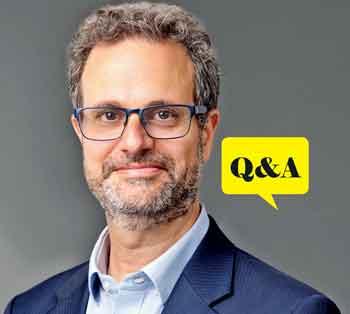
The report described how Sri Lanka’s successive governments have adopted policies that resulted in inadequate revenues contributing not only to Sri Lanka defaulting on its debt, but also to a decades-long decline in public education spending as a share of Gross Domestic Product (GDP) to among the lowest in the world. It also documents the impacts of inadequate funding on children’s right to education. Joining the launch of the report, Interim Executive Director at HRW Federico Borello who visited Sri Lanka spoke to Daily Mirror on Sri Lanka’s past and current situation with regard to the human rights situation. Borello was the Executive Director at the Center for Civilians in Conflict (CIVIC) for nearly a decade. Excerpts:
 Q What is the involvement of Human Rights Watch (HRW) in Sri Lanka over the years?
Human Rights Watch has been involved in Sri Lanka for decades; way before I joined the organisation and lot of our work has been documented; the atrocities and the crimes committed during the civil war and when the civil war ended, pushing for accountability, for justice, for truth on those violations. That’s been the historic engagement of Human Rights Watch with Sri Lanka and of course, we’re still concerned with ongoing violations.
We are launching a report on economic and social rights, so that we are compiling a report on another area that is relatively new to us in Sri Lanka. But the bulk of our (HRW) engagement has been on the violations committed during the conflict.
QSince the war ended in 2009, 16 years have passed, but there has not been a concrete solution to the reconciliation and neither is there any kind of solution to the allegation against Sri Lanka.
It’s true, and that’s why we keep coming back and we keep stressing this. We keep advocating with the government, with the United Nations, with foreign governments, that this hasn’t had a solution. There’s been a lot of commissions formed. It’s unclear what came out of those commissions. There is, of course, an international process in Geneva, as you know. But the hope has been, especially for the families of the people who suffered violations, or most importantly, who remain still disappeared and they have seen no justice at all.
QBut the government has been continuously turning down having international investigations and they have been talking about the local mechanism. So where can we make a compromise?
You know, a local mechanism would be fine if there were the political will and the capacities. It could definitely be a local mechanism with international support.
It doesn’t have to be international, but there needs to be some accountability. The reason the international community is so interested is because nothing is happening in Sri Lanka. If there were proper accountability efforts there wouldn’t be this involvement in Geneva every year at the Human Rights Council.
QSo since 2009, four governments have changed, four Presidents have been appointed. Do you mean there’s no genuineness?
Look, it’s hard to know. What we can only judge is the results, right And before coming back to Colombo, I was up in the North where I met many of the families whose members had disappeared. And we asked this question, did it change anything, these different governments? And they said “no, you know, rhetoric changes. This current government says the right things. We want to do this. It’s been a year. We haven’t seen anything yet. So it’s hard to believe that there is a genuine willingness to do this until we see concrete acts”.
QAs for now we haven’t seen any progress. As for your estimations, where can we reach a solution?
I think the government has been talking about a domestic mechanism, an independent prosecutor which would need to have its own independent investigators. There are international institutions that could support. So that could be definitely an avenue that should be explored, given that it’s coming from the government itself. Another area that is extremely important is to strengthen the capacity to investigate mass graves. As you know, 20 mass graves up to now have been discovered in Sri Lanka. My suspicion is that there will be more in months and years to come. And there’s limited capacity, there’s limited technical capacity that can be built. Again, with international assistance, but it can and should be local capacity.
QThere were several instances when the government had to stop unearthing mass graves because they had financial difficulties. I mean, the country is already in a financial mess.
Yes, every government decides how to allocate resources and what is important and this is not a massive amount for Sri Lanka. But when we’re talking about, I’ll give you an example. There’s DNA kits that would help identify. They’re stuck in Customs because the government wants something like US$5,000 in Customs and the university cannot pay that. That’s not a big amount of money for Sri Lanka’s budget. It’s is a lack of will. So sometimes, in my experience in many places, governments hide behind the lack of resources to justify inaction. If the resource is a problem, accept international assistance. If you don’t want international assistance, put the resources.
As you know, the International Criminal Court has mandates over the wars in Gaza and Ukraine, including at very high levels of government, Prime Minister Netanyahu and President Putin. So Sri Lanka is not singled out in this.
QSri Lanka has a history for human rights violations. It goes back to about 70 years, maybe more. Now, since the end of the war and up to now, do you observe there are more violations or new trends?
So obviously, luckily, we are not witnessing the scale of the violations that we were seeing during the war. But yes, there are ongoing human rights violations, ongoing concerns. And again, during my trip up North, I have been able to speak to families and activists and officials. So there is clearly in this country the abuse of the Prevention of Terrorism Act (PTA), the anti-terrorism law, to target people who are not terrorists and those, including activists.
We heard from the National Commission of Human Rights that they had received this year a very high number of allegations of torture. We are seeing land rights issues for people, especially in the north, where state institutions, including the Department of Archaeology and others, come in and appropriate land for purposes that communities feel was their land.
QDid you meet any government officials during your visit?
Not really. We have tried to make several requests, but unfortunately, as you know, the Prime Minister is not in town, the Minister of Justice is not in town. So we did meet the National Human Rights Commission, which as you know is a government institution, but not part of the Executive. But we have not been able, just because we chose the wrong week, possibly to meet government officials. That said, what we hear from our local partners here in Sri Lanka that it’s extremely difficult for local civil society to meet these government officials. And we strongly encourage any government in the world to meet and listen and learn and have a dialogue with the civil society. You cannot build a strong society based on the rule of law, isolating yourself from civil society.
QHad you got an opportunity to meet the Prime Minister or any government representative, what would have been the major concerns you wanted to discuss?
Those that we have discussed already. First, what is the plan for accountability for these violations? This issue will not simply disappear. The demand for justice will continue to be there, and it’s a right of these people. So that’s definitely one. Not by giving solutions, you need to do this and that. What is your solution? How can we help? It should be a local solution, possibly with international assistance. And secondly the violations happening which I witnessed in the North against communities and the abuse of the Prevention of Terrorism act (PTA) law. These are the concerns that we have.
QCompared to the earlier years, maybe with the past, we see that it is the Western countries that talk about human rights, but now we see that countries like South Africa and Gambia, coming forward against violation of human rights by certain countries. How do you see this trend?
We definitely welcome this trend, you know. We have been saying for decades that human rights are universal and are not just a Western concept. We definitely welcome the involvement and because there has been a retreat from the West, you know, from the United States, but also partly from Europe, it has opened space for countries like South Africa, and Gambia, as you mentioned.
QSri Lanka is also party to several other human rights conventions, like, you know, Disability Rights Convention, also maybe Migrant Rights. How do you see Sri Lanka’s performances in these areas?
Sri Lanka is a signatory to a number of international treaties. In fact, Sri Lanka even called its own law, ICCPR, which is often confusing when all of these things happen.
But, again, what we would like to see is those international standards being respected. We know the level of torture that happens in Sri Lankan custody. I have to tell you that the accounts of torture that I’ve heard from Sri Lanka are hair-raising. They’re disturbing as compared to other places. So, you know, they include sexual abuse in custody. So these are things that must be looked into, especially by a government whose members have also endured human rights violations in the past. This is where they can bring in legislation to have checks on the police.
The accounts of torture that we are being received at the National Human Rights Commission are very high. So the international conventions that Sri Lanka has signed should form the framework for local domestic legislation. But domestic legislation is also not going to be enough unless there is proper enforcement.
QWith so much atrocities happening do you think that Sri Lankan society is so violent?
I don’t think this society is more violent than other societies. I think it’s about impunity. You know, I think violence thrives when there is impunity. I don’t think there is any society that is inherently violent more than others.
QAnd also we have a practice of glorifying the war and having commemorating events every year. Do you think that is the right way to work for reconciliation?
I’m not agreeing with both parties involved in the war. Yeah, so I think that the best way for society to deal with that is the full exposure of the extent of violations that happened during the war.
And then the people of Sri Lanka can decide for themselves how glorious this was or wasn’t. This is propaganda that is allowed to flourish because there is no account of what happened, really.
QAs an international human rights organisation, what are the most disturbing concerns for you worldwide? Is it Gaza?
Certainly it’s the persistent violation and the failure to address violations in so many conflicts. It’s not only Gaza. Gaza, of course, is a big one because the violations were committed with the complicity of Western governments that enabled them. And so that’s particularly concerning given that these are the same governments that we saw at the beginning that sort of built and proposed to the rest of the world a human rights global framework. No response from international community. So that’s definitely one trend. The second trend that we’re very concerned is the rising authoritarianism and with it the suppression of basic liberties including in democracy.
QDon’t you see that some countries which were watch dogs of democracy have been violating the very concept they uphold?
So we’re seeing more and more countries clamp down on freedom of expression, freedom of speech, freedom of association. This is a very, very dangerous trend.
And we have to be careful because it’s a model that has a lot of supporters everywhere and we’re seeing attempts to replicate such a model for example in the United States and Europe.
Those are images that we’re used to seeing in Pinochet’s Chile in the 1970s and now happening in the United States. So there is a regression. At the same time there is a strong movement worldwide of protests.
QWe see throughout Europe and the United States that there’s this homophobia against the migrant and there are completely unsympathetic attitudes towards the migrants. How do you see this trend?
Definitely in the last 20 years we have seen across Europe and the United States a demonization of migrants as the source of all problems. And again, this is a very common tactic of every would-be authoritarian. Someone wants to become an authoritarian.
If you’re suffering, it’s because of migrants, not because the government has been failing you for decades and unfortunately, it’s been largely successful because it became a central issue for voters in Europe and the US. And so I’ve seen European Union policies become terrible over time, worse and worse, both at the individual states level and the EU level, and basically disrespecting the rights of migrants. So this is definitely a concern that we still have at the top of our concerns.
QAs a rights organization could you have done anything to change the mindset of the people on migration issue?
We try. So our role is really to document the violations. So we publish, we keep publishing. This is what has happened. Just yesterday, we published an open call to the Italian Government to not renew an agreement it has with the Libyan authorities, whereby migrants at sea are taken by the Libyans and brought back and tortured.
We’ve documented how they are tortured, how they are detained in horrible conditions and we’re calling on. So we are doing a lot of research and advocacy. We’ve published a report on refugees in Thailand and the conditions that they are going through just a month ago. So this is what we do. We publish this research and then advocate respecting basic rights and it’s a battle.
21 Jul 2026 6 hours ago
21 Jul 2026 6 hours ago
21 Jul 2026 7 hours ago
21 Jul 2026 7 hours ago
21 Jul 2026 9 hours ago