28 Jan 2025 - {{hitsCtrl.values.hits}}
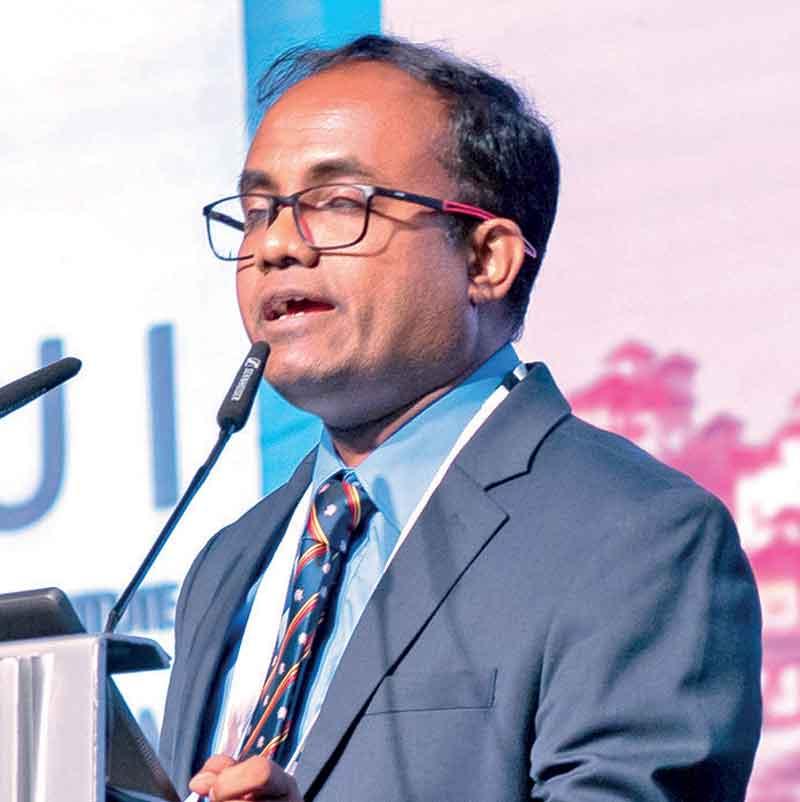
Dr. Himantha Atukorale speaking at the opening ceremony of the APLAR congress in Singapore.
Sri Lanka still lacks a proper database on the prevalence of arthritis
Our country also lacks dedicated geriatric medicine units with consultant geriatricians in our country in contrast to the rapid expansion of the elderly population
In South Asia, native remedies are used as a common healing practice
 With reports indicating the rising prevalence of joint diseases becoming a major public health concern in Sri Lanka, a leading Rheumatologist expressed his thoughts regarding the increase in such diseases among the elderly and those who are susceptible to them. Dr. Himantha Atukorale is a Consultant in Rheumatology and Rehabilitation at the Ministry of Health and Convener of the Young Rheumatology fraction of the Asia Pacific League of Associations for Rheumatology (APLAR). During an interview with Daily Mirror, he underscored the unique challenges and opportunities in Rheumatology care across Asia, highlighting regional diseases, the need for tailored medical guidelines and the importance of collaborative research to address this rising concern.

 Rheumatology diseases prevalent in Asia can be different compared to the West. What are some of the diseases that are prevalent in Asia but rare elsewhere?
“Asian countries are home to a number of tropical diseases. Some of these diseases are transmitted through a vector like in the case of Chikungunya fever where mosquitoes spread the illness. Recently, with the surge of Chikungunya patients in Sri Lanka, some ended up with severe joint arthritis. Tuberculosis is another example of a disease that can spread to the bones and cause joint diseases. The tropical weather has a role to play in the spread of these diseases as well”.
Economic and cultural barriers often affect access to advanced Rheumatology care in some Asian countries. What strategies can be used to improve awareness and early diagnosis of Rheumatic diseases, particularly in resource-poor settings?
“I did a survey during the COVID outbreak on the health-seeking behaviour of patients with arthritic conditions. The results proved that despite barriers such as economic constraints, lack of transport and fear of contracting COVID, the patients were keen to continue their usual Rheumatology medications.
We carried out a different research project on geographical barriers faced by arthritis patients when visiting hospitals. Despite mobility issues, the patients made it a point to continue their health checkups. In both these studies, I noted that even our rural patients were keen on learning about their diseases, be it through printed material, direct communication by healthcare staff or audio-visual methods. This enthusiasm to learn about their rheumatological ailments is encouraging.
Social media is a powerful tool in delivering early awareness of Rheumatological diseases and patient self-management strategies till the doctors examine them. A certain proportion of our Rheumatological patients who do not have knowledge in using smart devices can be helped by their children or grandchildren to watch patient education material. This is indeed a low-cost method in improving awareness”.
You’ve previously highlighted the over-reliance on Western research and its limitations in the Asian context. Could you elaborate on why Western guidelines may not fully address regional needs?
“Most joint disease types are categorised according to their presence in certain parts of the world and the severity. Some diseases are seen more in the West and some are noticeably severe among certain races in those countries. The reasons for this may be multifactorial and include genetic causes, dietary habits and weather.
For example, the joint disease called Gout caused by an increase in uric acid sedimentation within joints is common in the West but is rare in Sri Lanka.
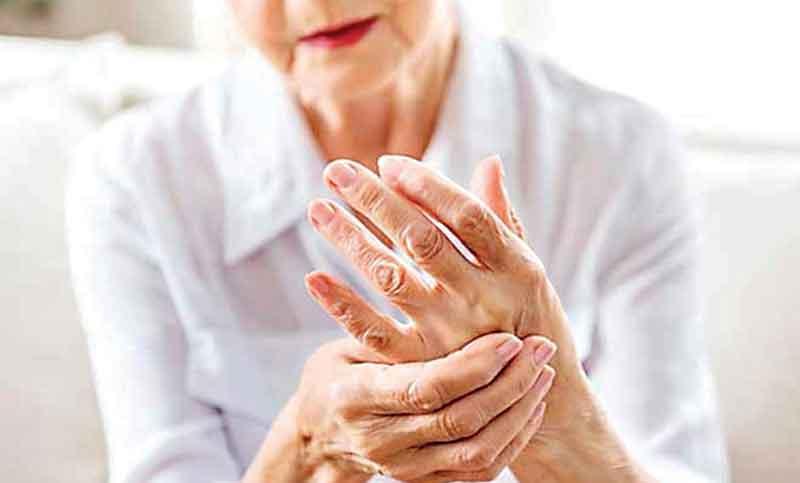
Rise in joint diseases among the elderly population of Sri Lanka that requires urgent attention.
For any disease, modern medicine heavily relies on research. If a certain country does research on how a particular type of medicine benefits its population, the validity of that medicine may not be globally applicable. How the body tolerates medicine differs from one patient to the next and displays a huge variation across the world.
Therefore, western guidelines on treating joint diseases are suitable as baseline recommendations for treating patients. But beyond this, what we require is more details on how these guidelines apply to our local population”.
What is the importance of tailored medical guidelines for Asia and how can we create our own research to better address the unique needs of the population here?
“Firstly, we need to create research to identify which joint diseases are common in Sri Lanka and to what extent they are seen geographically. Sri Lanka still lacks a proper database on the prevalence of arthritis. Unfortunately, the ongoing nationwide census did not incorporate arthritis in their questionnaire.
Once we identify the subtypes of arthritis and their prevalence, we can prioritise which diseases need to be intervened early. In Rheumatology, diseases that fall under the category of inflammatory arthritis need early attention. Local guidelines can be prepared to suit our own requirements. Without data on Sri Lankan diseases, we cannot move forward. The Rheumatology consultants in Sri Lanka are planning to focus more on research this year”.
You recently visited India and Pakistan as part of your role at APLAR. What were some of the key takeaways from those trips, and how did they shape your view on regional collaboration in Rheumatology?
“As the Convener of the Young Rheumatology fraction of the APLAR, I represented our membership during these academic gatherings. The South Asian Rheumatology Fraternity is keen to share their opinions and research findings. They are also interested in collaborative research. Since there is ample evidence of similar joint disease patterns within the region, we have to collaborate in formulating guidelines on disease management.
We also have to understand that the majority of the drugs that are used for not just rheumatology, but for any medical condition, are produced in South Asia. The term ‘pharmacokinetics’ describes how any drug is absorbed and becomes available within the body. The term ‘pharmacodynamics’ refers to the effects of drugs in the body and the mechanism of their action. Pharmacokinetics and pharmacodynamics of rheumatology drugs are thought to be similar within the South Asian population. This is an avenue that is yet to be explored.
During these tours, I learnt various patient behavioural patterns in drug compliance, their attitudes towards illnesses and even traditional methods used in healing arthritis types. Native remedies are used by a majority and some of these common healing practices are used across South Asia”.
How do you see cross-border collaboration influencing the future of Rheumatology research and practice in the Asia-Pacific region?
“We are in the process of sharing research findings and discussing some common approaches to treat arthritis. As I previously mentioned, the causes for the onset of arthritis and prevalence in gender, and age categories are very much similar across the Asia Pacific. Hence, cross-border collaboration is a vital step.
There are established treatment guidelines made by experts from the region that we currently use in Sri Lanka. These were prepared by the APLAR and I am happy to say that some of these guidelines include feedback from Sri Lankan Rheumatology experts too”.
What are the challenges in uniting Rheumatologists across diverse cultures and healthcare systems?
“One issue that requires attention is the awareness about the APLAR organisation among emerging Rheumatologists. Some of them in the region are not aware of the benefits that they attain by joining this organisation.
Over 70 languages are spoken across the Asia Pacific, and although medicine is taught to doctors in a few languages like English, Mandarin etc. the language that is understood by patients or even the language that is used in patient education differs from each country.
When applying a set of treatment guidelines to a diverse population, cultural barriers and traditional beliefs also matter. The myth that arthritic diseases do not have a solution needs to be eradicated.”
You mentioned initiating a discussion on Geriatric Rheumatology within APLAR, to address joint diseases among the elderly. How do you see this speciality evolving in Sri Lanka and other parts of the Asia Pacific region?
“A geriatric person is anyone who is aged 65 years and above. Asia Pacific region has one of the fastest-growing geriatric populations globally. Arthritis and problems in mobility are among the key issues that geriatric patients face. Those with joint diseases are more susceptible to falls, fractures and disability.
In 2022 at the APLAR annual congress, I proposed and implemented an inclusive discussion on ‘Rheumatology in the elderly’ not just for Sri Lanka but for the whole of Asia Pacific. Globally, geriatric medicine is still evolving. With this background, I firmly believe that geriatric rheumatology deserves greater prominence.
Within the Sri Lankan health system, addressing geriatric issues is unfortunately progressing very slowly. Even now, we do not have dedicated geriatric medicine units with consultant geriatricians in our country in contrast to the rapid expansion of the elderly population. We are yet to establish such units within our healthcare system”.
In what ways do you believe your role within APLAR could directly benefit Sri Lanka’s Rheumatology landscape?
“The APLAR organisation has numerous grants that are offered to our Rheumatology consultant trainees. I have successfully created awareness among our trainees about these grants. Over 30 such grants were utilised recently by our Sri Lankan trainees to attend Rheumatology seminars abroad. Once our Sri Lankan Rheumatologists are equipped with state-of-the-art knowledge in tackling joint diseases, the Sri Lankan population will invariably benefit.
APLAR also functions as a platform for information exchange. We share ideas on how patients receive quality care within clinics or wards. Most of the internationally recognised patient management systems can be implemented within our healthcare system at a low cost. I have been successful in introducing some of these systems into the current Sri Lankan healthcare system as well. Moreover, I have plans to implement Rheumatology nursing training in Sri Lanka. I carried out and published a survey among nurses who worked in the southern province where opinion was sought on how feasible Rheumatology nursing would be. The results were astounding as most of our nurses were keen on receiving this speciality nursing training. APLAR has an established Rheumatology nursing training programme which we can utilise for our nurses”.
Can you share any insights on the importance of medical leadership within the context of Rheumatology in Asia?
“Although not a novel concept, medical leadership is yet to emerge as a speciality within the Rheumatology fraternity in the Asia Pacific. Leadership in the health sector is not merely about achieving a position of authority but about inspiring, guiding and influencing healthcare teams, policies and practices to achieve better results.
In my recent visit to Pakistan, I conducted a lecture on how medical leadership transforms the practice of young Rheumatologists. I firmly believe that emerging Rheumatologists should cultivate both leadership skills and a strong foundation in medical knowledge to transform and elevate healthcare systems to new heights”.
21 Jul 2026 4 hours ago
21 Jul 2026 5 hours ago
21 Jul 2026 6 hours ago
21 Jul 2026 6 hours ago
21 Jul 2026 7 hours ago