15 Jul 2016 - {{hitsCtrl.values.hits}}
 The Chilcot Report or the report prepared by Sir John Chilcot on the United Kingdom’s involvement in the US led 2003 Iraq war and the lessons to be learnt from it failed to shake the conscience of the international community by its apparent damning revelations about how former British Prime Minister Tony Blair had lied to his nation as well as the world and his government’s violations of international laws.
The reason is that though the committee took seven years for the investigation into the British Government’s involvement in the 2003 Iraq war and for the publication of the report, its “revelations” had been in the public domain during the war itself and therefore had been well known. It is nothing but an attempt by the UK to absolve itself before the world from its criminal decisions and activities against Iraq.
For instance, the report says that intelligence had “not established beyond doubt” that Saddam Hussein had continued to produce chemical and biological weapons. This was a well known fact in the light of searches made by the international weapons inspectors even in the Presidential house in Baghdad before the Iraq war. According to a summary of the findings of the report by the BBC “the UK’s actions undermined the authority of the United Nations Security Council: The UN’s charter puts responsibility for the maintenance of peace and security in the Security Council. The UK government was claiming to act on behalf of the international community ‘to uphold the Security Council’. But it did not have a majority supporting its actions.” But who did not know this?
The Chilcot Report, as expected has been British centric; the war in fact waged for oil had devastated Iraq and its ancient civilization, created chaos throughout the Middle East. Though the report had referred to the death of 150,000 Iraqis during the war another half a million Iraqi children had died due to the sanctions imposed on Saddam Hussein’s regime by the Western world before the said war. Many culturally valued places in Iraq had been destroyed and the famous Baghdad Museum had been looted.
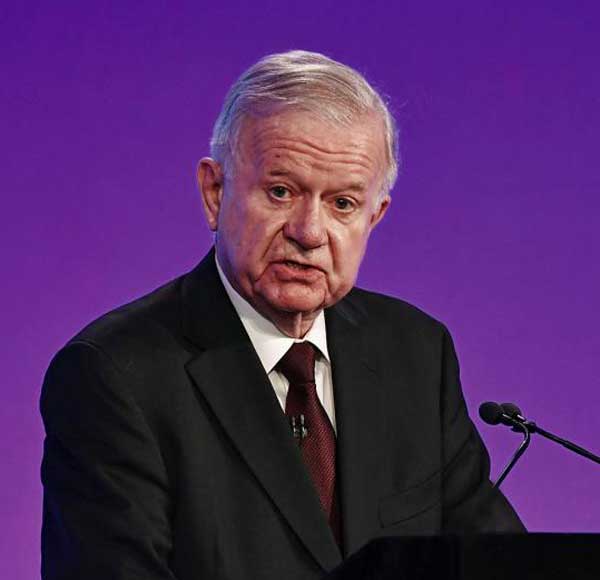
Sir John Chilcot
The Amnesty International in its response to the Chilcot Report had this to say; “Tragically, our fears about the safety of the civilian population were well-founded. Thousands of civilians were killed and injured, including in unlawful attacks; millions of people were forced from their homes; and the whole country was thrown into chaos as the occupation forces failed to fulfil their obligation to maintain security.
“While the Chilcot Report did not strictly focus on human rights, any meaningful assessment of the US-led invasion of Iraq and its aftermath cannot ignore the devastating human rights legacy it has left for millions of Iraqis. The UK and US governments cynically used Saddam Hussein’s appalling human rights record – as documented in Amnesty International reports – to help build public support for going to war. Their conduct during the occupation soon laid bare their hypocrisy in exploiting human rights rhetoric.
“In fact, the subsequent occupation was characterized by widespread human rights violations. Thirteen years on, the invasion’s aftermath has become synonymous with shocking images of torture of detainees at Abu Ghraib, the killing of Baha Mousa in UK custody, spiralling sectarian violence and suicide bombings that have claimed tens of thousands more lives.”
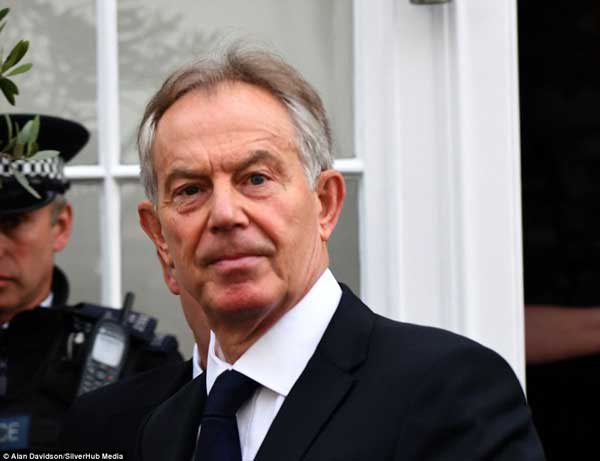 Tony Blair
The question remains as to what the use of the report is. What is the point of admitting after a long drawn probe what the whole world said during the war? Are the British leaders going to apologize to the Iraqi people for the devastation of Iraq and its culturally important sites? Are they going to refrain from helping such illegal wars and occupations in other countries such as the one waged by the Israelis the Palestine? Even if they apologized to the Iraqi people, they cannot reverse the situation.
There have been so many instances where the invaders had apologized to the countries they had invaded, sometimes after being pressurized or sometimes long after they had fully gained the fruits of the invasion. But they had been meaningless as the situation could not be reversed to the benefit of the victim country or the people.
The apology by the Japanese government to the people of Burma, China and South Korea for the atrocities meted out to the people of those countries, especially for detaining of Korean women as “ comfort women” for Japanese soldiers during the World War II, the apology extended by Queen Elizabeth to the Maori people in New Zealand for the injustices suffered by those people whose lands were confiscated following a treaty signed by her predecessors and US President Barak Obama’s apology to native Americans were cases in point.
Since the unconditional surrender of the Empire of Japan was formally confirmed by the acceptance by Japan the terms of the Potsdam Declaration in 1945, the Japanese government has expressed its remorse and apology more than 50 times to the people of Burma, China and South Korea for its atrocities meted out to those people during World War II. However, it was only in 1992 that the Japanese government had apologized to the Korean people for the issue of “wartime comfort women”.
However, the apology by the Japanese government to the Korean people had always been marred by controversy, with some Japanese leaders retracting their apology later and a section of South Korean people claiming that Japan had never apologised for its colonial rule while some others accusing Japan for not apologising sufficiently. Former Japanese Prime Minister Shinzo Abe who apologised to the Korean people in 2006 had denied in a newspaper article that the Imperial Japanese military had forced comfort women into sexual slavery during World War II.
Finally in last December, more than 70 years after the end of World War II, during Abe’s premiership South Korea and Japan reached a landmark agreement on the comfort women issue which both sides considered to be a “final and irreversible resolution” under which Japan made an apology and promised an $ 8.3 million payment that would provide care for the women.
In 1995, the Queen had agreed, in effect, to apologise to the Maori people in New Zealand by personally giving the royal assent to a New Zealand Act of Parliament explicitly acknowledging the injustices suffered by the Maori tribe in New Zealand whose lands were confiscated following a treaty signed by her predecessors.
Then on December 19, 2009, US President Obama signed off on the Native American Apology resolution as part of a Defense Appropriation Bill “for the many instances of violence, maltreatment, neglect inflicted on native people”. However, the resolution also included a disclaimer saying that nothing in it authorises or supports any legal claims against the United States, and the resolution does not settle any claims.
Also Obama had visited Hiroshima; the site of the world’s first atomic bomb attack by American forces at the end of the World War II in May this year and had sympathised with the victims of the attack, But he did not apologise to the victims.Hence, many of these international apologies and expression of sympathies seem to be halfhearted or of no use, since the invaders had gained the total advantage of the invasion while the majority of the victims had either perished in the invasion or in the aftermath, leaving survivors destitute.
30 Jun 2026 53 minute ago
30 Jun 2026 4 hours ago
30 Jun 2026 5 hours ago
29 Jun 2026 29 Jun 2026
29 Jun 2026 29 Jun 2026