22 Jul 2025 - {{hitsCtrl.values.hits}}
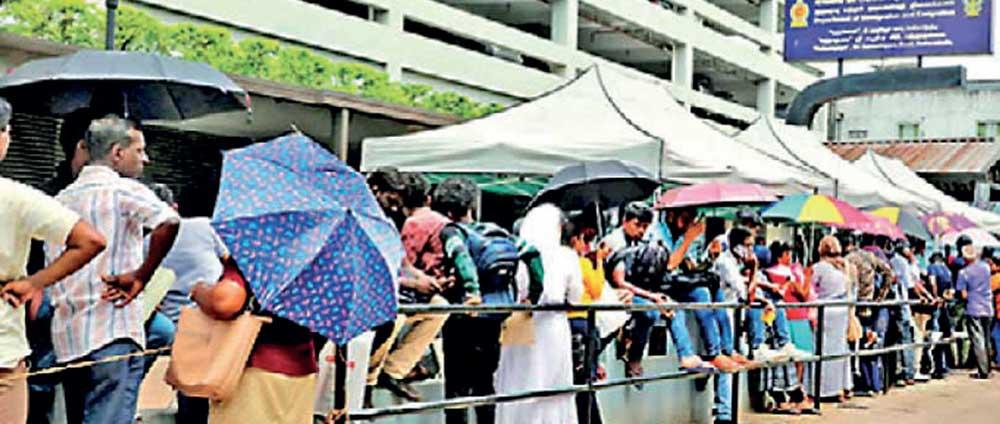 The Skilled workforce is leaving Sri Lanka due to disillusionment with local opportunities, lack of recognition, political interference, and economic instability that hinder building a secure future
 “The colonial administrator Leonard Woolf, in his foundational text Villagein the Jungle penned a disquieting insight into Sri Lankan monarchs of old, an insight that resonates with chilling, almost prophetic, accuracy in our current political climate.” Woolf noted, with a distinct undertone of regret and perhaps exasperation, that these kings often preferred “idiots and buffoons” to intellectuals. Their courts, he implied, were populated by those who would flatter and acquiesce, rather than challenge or innovate. Today, as we grapple with unprecedented crises and a pervasive sense of national stagnation, one cannot help but ask: has anything truly changed? Are we, as a nation, still trapped in a cycle where loyalty, personal relationships, and perceived docility trump merit, expertise, and intellectual prowess in the corridors of power?
 The Present Administration, Similar to its Forerunners
The uncomfortable truth for many Sri Lankans is that this historical predilection for the pliable over the proficient appears alive and well. The present administration, much like its predecessors, faces widespread criticism for what is perceived as a systematic sidelining of qualified professionals and intellectuals in favour of friends, family, and political allies. While it is natural for leaders to appoint individuals they trust, the sheer scale and consistency of these appointments, often to critical national roles, raise serious questions about the nation’s commitment to competence. We see individuals with limited or no experience in public administration, economics, security or complex policy-making entrusted with portfolios that dictate the very trajectory of our economy, our social and individual security, our health system, and our social fabric. The consequences of such appointments are not abstract; they manifest as policy missteps, inefficient governance, and a palpable erosion of public faith in institutions. When crucial decisions impacting millions are made by individuals ill-equipped for the task, the entire nation pays the price.
Public Disillusionment Mounts as Sri Lanka’s Promises Unfulfilled
Sri Lanka is at a critical juncture, facing widespread public disillusionment as the current government struggles to deliver on its pre-election pledges. Recent local government election results serve as a stark indicator of diminishing public support, signalling a growing chasm between the administration’s performance and public expectations.
The economic landscape remains grim, characterised by a notable absence of Foreign Direct Investment (FDI) and sluggish local capital infusion. Consequently, job creation has stalled, exacerbating an already challenging situation that appears to worsen daily. A concerning trend of filling high-ranking government positions through political affiliations, in stark contrast to electoral manifestos, further undermines public trust and poses a significant threat to economic stability.
With national security, the economy, and societal stability seemingly adrift, public frustration is palpable and intensifying. It is imperative for the government to undertake a rigorous and honest assessment of this escalating crisis. Failure to address these deep-seated grievances proactively could lead to widespread public unrest, jeopardising the nation’s fragile peace and hindering any prospects of sustainable recovery.
Tight Knit Gajaba Circle Ruined Gotabaya Rajapaksa
Perhaps the most stark and painful recent illustration of this phenomenon unfolded during the presidency of Gotabaya Rajapaksa. Having ascended to power on a wave of public yearning for stability and decisive leadership, particularly in the aftermath of the Easter Sunday attacks, the former President’s reliance on a tight-knit circle, particularly those from his military background in the Gajaba Regiment, became a defining feature of his administration. There was a profound belief, perhaps an overestimation of General Shavendra Silva and excessive trust and blind faith of General Kamal Gunarathna, in the capacity of military discipline and loyalty to translate directly into effective civilian governance. High-ranking positions, from key ministerial roles to heads of vital state-owned enterprises, were often handed to individuals whose primary qualification appeared to be their association with the President or their military service.
The intention may have been noble – to bring order and efficiency. However, the reality proved far more complex and ultimately catastrophic. When the nation plunged into its deepest economic crisis, characterised by crippling shortages, hyperinflation, and a complete breakdown of essential services, the very individuals entrusted with navigating these turbulent waters proved to be woefully out of their depth. Economic policy, foreign relations, and public communication often lacked coherence, foresight, or a nuanced understanding of the intricate web of global finance and governance. The crisis, multifaceted and unprecedented, demanded sophisticated economic modelling, diplomatic acumen, and a deep understanding of market dynamics – skills that were largely absent in many of the appointed decision-makers. The result was a cascading series of errors and an inability to adapt, culminating in widespread public unrest – the “Aragalaya” – which ultimately forced President Rajapaksa to flee the country, a stark testament to the perils of prioritising loyalty over fundamental competence.
Relentless Brain Drain in Sri Lanka
This consistent pattern of overlooking qualified individuals, coupled with recurring political instability and economic uncertainty, has had another devastating consequence: the relentless “brain drain.” Sri Lanka, a nation blessed with high literacy rates and a rich intellectual tradition, is steadily haemorrhaging its most capable and educated citizens. Doctors, engineers, IT professionals, academics, scientists, and skilled labourers are leaving our shores in unprecedented numbers. They are not leaving lightly; they are driven by a profound disillusionment with the opportunities available at home, a lack of recognition for their expertise, political interference in professional domains, and the sheer economic instability that makes building a secure future in Sri Lanka increasingly difficult.
Developed Nations Embraced Our Scholars
Developed nations, recognising the invaluable asset that skilled human capital represents, actively court these professionals with attractive economic packages, robust social safety nets, and environments that foster innovation and meritocracy. While we lament their departure, these individuals are welcomed with open arms in countries where their skills are not just valued but desperately needed. The long-term implications for Sri Lanka are dire. We are losing the very people who can drive innovation, improve public services, manage complex projects, and provide the intellectual leadership necessary for national recovery and sustainable growth. Our hospitals face staff shortages, our universities struggle to retain top faculty, and our private sector finds it challenging to fill critical roles. The collective loss of this intellectual capital significantly diminishes our capacity to address the multifaceted challenges we face, from climate change to technological advancement.
Sri Lanka’s Meritocracy Crisis
Sri Lanka’s persistent failure to prioritise meritocracy in public appointments remains a critical impediment to its progress. Despite recent economic turmoil and the clear lessons from the Gotabaya Rajapaksa administration’s struggles, the current government appears to be repeating past mistakes, sidelining intellectuals and competent professionals in favour of political loyalists and less qualified individuals.
The consequences of this “idiots and buffoons” preference are manifold. Public service efficiency suffers drastically, as key decision-making roles are filled by those lacking expertise, leading to ill-conceived policies and poor implementation. The previous administration, for instance, faced severe criticism for appointing retired military personnel to crucial civilian positions, often with questionable results that contributed to the economic crisis. This trend undermines the principle of separation of powers and erodes public trust.
Furthermore, this systematic disregard for human capital fuels a debilitating brain drain. Sri Lankan professionals, facing limited opportunities and disillusioned by pervasive politicisation, increasingly seek greener pastures abroad.
Until the government genuinely embraces merit-based appointments, prioritises intellectual contributions, and creates an environment where expertise is valued over political allegiance, Sri Lanka will struggle to overcome its multifaceted challenges and realise its full potential. The lessons of recent history, particularly the pitfalls of neglecting human capital, must be learned and acted upon decisively
Dubai’s Visionary Leadership: A Blueprint for Sri Lanka’s Economic Ascent
Dubai’s remarkable economic transformation, from a modest trading post to a global hub, offers invaluable lessons for Sri Lanka’s development aspirations. Central to Dubai’s success was visionary leadership that prioritised long-term planning, infrastructure development, and economic diversification beyond its limited oil reserves.
Dubai strategically invested in world-class ports, airports, and free zones, creating an irresistible environment for trade, logistics, and foreign direct investment. Crucially, its leaders fostered a business-friendly ecosystem with policies like tax holidays, 100% foreign ownership, and ease of doing business, attracting global talent and capital. This enabled a shift towards high-value sectors like tourism, financial services, and technology.
Sri Lanka, blessed with a strategic location, natural beauty, and a resilient workforce, can emulate this by prioritising focused development. Investing in modern infrastructure, streamlining bureaucratic processes, and cultivating a stable, investor-friendly policy framework are paramount. By leveraging its potential in tourism, port services, and potentially becoming a regional financial hub, Sri Lanka can unlock significant economic growth and elevate its global standing, much like Dubai did through bold and sustained visionary leadership.
Consider, in stark contrast, the remarkable transformation of Dubai. Not long ago, it was a modest fishing village with a small port and some nascent oil deposits, largely dependent on pearl diving. Today, it stands as a global hub for finance, tourism, trade, and innovation. This astonishing metamorphosis was not solely due to oil; it was largely the result of visionary leadership that understood the paramount importance of human capital and strategic management. Dubai actively, indeed aggressively, sought out and welcomed the brightest and most capable minds from across the globe, irrespective of their origin. They created an environment where expertise was celebrated, where meritocracy was a guiding principle, and where individuals were empowered to contribute to a collective vision of prosperity. Their success underscores a fundamental truth: natural resources, while beneficial, are secondary to sound management, strategic planning, and, critically, the intelligent deployment of human talent.
The Government must Embrace Genuine Meritocracy
For Sri Lanka to break free from this cycle of underperformance and perpetual crisis, it must fundamentally re-evaluate its approach to governance and leadership. We must move beyond the historical preference for sycophancy and embrace a genuine meritocracy. Appointments to critical national positions must be based on proven competence, relevant experience, and intellectual integrity, not on familial ties, political loyalty, friendship or regimental affiliations. We must create an environment that not only retains our intellectual capital but actively attracts back those who have left, by offering them opportunities to contribute meaningfully to their homeland, free from political interference and with the recognition they deserve. Only by prioritising expertise, fostering critical thinking, and placing our nation’s future in the hands of its most capable minds can Sri Lanka truly unlock its potential and build the prosperous, stable future its people so desperately deserve. The time for unheeded lessons is over; the time for decisive, competent action is now.
“Late is better than never”: Roman Historian Titus Livius (Livy)
The writer is an Infantry officer who served the Sri Lanka Army for over 36 years, a former Security Forces Commander of the Wanni Region and Eastern Province, and he holds a PhD in economics. He can be reached at: [email protected]
13 Jun 2026 5 hours ago
13 Jun 2026 5 hours ago
13 Jun 2026 7 hours ago
13 Jun 2026 7 hours ago
13 Jun 2026 8 hours ago