 MOHAMED AYUB
 Reply To:
Name - Reply Comment
Several political parties have been agitating against the arrest and detention of former State Intelligence Service (SIS) chief retired Major General Suresh Sallay over the Easter Sunday terrorist attacks in 2019.
They accused the government and the Criminal Investigation Department (CID) of harassing the senior army officer by humiliating him before other suspects detained at the CID headquarters for various other offences and starving him.
They have been claiming that the government by humiliating “war heroes” was working according to the whims and fancies of the Tamil diaspora who wants to avenge the security forces for annihilating the Liberation Tigers of Tamil Eelam (LTTE).
However, despite the arousal of ethnic emotions by the leaders of these political parties over this arrest, the crowd that showed up for the Sathyagraha in front of the Fort railway station on Monday to protest against the arrest was disappointingly very small.
And interestingly, the Rajapaksas and other prominent leaders of the Sri Lanka Podujana Peramuna (SLPP) were conspicuous by their absence at the protest site, even though Salley has been accused of planning the Easter Sunday terrorist attacks by the CID. Several political parties have also accused him of planning this attack on behalf of the Rajapaksas.
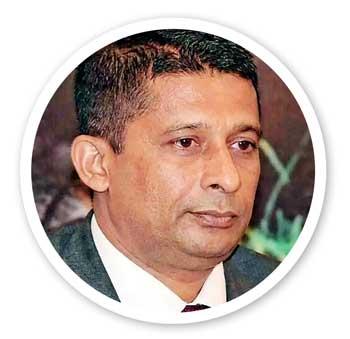 |
| Ironically, the parties that are agitating in support of Redt. Maj. Gen. Suresh Sallay are now demanding the abolition of the draconian PTA |
Ironically, the parties that are agitating in support of Sallay, and even Sallay himself, who as an intelligence officer handled many suspects arrested under the Prevention of Terrorism Act (PTA), are now demanding the abolition of that draconian piece of legislation. They are accusing the CID of torturing the former SIS head, physically as well as psychologically, compelling him to go on a hunger strike from Sunday. They stated that the senior officer cried, unable to bear the harrowing conditions in the detention cell and the maltreatment meted out to him. Sallay’s brother, after visiting him at the CID, told media that he was not against the investigations against Sallay, but he must be treated humanely. On the other hand, Hejaaz Hizbullah, the senior lawyer who was arrested under the same PTA has stated in his Facebook page: “Salley who detained us knows that the conditions for us were worse than what it is for him.”
PTA is no doubt a draconian law and cannot be accepted. And the argument that suspects must be treated humanely during their detention is also acceptable. However, it is hypocritical to demand a law be scrapped only when it is turned against you, after supporting its use against thousands of others for decades.
Torture is illegal in Sri Lanka as well as other countries. The Sri Lankan Constitution states “No person shall be subjected to torture or to cruel, inhuman or degrading treatment or punishment” and Sri Lanka is a state party to the UN Convention Against Torture (UNCAT) and adopted its Optional Protocol (OPCAT).
However, torture has been unofficially accepted in almost all countries as a norm during interrogation of suspects in crimes, terrorist activities and even minor offence. Rebels in any country use this as a tool to extract information about armed forces of governments. Although this has so far been a common practice during questioning of suspects and it is common knowledge, very few incidents make news.
The leaders of the Janatha Vimukthi Peramuna (JVP) claim that one of their members named Kamalabandu was sliced into pieces with a machine saw during interrogation by the police during their first insurrection against the Sirima Bandaranaike government in 1971. Thousands of tortured bodies had then been found floating in many rivers. A youth named Inbam also faced the same fate as Kamalabandu in a special operation by the armed forces in 1979 during the initial days of the Tamil armed separatist groups.
Sordid history of torture
The famous Batalanda torture chamber was a place making frequent news about cruelty against suspects arrested or abducted by the armed forces and vigilante groups during the second insurrection of the JVP. Over hundreds of wounds with almost all ribs broken were found on the body of Wijedasa Liyanaarachchi, a human rights lawyer allegedly abducted to the Batalanda camp, during the post mortem. Various methods of brutal torture used against the rebels at an armed force camp in down south those days are graphically explained in a book written by Rohitha Munasinghe, an inmate of that camp who later migrated to France.
Similar incidents of brutality unleashed during the 88/89 period have been revealed in another book titled “Mathaka Gini Pupuru” (Sparks of memories) by Gamini Muthukumarana, a senior JVP activist who also later chose to live in exile in the UK. The JVP, though not exceptionally accused of torture was accused of extrajudicial killings during both their armed uprising against the government.
The LTTE had used exclusive methods of torture to extract information from captured armed forces personnel and suspected members of other Tamil groups. Troops discovered barbed wire cages of which the length and width were 18 inches and height was six feet at Pudukudiyiruppu where Prabakaran’s five story underground bunker was also found. They said that these cages were used to lock up the prisoners and keep them in the scorching sun for days, so that the victims would physically and psychologically be destroyed before they agreed to cooperate.
These inhuman acts took place in all countries including those that preach to the so-called third world countries about human rights. According to reports about torture unleashed by the CIA, one prisoner, known as Abu Zubaydah, who was detained in several “Black Sites” of the CIA “was slammed against walls, stripped naked, hung from his wrists, and waterboarded 83 times, once to the point of unconsciousness. Over the course of 20 days, he spent more than 11 days in a “confinement box” made to look like a coffin and another day and a half in a box that was, by design, too small to allow him to straighten his legs or his back.”
One bitter but unreputable fact is that torture is an indispensable tool in interrogation of hardcore criminals or terrorists. No criminal or terrorist or even a minor offender has cooperated or will corporate with the interrogators if physical or psychological pressure is applied. Beyond a certain limit, this pressure takes the shape of torture. This is true, but an inhuman method.