24 Nov 2025 - {{hitsCtrl.values.hits}}
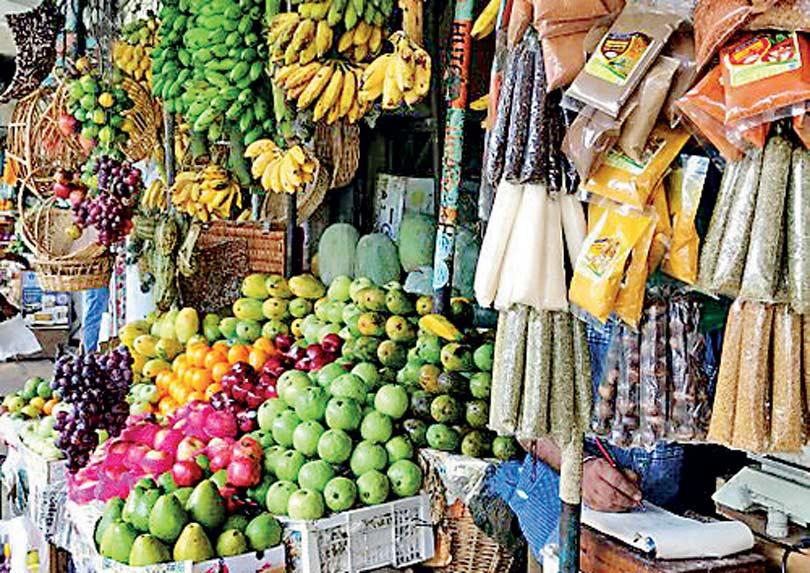
Even local grown products are too expensive for most Sri Lankans
 When politicians normalise corruption, public servants inevitably follow, engaging in bribery and malpractice at every level
 As the first party to govern Sri Lanka outside the long-standing two-party system in generations, the NPP ran on a bold platform: wiping out corruption, rebuilding the struggling economy, boosting investment in public education, passing a new constitution giving more power to the regions, scrapping harsh anti-terrorism laws, and ending decades of failed two-party rule.
A year later, the record shows both real gains and troubling shortfalls that reveal an uncomfortable truth: new faces in power cannot break the grip of the old political order if the alternative simply copies the same policies and priorities it was elected to change.
Over the past three decades, Sri Lanka has sunk to the ranks of the most corrupt nations in the world. When politicians normalise corruption, public servants inevitably follow, engaging in bribery and malpractice at every level.
Fourteen months ago, President Anura Kumara Dissanayake took office amid unprecedented optimism. Milk rice was served, fireworks lit the sky, and youth across the nation celebrated what they believed would be transformative leadership. Citizens expressed confidence that his administration would prioritise the common good and deliver meaningful change after his September 21, 2024 victory gave the leftist National People’s Power (NPP) coalition an unprecedented supermajority in Parliament, drawing support from both the majority Sinhala population and minority Tamil and Muslim communities. People looked to the NPP as their only hope, an alternative that might lift the country out of its current social and economic distress and pave the way for real prosperity.
What the nation needs is a party capable of rebuilding, not one that will push it deeper into decline. Since around 1970, every major political party has been tainted by corruption.
The Anti-Corruption Success
The government deserves recognition for its serious approach to anti-corruption measures. Breaking from decades of impunity, the administration has pursued legal action against violators with notable determination. Corruption cases that languished under previous governments have been revived, investigations proceed without apparent political interference, and several prominent figures face genuine legal consequences. Law enforcement agencies appear empowered to act based on evidence rather than political considerations, with courts processing cases involving individuals who previously seemed untouchable. This commitment to rule of law fulfills a central campaign promise that energised voters.
The Economic Betrayal
Yet this commendable anti-corruption drive stands in stark contrast to the NPP’s economic policy, which represents little more than unquestioning adherence to IMF-imposed austerity measures. Despite explicit campaign promises to fundamentally renegotiate the IMF agreement and pursue equitable reform, the government has done neither. As researchers observe: “The NPP government has largely continued the previous administration’s macroeconomic policies,” effectively validating former President Wickremesinghe’s assertion that “there are no alternatives” to the IMF programme, a claim the NPP once vehemently rejected.
This continuity has proven devastating. According to 2024 World Bank statistics, poverty now affects 24.5 percent of the population, while food insecurity plagues 26 percent of households. Household debt has climbed to 38.5 percent according to 2024 UNDP data. The NPP has even slashed health spending from 410 billion rupees in 2024 to 383 billion in 2025, worsening medicine shortages and hospital conditions when public health infrastructure requires urgent investment.
President Dissanayake has effectively embraced his predecessor’s austerity regime. His government granted substantial benefits to investors in the Colombo Port City development, including suspension of key labour laws—drawing criticism even from previously NPP-aligned unions. When the IMF warned against excessive tax exemptions, the government promised “rules-based” eligibility criteria but ignored labour protections entirely. This represents textbook neoliberal orthodoxy, not the progressive alternative promised to voters. Though GDP grew 5 percent in 2024 after six quarters of decline, this recovery has not made life better for most people. An ODI Global and CEPA study in July 2025 found that “income poverty remains stubbornly high, affecting a quarter of the population, double 2021 levels—taking Sri Lanka back to its early-2000s poverty rates.” The government has put IMF fiscal targets ahead of the humanitarian crisis facing millions.
The Tax Injustice
The NPP’s tax policy further reveals its neoliberal leanings. A political economist has documented how governments have since 1977 failed to collect adequate direct taxes, shielding wealthy elites who “pay little or no direct tax” while public services fall apart. An October 2025 Human Rights Watch report found that heavy reliance on taxes like VAT, which hit the poor hardest, has deepened inequality, with rates more than doubling in recent years while exemptions on basic goods were scrapped.
Corporate tax breaks
Meanwhile, corporate tax breaks drain the treasury of billions each year, revenue losses that dwarf the entire education budget. This massive giveaway to corporations continues while families cannot afford medicines, children crowd into underfunded schools, and millions live below the poverty line. The party that promised to make the wealthy pay their fair share has instead preserved a system where those least able to afford it carry the heaviest burden.
Since 1977, nearly every Sri Lankan government has followed the same economic playbook: deregulation, open markets, and privatisation. The two main parties, the United National Party and Sri Lanka Freedom Party, both embraced this approach, believing it would drive growth. Instead, it widened the gap between the rich and poor. By 2012, the wealthiest fifth of households took home more than half of all income, while the poorest fifth scraped by on less than 5 percent.
Spending on education collapsed from a healthy share of the budget in the 1950s and 1960s to one of the lowest rates in the world by 2022, a grim turnaround for a country that pioneered free schooling for all back in 1945.
The NPP emerged positioning itself as a genuine alternative. Its Marxist-Leninist foundations through the Janatha Vimukthi Peramuna, grassroots organising among workers and youth, and vocal criticism of IMF austerity all suggested it possessed the capacity to break the destructive policy cycle. Its electoral success appeared to validate that Sri Lankan politics could chart a fundamentally different course.
The government has also launched an aggressive anti-narcotics campaign. In the first nine months of 2025, police seized over three tons of heroin and crystal methamphetamine, along with thousands of kilos of cannabis and millions of narcotic tablets, a significant increase from the previous year. In late October 2025, President Dissanayake launched the “A Nation United” mission, describing it as the biggest public movement against harmful drugs. The government has also designated hospitals for addiction treatment and instructed schools and universities to set up drug-prevention committees. However, human rights concerns remain, as past anti-drug campaigns drew criticism for warrantless searches, mass round-ups, and degrading treatment.
Conclusion
The NPP’s record raises a difficult question: can any government truly break from the old order, or do entrenched interests and international lenders hold too much sway? The foundation for change exists. Whether the government builds on it, or lets anti-corruption stand as its only legacy, remains to be seen. But until it brings that same energy to tackling poverty, inequality, and economic reform, its promise of transformative change will remain unfulfilled.
19 Jun 2026 42 minute ago
19 Jun 2026 48 minute ago
19 Jun 2026 59 minute ago
19 Jun 2026 1 hours ago
19 Jun 2026 2 hours ago