21 May 2026 - {{hitsCtrl.values.hits}}
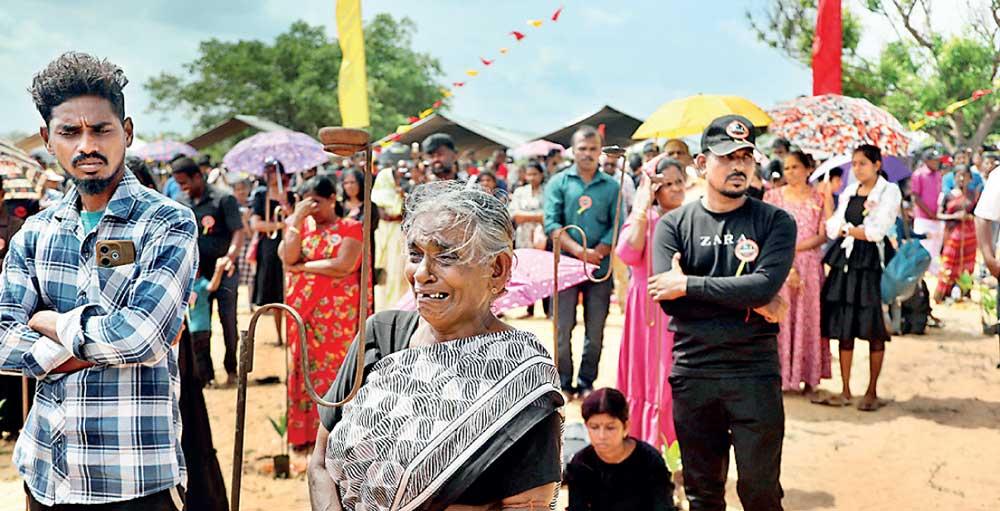
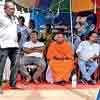
Pictures of the divide – mourners in Mullivaikkal and Sri Jayawardhanepura
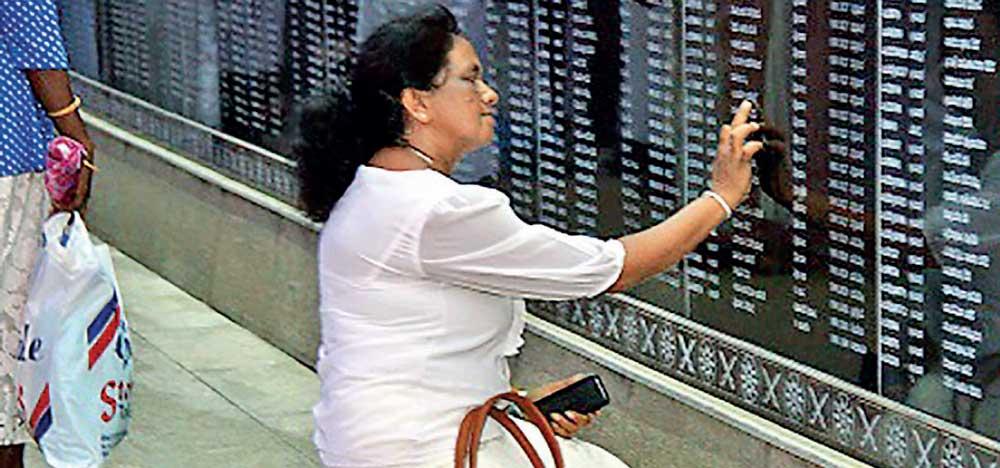
 The end of the war between the armed forces and the Liberation Tigers of Tamil Eelam (LTTE) was remembered in the country in two major events during a two-day period.
A state sponsored remembrance was held at the Parliament grounds on Tuesday, and a separate event took place in Mullivaikkal, in Mullaitivu Distrct -- where the last battle was fought -- with leaders of Tamil political parties and civil society organisations participating on Monday.
The two events were worlds apart in every conceivable way. Despite the fact that both were said to be commemorations of those killed in the same war, the one in the south represented triumphalism and jubilation, while the other in the north saw an environment of defeatism and frustration.
The heroism and sacrifices of the armed forces and the police during the war were hailed at the ceremony held at the Parliament grounds under the aegis of President Anura Kumara Dissanayake. On the contrary, the commemoration on the Mullivaikkal Day, as it is named by the Tamil leaders, was an emotionally charged event that was marked mainly by the wailings by thousands of Tamil mothers who grieve over the deaths and disappearance of their sons and daughters during the same war.
The majority of people in the southern parts of the country do not like to see the commemorations in the north and east by Tamils, which were not allowed in the past, especially during the tw Rajapaksa regime eras, on the grounds that “terrorists’ who attempted to divide the country are being glorified during those events. Hence, such memorial gatherings are still being described as events held by the people to commemorate their loved ones fallen in the war.
They are not being identified with the LTTE, though Mullaivaikkal Day is commemorated on May 18, the day when LTTE leader Velupillai Prabhakaran is believed to have been killed in 2009 on the bank of Nandikadal in Mullaitivu.
Since the end of the war, no aerial bombing has been carried out in the north or east, no shells launched either by the armed forces of the LTTE are falling on populated areas, children are not being abducted to be used as soldiers, no political party is controlled at gunpoint. Yet, the state sponsored “Victory Day” celebrated on May 19 each year seems to be an irritant to the Tamil people and politicians, apparently because that victory was achieved by “Sinhalese” armed forces defeating a Tamil armed group.
Neither peace nor war
If so, how should we describe the situation that currently prevails in the country? Is it correct to say that the end of the war has brought about peace? Or is it just a situation without armed hostilities among various communities that physically live side by side but exist emotionally in two different worlds? In other words, it is neither peace nor war.
Many peace researchers have emphasised the fact that peace is not only absence of violence. Johan Galtung, the Norwegian sociologist who is considered to be the principal founder of the discipline of peace and conflict studies, calls that situation “negative peace.” However, it is logical that it is the first step towards sustainable peace or positive peace characterised by mutual respect, shared equity, and empathy across cultural, religious, and social differences.
It could be achieved, according to many peace researchers, only through continuous efforts for collaboration and dialogue backed by a firm political will on the part of the government. The leaders of different communities have to play a leading role in this.
However, this is where Sri Lankan leaders failed. They politicised the whole process before the war, during the war and after the war for narrow political ends. Besides, commemorations of the war dead are conducted annually by both parties in a manner that hurts other communities and historical trauma is rekindled. Although structural governance reforms are widely recognised as a primary remedy in search of peace, specific steps are constantly avoided due to the fear of backlash from one’s own ethnic camp.
Subsequent to the silencing of guns in 2009, not a single voluntary step was taken either by successive governments or Tamil leaders towards peace building. President Mahinda Rajapaksa appointed the Lessons Learnt and Reconciliation Commission (LLRC) in 2010, but only to counter the appointment of an experts’ panel commonly known as Darusman Committee by the then UN Secretary General Ban Ki-moon to advise him on Sri Lanka in light of Sri Lankan government’s failure to create an accountability process.
Viewed with suspicion
Although the LLRC had made many important recommendations, they were ignored despite resolutions by the UNHRC having repeatedly stressing the need to implement them.
During the so-called Yahapalana government, institutions such as the National Unity and Reconciliation (ONUR), Consultation Task Force on Reconciliation Mechanisms (CTFRM), Office on Missing Persons (OMP) and Office for Reparations were established, but again under duress by the United Nations Human Rights Council (UNHRC). However, they are viewed with suspicion by the radicals on either side.
The only structural change that is in place for the resolution of the ethnic issue for the past several decades is the provincial council system. But it was, too imposed on the country by Indian leaders. Besides, the councils received step-motherly treatment by successive governments, and Tamil leaders also abused the system by weaponising it against the government.
When it comes to transitional justice after armed conflict, Tamils prefer retributive justice - punishing those who had violated their human rights - while the government seems to prefer restorative justice, meaning focusing on repairing the harm done to victims by way of financial compensation. The Tamil stance is based on the perception that only the state has violated human rights which has now been almost universally accepted.
However, in 2015, the UNHRC compiled a special report based on a 2014 investigation by a panel of experts appointed by the then High Commissioner for Human Rights, Navanethem Pillay and it accused the LTTE of committing all types of violations as the armed forces, with the exception of sexual violence.
There is a vast gap between the political demands of Tamil leaders and what the government is prepared to offer. Neither party is prepared to compromise for genuine ideological reasons or circumstantial pressure. Although there seems to be individual leaders on either side of the ethnic divide who are prepared to compromise for a lasting solution, they are reluctant to be branded as traitors. It is an impasse that might widen the gap.
07 Jul 2026 32 minute ago
07 Jul 2026 36 minute ago
07 Jul 2026 40 minute ago
07 Jul 2026 43 minute ago
07 Jul 2026 1 hours ago