10 Jul 2025 - {{hitsCtrl.values.hits}}
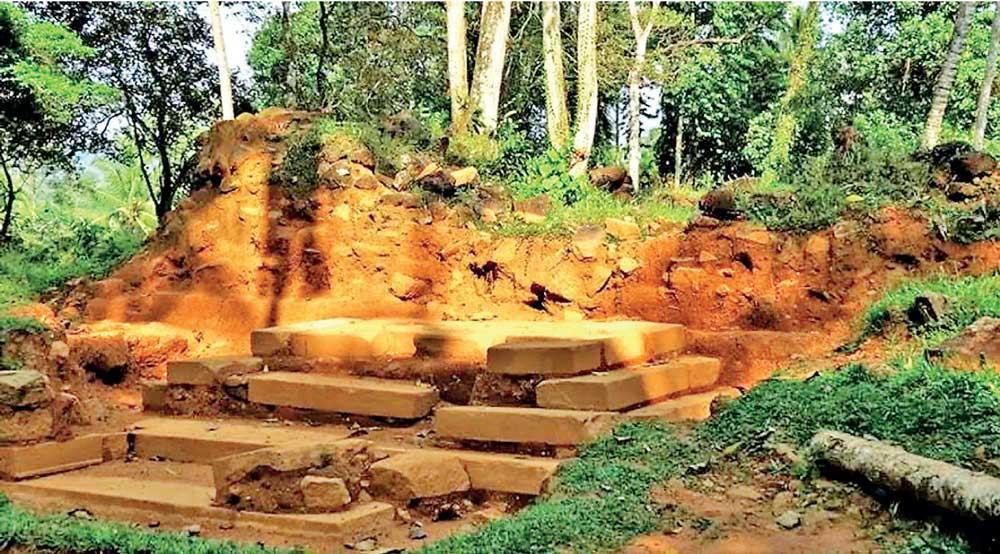
The remains of the Sitawaka kingdom, or Ravana’s prison for Sita? Image source:
Dr. Ashan Geeganage/amazinglanka.com
Multiple locations across Sri Lanka lay claim to the name ‘Sitavaka’, which distorts the origin story and its significance
By Rajitha Weerakoon
Was Sita held captive by Ravana in Sitavaka? Was the name Sitavaka coined after this fact? And did Ravana rule Sri Lanka five thousand years ago?
Myth or reality, the debate of the Ramayana epic, continues to capture the imagination of people and the claims made of several Sitavakas as the probable location where Sita was imprisoned, led the late eminent anthropologist and historian Gananath Obeyesekere to attempt to “untangle the multiple references to Sitavaka and bring the “Sitavaka conundrum” into some kind of order.”
Towards this end, the late author, in his “Stories and Histories – Sri Lankan Pasts and the Dilemmas of Narrative Representation,” had turned to “Vitthi Poth,” rather than the classical Pali and Sinhala texts and the major Rajavaliyas that were devoted to the genealogy of Lankan kings. “Vitthi Poth” was a popular text used to understand empirical history and patterns of migration from South India to Sri Lanka.
The late anthropologist, in his previous book “The Buddha in Sri Lanka – Histories and Stories”, had dismissed the varied versions of the Rama-Sita-Ravana story he had heard during his field work as absurd. Even “Ravana Rajavaliya,” probably of the sixteenth century, had implied that Sigiriya was the abode of our five-headed ancestor – Ravana and that he lived at a time of the previous Buddhas – about five thousand years ago.
But referring to the popular tracing of Sitavaka – the kingdom of Mayadunne and Rajasinghe I, as the site where Sita was held captive by Ravana, had stirred the interest of the late author, as he says this belief gives a hint as to how Sitavaka derived its name. In the popular imagination, Sita was captured by Ravana and sequestered on mountain tops. It is therefore likely, according to him, that prominent mountains of Sitavaka were associated with the Ravana legend as places where Ravana kept Sita imprisoned.
The late historian was convinced that there were many mountain tops that claimed this privilege in myth and popular beliefs. “Vitthi Poth,” which the late author had extensively made use of, mentions kings who had played a role in the historical events they relate to. These have been full of references to significant place names associated with Ravana.
“Ravana Rajavaliya,” a book of boundaries in ancient times written with a focus on etymologies of villages, had placed Ravana’s reign at a time before the time of the Buddha, while Vijaya’s arrival was during Buddha’s dispensation.
Sita is mentioned in “Rajasinghe Vitti” as Sita Parameshwari who was imprisoned by Ravana. A reference in the “Vitthi Poth” speaks of a region known as “Devamaddha”, where a larger district in which the historically famed Mundukondapola was located. “In ancient times,“ it had written, “fruits of this area were enjoyed by Ravana.”
“Ravana Rajavaliya” has the reference that the main city where Sita was held prisoner was called “Lankapura” - the city of Lanka. “Ravana Rajavaliya”, however, had failed to give any topographical information on the location of “Lankapura” – not even a clue. There however is one original myth that explicitly connects Ravana with Dambadeniya at Mundukondapola. Therefore, was Sitavaka linked with Ravana, located in Mundukondapola?
Towards making a thorough research in order to find the correct location of Sitavaka, author Obeyesekere had delved into “Malala Vitthi.” These of the “Vitthi Poth” genre speak of a Veddha chief informing the Malalas that the “King belonging to the solar dynasty, dwells in the city of “Kotte Sitavaka”. Malalas were migrants from Kerala, who were brought to Sri Lanka by Magha. He colonised the North Rajarata with them.
Whereas “Rajasinghe Vitthi” speaks of Sitavaka in the context of a journey made by tusker-catchers. They came to Mundukondapola, then to Dambadeniya, from where they “flew” to Sitavaka and met King Bhuvanaikabahu, which makes it clear that this Sitavaka is different from the Sitavaka palace on Mundukondapola.
There is another Sitavaka mentioned in “Vanni Kadaimpotha, where King Vira Parakramabahu, who lived in Sitavaka, summoned the veddhas of the twelve “patthus” and gave them land. These were the Tamils originally captured during the reign of King Bhatiya.
As “Rajasinghe Vitthi” relates, the Kurunegala “Veddhas” described as tusker-catchers, probably met Bhuvanakabahu and/or his brother Parakramabahu 11 in the Sitavaka Palace in Kurunegala, which was yet another mountain fortress. Sitavaka Palace, located in Mundukondapola, was also a mountain city.
If, however, Sitavaka is not Kurunegala or Mundukondapola, then it is likely that the Sitavaka we know of which was the Capital of Mayadunne and Rajasinghe I, located in Mayadhanu, existed much earlier. Malala texts speak of Sitavaka as being located south of Munneswaram. The reference, therefore, is very likely to the better-known Sitavaka we know of.
The confusion in Sitavaka was caused by the fact that Sitavaka was associated with Kotte. What is certain, however, is that an important city known as Sitawaka existed during the time of Parakramabahu II, long before the reign of Parakramabahu IV, who according to Mahavamsa, erected a new town in the district of Mayadhanu long before the ascension of Parakramabahu IV. Whether it was where Sita was imprisoned and remained until her dramatic rescue, however, continues to be a mystery.
08 Jun 2026 7 hours ago
08 Jun 2026 7 hours ago
08 Jun 2026 7 hours ago
08 Jun 2026 7 hours ago
08 Jun 2026 9 hours ago