20 Nov 2025 - {{hitsCtrl.values.hits}}
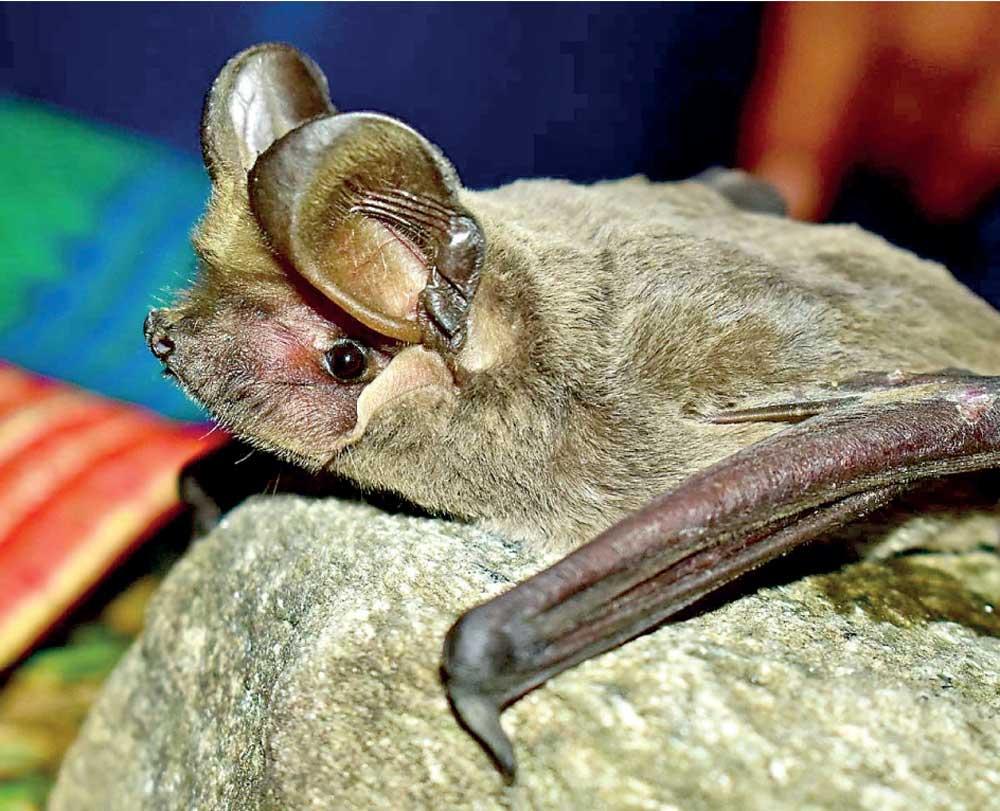
A landmark wildlife survey in Sri Lanka’s central highlands has uncovered two rare free-tailed bat species, reshaping scientific understanding of the island’s biodiversity. Researchers working across tea plantations detected the calls of Wroughton’s free-tailed bat and the East Asian free-tailed bat, neither of which had been documented in the country before. The findings, made possible through advanced acoustic monitoring, extend the known ranges of both species and highlight how human-managed landscapes can harbour surprising pockets of nocturnal life.
In the cool, shaded tea plantations of Sri Lanka, a quiet discovery has taken flight. For the first time, researchers have recorded two rare species of free-tailed bats, Wroughton’s free-tailed bat (Otomops wroughtoni) and the East Asian free-tailed bat (Tadarida insignis). This discovery, made using acoustic monitoring, not only adds to Sri Lanka’s natural heritage but also changes how we understand the island’s wildlife.
Quiet flyers
Bats are mysterious creatures, mostly active at night and hidden from human view. Traditionally, scientists have studied bats through captures or sightings, but some species are difficult to catch or live high above the ground. Acoustic monitoring solves this problem.
By recording the ultrasonic sounds bats use to navigate and hunt, researchers can identify species that are otherwise invisible.

In surveys across eleven tea plantations, researchers used special microphones to capture bat calls at night. Over several months, they identified the unique calls of Otomops wroughtoni and Tadarida insignis, two species not previously known in Sri Lanka.
Bat Calls
Each bat species has a distinct echolocation call. Otomops wroughtoni produces calls with a peak frequency of about 16.16 kHz, while Tadarida insignis calls peak near 12.51 kHz.
These differences help scientists distinguish them from other local molossid bats, such as Tadarida aegyptiaca and Mops plicatus.
Statistical tests, including Principal Component Analysis and Kruskal-Wallis tests, confirmed that the calls of these four species form separate groups. This gives confidence in identifying these bats by sound alone, without needing to capture them.
This finding greatly expands the known range of these bats. For Otomops wroughtoni, its known global range increased by over 70%. This is important because the species is listed as “Data Deficient” by the IUCN, meaning its conservation status is unclear. Tadarida insignis was found at higher elevations, showing ecological patterns that need further study.
These bats are strong fliers and may have roosts in other areas of Sri Lanka. The tea plantations where they were recorded show that human land use and wildlife conservation can coexist.
Challenges
Traditional bat surveys, which rely on nets or traps, often miss high-flying or elusive species. Acoustic monitoring allows scientists to detect bats even in hard-to-reach places, like cliff faces or dense forests, without disturbing them.
In Sri Lanka, this method is especially useful. The newly discovered molossid bats often roost in tall rock faces, which are difficult for researchers to access. Listening to their calls lets scientists map their presence safely.
With Otomops wroughtoni and Tadarida insignis, Sri Lanka now has 33 recorded bat species, a milestone that shows there is still much to learn about the island’s wildlife. Bats play vital roles in ecosystems as pollinators, seed dispersers, and insect controllers.
Researchers recommend expanding acoustic surveys across all ecological zones in Sri Lanka to find more hidden bat species and to better understand where they live. Combining acoustic data with traditional capture records will strengthen species identification.
Sri Lanka’s newly discovered bats remind us of the hidden wonders of nature. As they fly and call in the night, they reveal the richness and resilience of biodiversity. In a world where habitat loss and environmental change threaten many species, understanding and protecting these unseen creatures is more important than ever. Thanks to modern science, Sri Lanka’s night skies have new stories to tell, echoes that invite curiosity, respect, and care.
07 Jun 2026 8 hours ago
07 Jun 2026 9 hours ago
07 Jun 2026 07 Jun 2026
07 Jun 2026 07 Jun 2026
07 Jun 2026 07 Jun 2026