25 Aug 2025 - {{hitsCtrl.values.hits}}
 What’s valuable about this work is the emphasis placed on the pre-Islamic Arabian presence in the country
The spread of Islam resulted in more interaction between the Arab world and Sri Lanka
 This work is a pioneering study of the Muslim archaeological heritage of Sri Lanka. Although much has been written about early Arab and Muslim settlements in the island as attested by the existence of Arabic inscriptions scattered over various parts of the island, this study takes into consideration not only the epigraphic evidence, but also incorporates pottery, coinage, folklore, monuments and mosque architecture and the varied influences it has been subjected to over the centuries. In this respect, Jesmil’s work constitutes the most comprehensive archaeological survey of the Muslim presence in Sri Lanka undertaken so far.
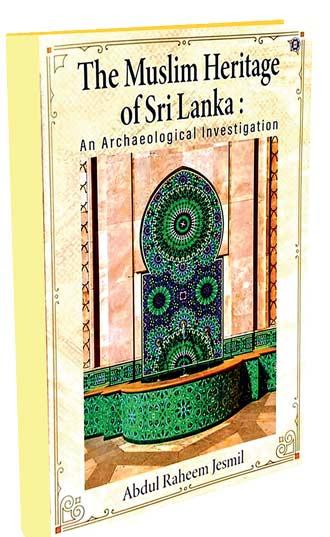 What is particularly valuable about this work is the emphasis it places on the pre-Islamic Arabian presence in the country to give it context before getting on with the early Islamic and late Islamic periods, all of it giving us an idea of the evolution of Muslim maritime trade with the island and its place within the Indian Ocean trading network that linked the Mediterranean and Middle East with the Far East. It brings out how such a development led to the followers of all faiths interacting with one another on very cordial terms. Free trade, after all, is a great unifier of peoples and nations and this was more true of the past than today.
The advent of Islam in the seventh century of course had far-reaching consequences on Arabian trade and maritime commerce in particular. This was given further impetus with the exhortation in the Qur’an to travel the earth and seek of the bounty of God, which must have prompted these erstwhile denizens of the dessert to travel far and eventually settle in new lands for purposes of trade and over time to establish more or less permanent settlements after espousing the daughters of the land, which was a commonplace occurrence in Sri Lanka as well.
In fact, the spread of Islam resulted in more interaction between the Arab world and Sri Lanka which as the author has rightly pointed out became stronger for reasons that went beyond economics and included the cultural and religious life of the early Arab Muslim community domiciled in the island. As the faith expanded from the Arabian peninsula to beyond, it also strengthened linkages between the followers of the faith in South and South East Asia and even the Far East, as a result of which Sri Lanka, which strategically stood at a central position in the waterways of the East as part of a Maritime Silk Road benefitted considerably. The country became an entrepot of trade and a source of important products like elephants, cinnamon, pearls and precious stones which brought much prosperity to the country.
The discussion on ports particularly makes very interesting reading since this was the first point of interaction between the Arabs and the people of the country, with prominent ports like Colombo and Beruwala owing its origins to Arab merchants and mariners. Arabian Nights stories like Sindbad the Sailor which make reference to the country shows how prominently Sri Lanka figured in the Arabian imagination. How brisk trade was between Sri Lanka and the Islamic world constituting the Arabian peninsula and Persia could be gathered from the presence of imported glazed pottery and glass of the early Islamic era in sites such as Mantai and Anuradhapura. In fact, over ninety percent of the glass discoveries in Mantai could be dated to the early Islamic period.
A detailed catalogue of twelve Arabic inscriptions from the Ambalangoda epigraph to a stone stele in Cufic characters found in Mantai Temple given here is the most comprehensive list of Arabic inscriptions published thus far and ought to stimulate further research and inquiry. The same holds true of what the author describes as ‘Monuments’ such as Adam’s Peak called Baba Adam Malai (Mountain of Father Adam) by local Muslims, Daftar Jailani off Balangoda and the Galebandara Shrine in Kurunegala together with their associated legends which are covered in much detail.
There are of course a few shortcomings that need to be corrected in a second edition of the work especially with regard to the References. For instance the reference to Hussein (2009) in the context of the Ramayana story is an obvious reference to my book Zeylanica. A Study of the Peoples and Languages of Sri Lanka while other references to Hussein (2022) with regard to the history of Dawatagaha Mosque and Meera Makam Mosque are references to another work of mine Iconic Masjids of Ceylon, but none of these works are mentioned in the bibliography. It is hoped that the author would be more diligent with regard to the references in future editions of his work.
On the whole, the work is a ground-breaking study that seeks to meet a long felt need given the dearth of academic interest in Muslim archaeology. The work running to over 240 pages is also illustrated with 42 plates of heritage sites, monuments, inscriptions, ceramics and coinage as appendices which considerably enhance its value.
08 Jun 2026 5 hours ago
08 Jun 2026 5 hours ago
08 Jun 2026 5 hours ago
08 Jun 2026 5 hours ago
08 Jun 2026 7 hours ago