06 Nov 2025 - {{hitsCtrl.values.hits}}
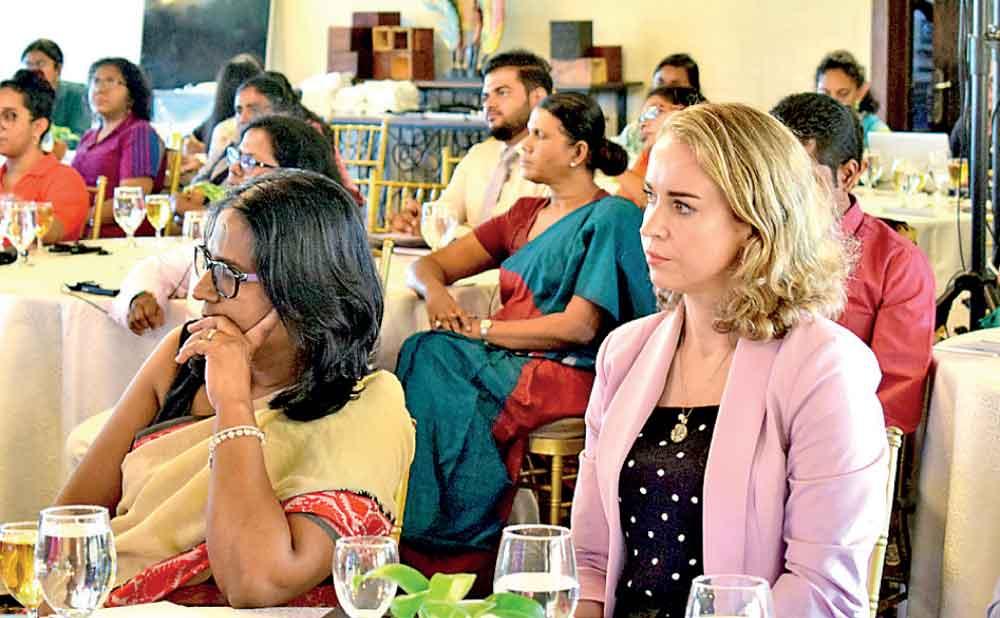
A group of participants
The report also highlights barriers to accessing reliable care services, such as day care services, and examines perceptions of gender and the influence of gender norms on the distribution of care work within households, the state, and the broader economy
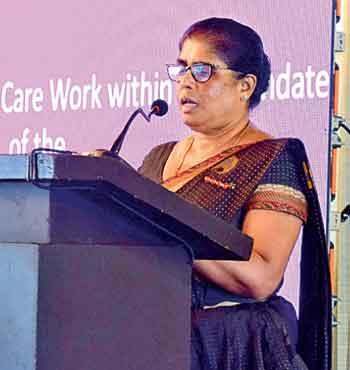 |
| Nilmini Herath, Additional Secretary (Development), Ministry of Women and ChildAffairs speaking in the event |
By Manjula D. Phillips
The Asia Foundation and Women and Media Collective, with support from Global Affairs Canada, hosted the second National Convening on Recognising Unpaid Care Work in Sri Lanka last week at Waters Edge, Battaramulla.
Parallel to celebrating International Day of Care and Support, the event centered on the theme: “Rethinking Unpaid Care: Shifting from Women’s Work to Collective Responsibility”.
The first National Convening on Recognising Unpaid Care Work in Sri Lanka was held in July last year, during which then Member of Parliament and now Prime Minister of Sri Lanka, Dr. Harini Amarasuriya, highlighted the need for a national policy of recognition on unpaid care work.
Briefing at the event Kiril Iordanov, Counsellor and Head of Cooperation, High Commission of Canada to Sri Lanka and the Maldives urged:
“Through strategic partnerships and targeted investments, Canada continues to promote inclusive growth, equitable participation, and social systems that value and support carework — reaffirming its role as a global leader in building a fairer and more just world for all.”
This year, the event promoted multi-sectoral collaboration to address unpaid care work in Sri Lanka, an issue central to the government’s policy commitments as stated in the National Policy Framework – A Thriving Nation, A Beautiful Life and the National Policy on Gender Equality and Women’s Empowerment. The event brought together government officials, including representatives from the Ministry of Women and Child Affairs, international and national development partners, and private sector institutions supporting care work.
“The Ministry of Women and Child Affairs’ policy direction emphasises addressing unpaid care work as a part of the country’s gender equality and women empowerment strategies. After launching the National Policy on Gender Equality and Women’s Empowerment, we are working to prepare the strategic action plan where we have included an activity to reduce the burden of unpaid care work on women.” Speaking at the ceremony, Nilmini Herath, Additional Secretary (Development), Ministry of Women and Child Affairs stated.
By letting know the policy through evidence-based research, the event launched the report: “Why Reduce & Redistribute Unpaid Care Work? Findings from a Time Use Survey in Seven Districts in Sri Lanka.”
The report, drawing on research conducted by the Women and Media Collective, provides a snapshot of women’ and men’s use of their time and labour engaging indirect care of others, indirect care of households, and community care. It reiterates the urgent need to recognise the value of unpaid care work as a critical component of the economy and to integrate reducing and redistributing unpaid care responsibilities into national policy frameworks. The report concludes with actionable recommendations to recognise, reduce, and redistribute the disproportionate care responsibilities borne by women and girls.
As part of the convening, The Asia Foundation featured a day care centre model for children, elders, and persons with disabilities which is implemented by women’sorganisations. The women-led and community-based model provides professional and rights-based care services while responding to the challenges women face in managing unpaid care work responsibilities. This model offers insights that can inform national dialogue and policy directions on care support systems in Sri Lanka.“At The Asia Foundation, we place a strong emphasis on promoting gender equality and women’s empowerment, and we see addressing unpaid care work as an integral part of this focus area. Our project on Addressing Unpaid Care Work in Sri Lanka, looks to improve policy and support services to ensure that unpaid care work is reduced, recognised and redistributed, ”Johann Rebert, Country Representative, The Asia Foundation emphasised.
Highlighting the need for a multi-sectoral approach, the event concluded with a panel discussion with stakeholders that showcased the varied interventions currently undertaken to address and redistribute unpaid care work in the country. The panelists represented the International Labour Organisation, the Board of Investment of Sri Lanka, and MAS Holdings. The event, organised under the title Unpaid Care Work in Sri Lanka Project funded by the government of Canada, initiated a dialogue on sharing and redistributing the unpaid carework of women and girls in Sri Lanka.
07 Jun 2026 3 hours ago
07 Jun 2026 4 hours ago
07 Jun 2026 6 hours ago
07 Jun 2026 8 hours ago
07 Jun 2026 8 hours ago