15 Jan 2026 - {{hitsCtrl.values.hits}}
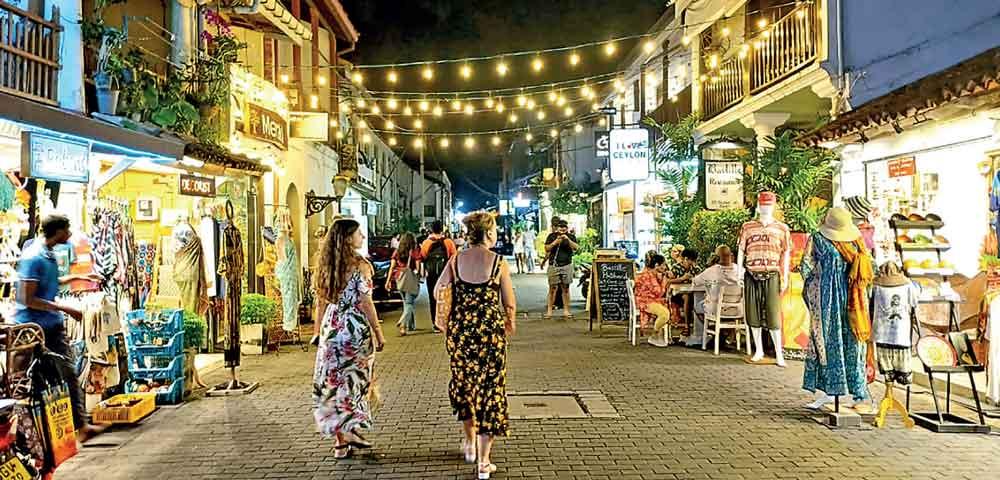
For many visitors, it isn’t only the scenery, but the people that leave a lasting impression
By Sirangika Lokukarawita
Galle continues to stand out as one of Sri Lanka’s most iconic and globally recognized tourist destinations, offering a rare combination of history, culture, nature and living heritage. Often described as the only place where one can sit on a single bench and watch both sunrise and sunset, Galle Fort remains the oldest and best-preserved European sea fortress in Southeast Asia.
Governed in succession by three European colonial powers, Galle still reflects its architectural and urban legacy, while functioning as a vibrant coastal city where people live, work and worship within a UNESCO World Heritage Site.

“Everything is wonderful, especially Galle Fort. We believe more tourists from our country and others will visit Sri Lanka in the future, mainly because of the warmth and friendliness of the people”
- Rachel Baxter from England

Galle’s uniqueness lies in being a living heritage city. Tourists enjoy walking through narrow streets, seeing colonial architecture, art, schools, religious sites and daily life all within the fort,”
- Tharanga Liyanarachchi, Archaeological Researcher and Tourism Analyst

“We are planning programmes to promote home-stay tourism at the village level. This will allow local communities to directly benefit from tourism while offering visitors an authentic Sri Lankan experience”
- Jayan Godakanda, Ruhunu Tourism Bureau Chairman
Beyond its historic fortifications, Galle is also considered a gateway to Sri Lanka’s
evergreen interior. Galle’s attraction is reflected in visitor numbers. Of the 1.9 million tourists who arrived in Sri Lanka in 2024, arrivals increased to around 2.3 million in 2025, with an estimated 60–70% including Galle in their travel itineraries. During peak seasons, approximately 3,000 foreign tourists visit Galle Fort daily, according to Tourism Promotion Bureau data.
For many visitors, it isn’t only the scenery, but the people that leave a lasting impression.
“I came from England for a holiday. Sri Lanka is a very beautiful country and the people are always smiling and friendly,” said Rachel Baxter of England, who recently toured the island.
“Everything is wonderful, especially Galle Fort. This country feels like a paradise. We believe more tourists from our country and others will visit Sri Lanka in the future, mainly because of the warmth and friendliness of the people. We are truly happy about this journey,” he said.
From Bentota to Koggala, the Galle District coastline includes major tourism hotspots such as Bentota, Ahungalla, Ambalangoda, Hikkaduwa, Galle Fort, Unawatuna and Koggala.
During peak seasons, hotel occupancy rates reach 85–90%, and in tourism-intensive zones, 30–40% of the population earns a livelihood directly or indirectly from tourism—from hoteliers and tour guides to artisans and transport providers.
Archaeological researcher and tourism analyst Tharanga Liyanarachchi noted that Sri Lanka’s “green and clean” image and friendly population resonate strongly with modern travelers.
“Galle’s uniqueness lies in being a living heritage city. Tourists enjoy walking through narrow streets, seeing colonial architecture, art, schools, religious sites and daily life all within the fort,” he said, stressing the need for trained guides, better traffic management and improved visitor facilities.
Ruhunu Tourism Bureau Chairman Jayan Godakanda said several infrastructure projects were implemented in 2025, including improved sanitation facilities in Hikkaduwa and Unawatuna, enhanced beach safety measures, upgraded street lighting and progress on a waste management centre at Rumassala.
He also revealed plans to encourage home-stay tourism at the rural level, enabling families to offer accommodation within their own homes.
“We are planning programmes to promote home-stay tourism at the village level. This will allow local communities to directly benefit from tourism while offering visitors an authentic Sri Lankan experience,” Godakanda said.
Despite these efforts, industry stakeholders warn that unregulated growth could undermine long-term sustainability. Senaka de Silva, former President of the Southern Province Hoteliers Association, stressed that tourism development must priorities quality over numbers.
Waste management remains a major concern. Visitors often encounter garbage piles, scrap metal and abandoned boats, particularly along the Colombo–Matara main road and even within Galle Fort.
Tourism entrepreneur Nishshanka Apaliyana warned that while arrival numbers have increased, revenue growth has lagged.
Deputy Inspector General of Police for the Galle Range, Jagath de Seram, said tourist safety is treated as a top priority.
“We have 24-hour patrols, mobile units, hotel inspections and civil-clothed officers deployed in tourist zones,” he said. Dedicated tourist police stations operate in Bentota, Hikkaduwa, Galle Fort and Unawatuna, with English-speaking officers and translators when required.
Galle remains one of Sri Lanka’s strongest tourism assets, blending heritage, nature and hospitality. However, experts caution that sustainable growth will depend on improved regulation, cleaner surroundings and a visitor-friendly environment—ensuring that the city’s global appeal is preserved for
generations to come.
07 Jun 2026 52 minute ago
07 Jun 2026 2 hours ago
07 Jun 2026 4 hours ago
07 Jun 2026 6 hours ago
07 Jun 2026 6 hours ago