02 Feb 2026 - {{hitsCtrl.values.hits}}
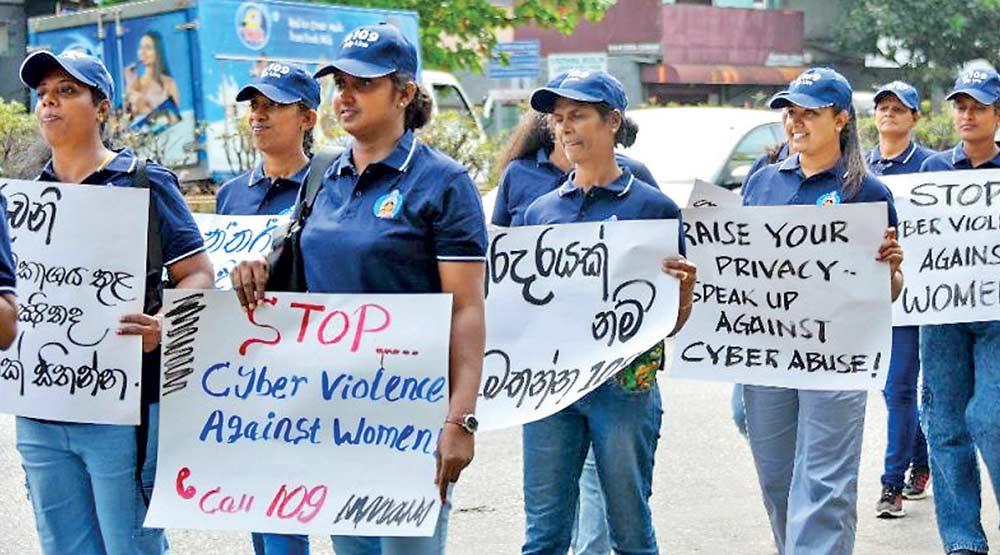
Representatives of the Sri Lanka Police take part in an awareness campaign organised to underscore the need to speak up against cyber abuse
 Concerns have been raised about capturing videos and leaking such intimate information into the public domain without consent
How social media page admins create memes, cartoons by extracting videos and photos of victims highlights the need to safeguard victims
Recording, storage, possession, or circulation of intimate materiaL is punishable under Sri Lanka’s Online Safety framework
The social media hype over the latest leaked video incident relating to a student and teachers of a prominent school in Colombo has been described as ‘harmful’ and ‘unhealthy.’ The extent to which social media page admins had gone to create memes, cartoons and other material by extracting videos and photos of victims highlights the need for stringent laws to safeguard victims who face online violence and harassment. Rather than an issue of whether the relationship between the student and the teacher was right or wrong - since the individuals involved are of consenting age, concerns have been raised about capturing videos and leaking such intimate information into the public domain without consent.
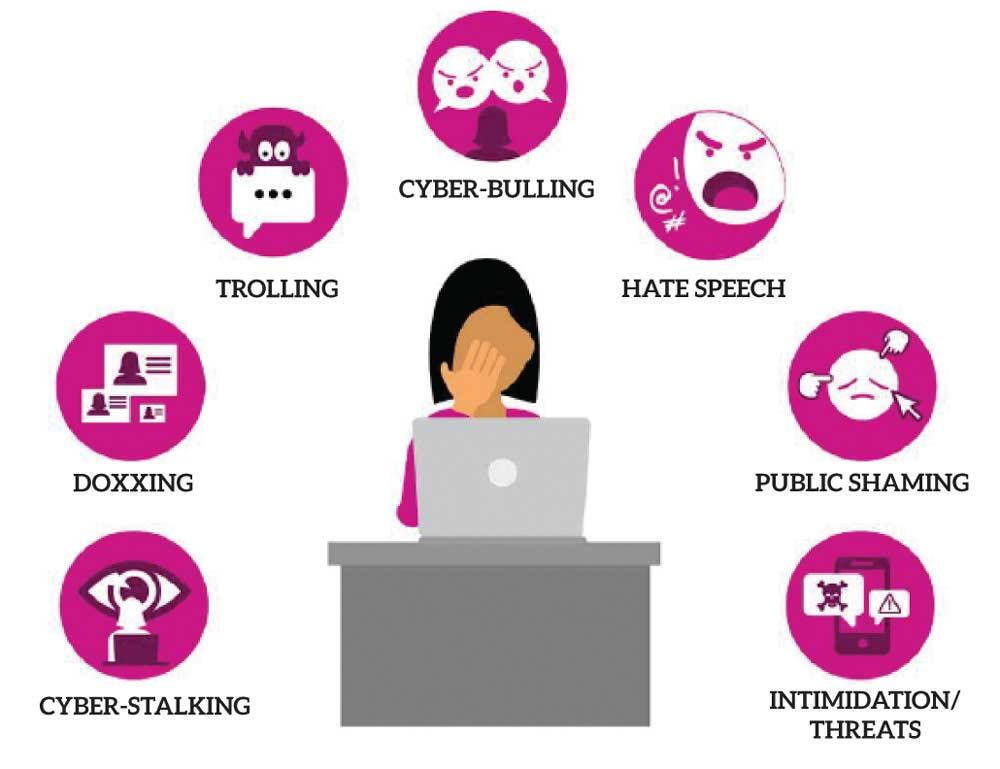
The need to build stronger protective systems
“Recording, storage, possession, or circulation of intimate material, regardless of consent to the underlying relationship, raises serious legal concerns and is punishable under Sri Lanka’s Online Safety framework when such content is shared, misused, or publicly disseminated,” said Milani Salpitikorala, Founder and Senior Legal Consultant, Child Protection Force. She said that when situations involving schools, young people and sexual conduct emerge in the public domain, it is critical to separate moral outrage, legal analysis, and child protection principles. “From a child protection perspective, the first question is always one of age, consent, and safeguarding thresholds. Where all parties are legally adults, criminal liability does not automatically arise from consensual relationships. However, that does not mean the law is silent,” she added.
Salpitikorala said that equally important are the ethical and safeguarding obligations of adults working in educational settings. “Individuals employed in schools occupy positions of trust, authority, and influence, and are expected to uphold conduct and standards that go well beyond minimum legal compliance. This is precisely why child protection systems emphasise robust recruitment processes, including background checks, psychological assessments, ongoing training on boundaries and power dynamics, and clear reporting and accountability mechanisms. When these systems are weak or absent, institutions expose children and young people to harm and themselves to reputational and legal risks,” she explained further.
Speaking about the importance of reflecting on how such incidents are addressed in the public space she said that short-term sensationalism, politicisation, and online outrage may generate attention, but they do little to advance meaningful child protection outcomes. “Sustainable safeguarding requires consistent policy implementation, serious investment in prevention, and media engagement that prioritises education and reform over spectacle. If public discourse is shifted from blame to building stronger protective systems, the long-term impact for children and young people would be far more significant,” Salpitikorala underscored.
Lack of accountability
In his observations, Harendra De Silva, Emeritus Professor of Paediatrics at the Faculty of Medicine, University of Colombo said that neither party nor parties are children and that they are all adults. So there’s an issue of what we call consenting adults. He said that there are certain rules and ethics for teachers about ethical behaviour. “Whether they are consenting or otherwise, having a relationship with a student whether an adult or not, or even another fellow teacher which is in the school environment can be considered wrong. There are two aspects to this; one is whether there is a criminal case or a civil case in the case of a disciplinary matter regarding the behavior of the teachers. As a result of that what should happen is not to put these people on transfer, which is wrong because there’s a disciplinary issue. As an independent person, what I have to say is that according to normal procedure they should be placed under interdiction without transferring to another school and then hold a disciplinary inquiry. If found guilty, the Establishments Code should apply to decide on whether they should be sacked or demoted,” he added.
He further said that the Establishments Code includes the behaviour of employees, employers, student, teachers etc. “What happens is that adults always favour the adult. In this country the concept of accountability is never there. If you know the right people you are not accountable. That is why people daringly commit offenses because they have the right connection. The rule of law should remain, whether it is the criminal law, civil law or ethical norms in the Establishments Code,” he emphasised.
Breakdown societal ethics
Senior Disinformation Researcher Dr. Sanjana Hattotuwa said that there is a lack of public awareness around the illegality and significant harms when sharing this kind of violative content in the form of memes, photos, videos, still-frames etc. He said that there is also a lot of generative AI-based manipulated media around this incident as well.
From his own research he had observed how, in a 72 hour period, a flood of new accounts were created on leading online, social media, and chat platforms just to share explicit content relating to this incident. “The speed at which these new accounts were created, often featuring identical multimedia content, posed challenges for social media platforms, including taking them down for violating platform guidelines prohibiting the sharing of non-consensual intimate imagery (NCII). This was further complicated because of links on social media account to off-platform, web-based locations, making it much harder to flag, and prevent the rapid spread of really harmful material,” he explained.
He said that the text in the posts featuring the material on social media, to the extent he studied them, near exclusively targeted only the women involved in the incident, including through victim, and body-shaming. “There’s already a dark economy based on the seed, and spread of this incident’s content online, highlighting a complete breakdown of decency, privacy, as well as personal, and societal ethics,” he added.
Dr. Hattotuwa further said that this incident also highlights the lack of appropriate legislation in Sri Lanka. “The absolutely terrible Online Safety Act (OSA), loudly sold as a law that protects women, and children, is anything but this. After repealing it, we need to purposefully craft regulatory frameworks to address online harms, since incidents involving NCII will recur, and with increasing frequency given the accelerated roll-out of digitalisation without commensurate cyber hygiene,” he further said.
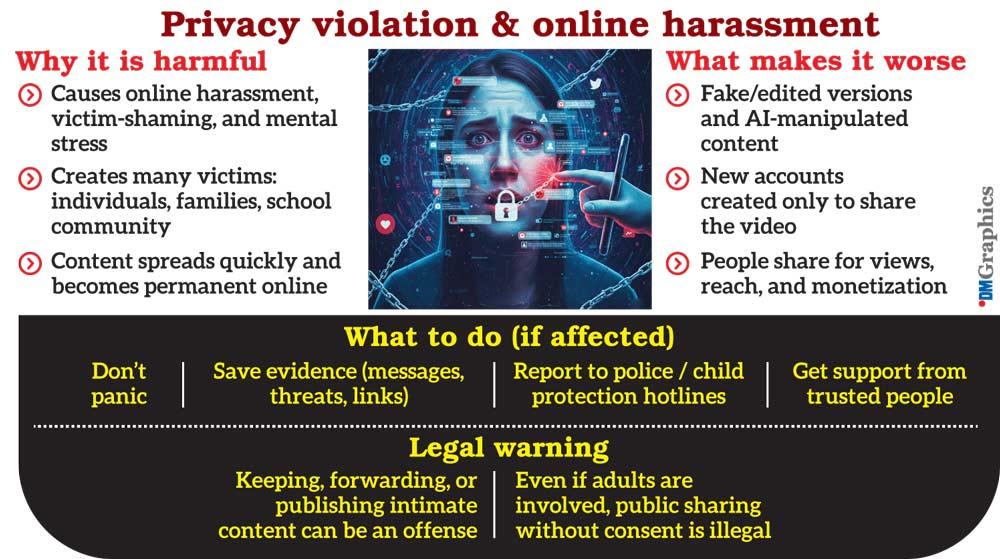
Analyzing algorithms
Speaking about online harassment and recent trends, Charuka Damunupola, Lead Information Security Engineer at Sri Lanka Computer Emergency Readiness Team (SLCERT) said that intimate photographs which are sometimes exchanged between two people in a relationship are published without consent, either as a threat or by making unwanted demands. “This is the most typical case that is often being reported to us. But this particular incident is totally different, firstly because it was recorded without consent and it was leaked by another individual also without consent. There are legal consequences of keeping obscene images and content in one’s possession. The Online Safety Act also addresses sharing personal, intimate images. Even if the photos were leaked with consent nobody would consent to publishing these videos and images in the public domain. If it is done without consent it is an offense,” he added.
He said that by sharing these images it creates a group of direct and indirect victims including the spouses, parents and in this case the student’s school. “Therefore social media users should handle these kinds of matters responsibly and respectfully,” he said.
According to Damunupola, no government in any country have control over social media platforms. He said that it is controlled by the platform provider. “So the algorithms and safety features cannot immediately detect content of this nature. They think this is a viral video or similar content because that is the main concept in social media. They don’t understand content made to bully or harass another individual. They cannot detect the context of a meme unless someone reports it,” he explained.
He said that one of the reasons for people to create accounts and share this kind of content is due to the monetization feature. “If they get more reach they can earn more. So once they find a viral topic they create content related to this topic. So nobody really thinks about the damage caused to victims,” he stressed.
Support available for victims
However, his advice is that if someone encounters an incident of this nature, they shouldn’t panic. “His or her friends and people around them should support the victim because of the immediate and long term psychological impact. In certain instances these kinds of content could be removed for instance if the content is on a pornographic website. If someone is threatening an individual to share these images, they should keep the call recordings and text messages and immediately inform police law enforcement. One such place is the Police Women’s and Children’s Bureau. They can call the 109 hotline or even lodge a complaint at the National Child Protection Authority,” he further said.

 Sustainable safeguarding requires consistent policy implementation, serious investment in prevention, and media engagement that prioritises education and reform over spectacle. If public discourse is shifted from blame to building stronger protective systems, the long-term impact for children and young people would be far more significant
- Milani Salpitikorala, Founder and Senior Legal Consultant, Child Protection Force
 As an independent person, what I have to say is that according to normal procedure they should be placed under interdiction without transferring to another school and then hold a disciplinary inquiry. If found guilty, the Establishments Code should apply to decide on whether they should be sacked or demoted
- Harendra De Silva, Emeritus Professor of Paediatrics at the Faculty of Medicine, University of Colombo
 There’s already a dark economy based on the seed, and spread of this incident’s content online, highlighting a complete breakdown of decency, privacy, as well as personal, and societal ethics. The speed at which these new accounts were created posed challenges for social media platforms, including taking them down for violating platform guidelines prohibiting the sharing of non-consensual intimate imagery
- Dr. Sanjana Hattotuwa
Senior Disinformation Researcher
 There are legal consequences of keeping obscene images and content in one’s possession. The Online Safety Act also addresses sharing personal, intimate images. Even if the photos were leaked with consent nobody would consent to publishing these videos and images in the public domain. If it is done without consent it is an offense. The algorithms and safety features cannot immediately detect content of this nature”
- Charuka Damunupola, Lead Information Security Engineer at Sri Lanka Computer Emergency Readiness Team
07 Jun 2026 5 hours ago
07 Jun 2026 7 hours ago
07 Jun 2026 9 hours ago
07 Jun 2026 07 Jun 2026
07 Jun 2026 07 Jun 2026