30 Jan 2025 - {{hitsCtrl.values.hits}}

A section of the karnataka journalists who were present at the event
|
The teachings of the Buddha emphasise the intrinsic value of nature and the ethical responsibility of humans to protect the environment. Sri Lanka is poised to serve as a model for other nations. Our policies reflect a harmonious blend of intellectual rigour and spiritual wisdom, emphasising that environmental conservation is not merely a policy but a way of life. Human activities, particularly illegal ones, have disrupted the delicate balance between humans and wildlife. Wildlife such as monkeys, wild pigs, and peacocks have been causing significant damage to farms, leading to a loss of 30–40% of the country’s total harvest. Initiatives like UNDP’s own programmes not only update journalists’ knowledge on environmental matters but also empower them to report accurately and effectively on related issues. |
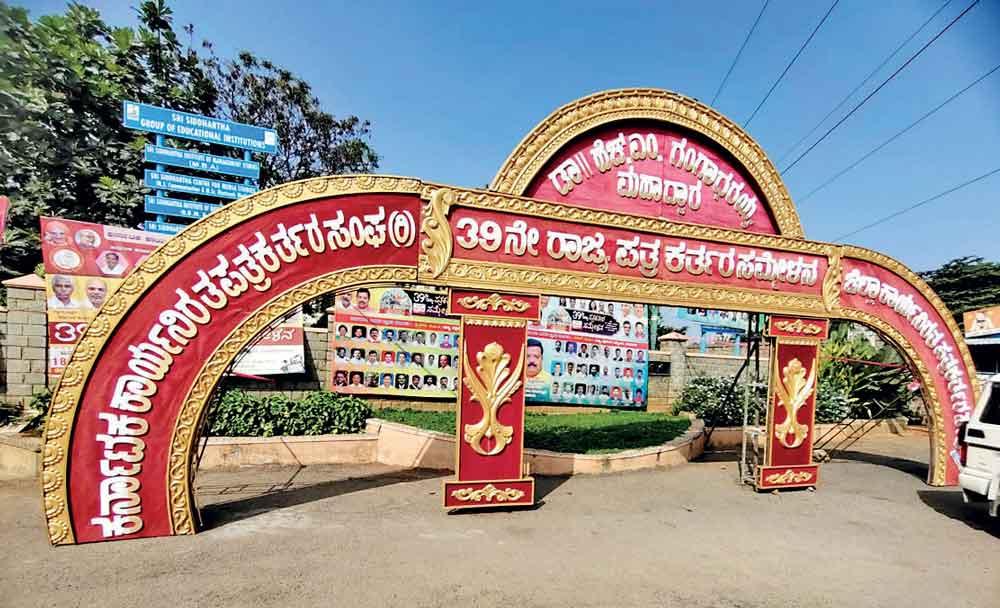
Karnataka Union of Working Journalists hosted the ‘Media Meet’ at Tumakur, India in Association with the Tumakur Working Journalists Association from 17th January - 19th January 2025. Nishantha Alwis, a Senior Journalist spoke on the subject of ‘The Environment and Media’.
He made the following comments “Sri Lanka, a nation rich in natural beauty and biodiversity, is deeply committed to environmental preservation. Our commitment aligns with the principles of the UN Environmental Charter, and we are actively developing our own comprehensive environmental policy. This policy is designed not only to meet global environmental standards but also to reflect our unique cultural and spiritual heritage.
“As a South Asian nation, Sri Lanka’s environmental policies are enriched by the profound influence of our Buddhist traditions. The teachings of the Buddha emphasise the intrinsic value of nature and the ethical responsibility of humans to protect the environment. The Karaneeya Metta Sutta, for instance, embodies this philosophy, urging unconditional love and compassion for all beings. Such teachings guide us to respect and cherish trees, animals, and the environment as essential to the balance of life.
“An iconic example of this respect is the Buddha’s gratitude to the Bodhi tree, under which he attained enlightenment. This act of reverence underscores the Buddhist principle of showing gratitude and love for nature, a timeless lesson that remains relevant in the modern pursuit of sustainability”.
The current government
He spoke about the NPP, stating that “They demonstrate a strong commitment to environmental protection. Recognising the urgency of the climate crisis, they have incorporated environmental conservation into their manifesto, ensuring that this critical issue remains a priority in national development.,”
He also mentioned that “By drawing upon our cultural heritage and aligning with global environmental frameworks, Sri Lanka is poised to serve as a model for other nations. Our policies reflect a harmonious blend of intellectual rigour and spiritual wisdom, emphasising that environmental conservation is not merely a policy but a way of life.
“As we discuss and share ideas today, let us remember that our collective responsibility transcends borders. Together, we can ensure that our actions today will safeguard the planet for future generations.
“As Sri Lanka navigates its economic recovery, we must remember that solutions to our crisis cannot come at the expense of our environment. Protecting our natural heritage is a responsibility that is deeply ingrained in our culture and, notably, enshrined in the NPP’s manifesto.

Nishantha Alwis (second from R) with represenatives from the Karnataka Working Jorunalists Association. Standing next to Nishantha on his right is Marshad Barry, another Sri Lankan invitee.
“The current government is making commendable strides in upholding law and order, a crucial aspect that has seen significant decline in the past. What sets this government apart is its unwavering commitment to environmental protection. Unlike previous administrations, this government is taking firm action against those who harm the environment, with the active support of the Sri Lanka Police and the Attorney General’s Department. A new programme has been initiated to strengthen this process, with the CID and the judicial system playing vital roles in its enforcement.
Touching on the “Clean Sri Lanka” programmeme, he said “In addition, the government has launched an ambitious initiative called “Clean Sri Lanka.” This project goes beyond environmental protection; it aims to rebuild and revitalise every sector of the country. It represents a holistic approach to national development, balancing economic growth with ecological preservation.
The Pain Points of the Environment
“Sri Lanka’s geographical uniqueness is a source of immense pride. Despite being a tropical country, we are blessed with diverse climates—ranging from the warm coastal plains to the cool highlands. Our natural biodiversity is extraordinary, with iconic species like the elephant, the largest land animal, calling Sri Lanka home.
“However, human activities, particularly illegal ones, have disrupted the delicate balance between humans and wildlife. As a result, elephants and other wildlife are increasingly encroaching on human settlements, creating challenges for both conservation and communities.
“One of the most pressing issues we face in Sri Lanka today is the escalating conflict between humans and wildlife. The numbers are heartbreaking. In 2023 alone, 181 human lives were lost due to human-elephant conflicts, and tragically, 484 elephants were also killed. Beyond this, environmental disasters like floods claimed the lives of over 190 individuals.
“The impact on agriculture is equally alarming. Wildlife such as monkeys, wild pigs, and peacocks have been causing significant damage to farms, leading to a loss of 30–40% of the country’s total harvest. This is a severe blow to an economy that heavily relies on agriculture, impacting both livelihoods and food security.
“Recognising the gravity of these issues, the new government has taken decisive steps to address them. For instance, a programme has been initiated to control the reproduction of monkeys, which is a proactive measure to manage their population. Similarly, efforts are underway to guide elephants back to the jungle, their natural habitat, using various innovative methods.
“Additionally, the government is implementing projects like constructing electric fences and other protective barriers to mitigate the human-elephant conflict. These measures aim to create a safer environment for both humans and wildlife, ensuring coexistence while protecting our agricultural output and biodiversity.
Journalists’ role in Environmental reporting
“It is important to highlight the significant impact the human-wildlife conflict has had on Sri Lankan journalists. Tragically, one of our journalists lost their life a few years ago due to an elephant attack while reporting on these issues. This serves as a stark reminder of the risks journalists face while raising awareness about environmental challenges.
“In response, initiatives like the UNDP’s programme to train journalists on environmental reporting are crucial. These programmemes not only update journalists’ knowledge on environmental matters but also empower them to report accurately and effectively on issues such as biodiversity conservation and sustainable development.
“Protecting our environment is key to maintaining the delicate balance of biodiversity. Take, for example, the Sinharaja Forest Reserve, Sri Lanka’s largest rainforest and one of the most significant in Asia. This UNESCO World Heritage Site is a vital ecological treasure. If the biodiversity of Sinharaja is disrupted, it could have far-reaching consequences, not just for Sri Lanka but for the entire South Asian region. By safeguarding our forests, wildlife, and ecosystems, we can ensure the balance of biodiversity and protect the livelihoods of future generations.
He concluded his speech with the following remarks “Journalists have a crucial role to play in this journey, acting as the voice that informs and inspires action to preserve our natural heritage”.
11 Jun 2026 32 minute ago
11 Jun 2026 2 hours ago
11 Jun 2026 2 hours ago
11 Jun 2026 2 hours ago
11 Jun 2026 2 hours ago