14 Jan 2026 - {{hitsCtrl.values.hits}}
 In a decision that revealed his sense of calling, he turned his back on a prestigious international law scholarship to enter parliamentary service instead
Mr. Seneviratne was entrusted with overseeing the unprecedented transition of a national treasure accumulated over 53 years to the new Parliament Complex at Sri Jayewardenepura Kotte
Hon. Ranil Wickremesinghe described him as ‘a man of singular integrity,’ noting that his service prompted reflection on the very purpose of democracy in Sri Lanka
He played a central role in translating constitutional provisions into effective parliamentary conventions and working practices during a period of significant transition
He never lost sight of a fundamental principle: that Parliament and its officials exist to serve the people, not the interests of political persuasions
By S. L. Siyath Ahemed
Parliament Librarian
|
Santi Nihal Seneviratne |
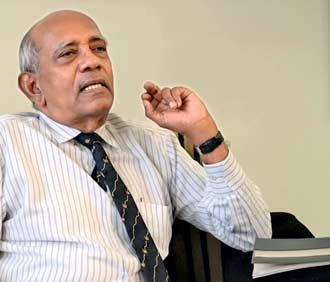
A lawyer by training who turned his back on a prestigious American scholarship to serve the Legislature, he rose to become the second Secretary-General under the 1978 Constitution. Renowned for his tactical brilliance and procedural mastery, he steered the institution through its historic relocation to Kotte, ensuring the preservation of the nation’s democratic memory.
Sri Lanka’s parliamentary history records with deep respect the life and service of Mr. Santi Nihal Seneviratne, former Secretary-General of Parliament, a public servant whose career spanned more than three decades and whose quiet dedication strengthened the foundations of democratic governance in the country.
Mr. Nihal Seneviratne was born on 28 May 1934 in Elpitiya, where his father, Dr. Don Robert Seneviratne, was serving as the District Medical Officer (DMO) at the Elpitiya Hospital. His mother was Mrs. Laura Goonawardena. He was the youngest in the family, with an elder sister, Iranganie, and an elder brother, Nissanka, growing up in a home that valued education, discipline, and service to society.
His schooling began at Royal College Primary Section, Colombo, from 1939 to 1944, followed by Royal College, Colombo, where he studied from 1945 to 1954. During a temporary transfer of his father to Galle, he spent two years at Richmond College, Galle, before returning to Royal College to complete his secondary education. He often reminisced fondly about his Royal College years, noting that the friendships formed during that period endured throughout his life as the ‘45 Alumni Group’.
An outstanding all-rounder at school, Mr. Nihal Seneviratne was a member of the Cadet Corps, rising to the rank of Corporal and leading the 22 firing team. He was actively involved in literary pursuits, serving as Chairman of the Senior Literary Association and as Editor of the Royal College Magazine for three consecutive terms. He was also appointed a College Prefect, reflecting his leadership qualities and personal discipline. It was during these formative years that he acquired the affectionate nickname “Galba”, a name by which he continued to be known among close friends throughout his life.
He continued his academic journey at the University of Peradeniya, graduating with a Bachelor of Laws (LLB) degree in 1959. In 1960, he entered Law College, successfully completing the Advocate Final Examination in 1961 and being enrolled as an Advocate of the Supreme Court that same year. At this early stage of his professional life, he was offered a prestigious American scholarship to study international law, a path that would likely have led to a diplomatic career. However, in a decision that revealed his sense of calling, he turned his back on this opportunity to enter parliamentary service instead.
In June 1961, Mr. Seneviratne joined Parliament as Second Clerk Assistant, marking the beginning of a distinguished 33-year career devoted entirely to the Legislature. He rose steadily through the ranks, becoming Clerk Assistant in 1965, later Deputy Secretary-General, and ultimately Secretary-General of Parliament. Following the retirement of Mr. Sam Wijesinghe, he was appointed Secretary-General on 1 August 1981, at the comparatively young age of 47, becoming only the second Secretary-General of Parliament in Ceylon after the 1978 constitutional change. He held this high office until 27 May 1994, retiring after more than three decades of continuous parliamentary service.
Renowned for his exceptional mastery of parliamentary procedure and practice, Mr. Seneviratne served Governments of differing political persuasions with equal diligence, impartiality, and tact - qualities clearly reflected in the tributes paid to him in Parliament upon his retirement, as recorded in the Hansard of 8 June 1994. His tenure coincided with a period of significant institutional transition, particularly following the introduction of the 1978 Constitution, during which he played a central role in translating constitutional provisions into effective parliamentary conventions and working practices.
One of the most demanding tasks of his career arose during the presidency of J. R. Jayewardene, when Parliament was relocated from the historic Galle Face building to the new Parliament Complex at Sri Jayewardenepura Kotte. Mr. Seneviratne was entrusted with overseeing this unprecedented transition. A vast convoy of lorries, buses, vans, and cars was mobilised to transfer a national treasure accumulated over 53 years - official records, files, photographs, paintings, furniture, and the entire Parliamentary Library. The relocation of fragile and irreplaceable documents, particularly the Library’s collections, posed immense logistical and archival challenges. Under his careful supervision, the transfer was completed successfully, preserving the institutional memory of the Legislature.
Among his many other contributions were the strengthening of Parliamentary Committees, the computerisation of parliamentary information systems, the improvement and expeditious production of Hansard, and the dignified representation of Sri Lanka’s Parliament in international and Commonwealth Parliamentary Associations. As part of his professional development, he gained valuable international exposure through three-month attachments to the House of Commons in Westminster, the Parliament of Canada in Ottawa, and the House of Representatives in Washington, D.C.
Despite spending virtually his entire professional life within parliamentary precincts, Nihal Seneviratne never lost sight of a fundamental principle: that Parliament and its officials exist to serve the people. His humility, patience, decisiveness, and willingness to mentor younger officers earned him the respect and trust of Members across party lines.
Following his retirement, Mr. Seneviratne remained actively engaged in public and intellectual life. From 1996 to 1998, he served as an Advisor to Prime Minister Ratnasiri Wickramanayake, and from 2004 to 2006, as an Advisor to Hon. Anura Bandaranaike, Speaker of Parliament. Well into his eighties, wearing his 84 years with a boyish yet gentle suavity, he continued to serve society in quieter but meaningful ways. As Vice President of the Royal College Union, he was instrumental in founding the Loyalty Pledge, a scholarship initiative aimed at supporting less privileged students from rural areas studying at Royal College.
He was also an author of note, recording his unique parliamentary experiences in two books: A Clerk Reminisces and Memories of 33 Years in Parliament. These works provide invaluable insights into the workings of Sri Lanka’s Legislature and preserve many incidents and traditions that might otherwise have remained unwritten chapters of parliamentary history.
Paying tribute at his retirement, Hon. Ranil Wickremesinghe described him as “a man of singular integrity”, observing that appreciation for his service should also prompt reflection on the long-term functioning and purpose of democracy in Sri Lanka.
As we now bid farewell not only to his office but to his life in this world, Mr. Nihal Seneviratne will be remembered as a true child of Parliament, a public servant of rare calibre, and a steadfast guardian of Sri Lanka’s democratic institutions. His legacy endures in the traditions he preserved, the institutions he strengthened, and the generations he inspired.
May he rest in peace.
07 Jun 2026 3 hours ago
07 Jun 2026 4 hours ago
07 Jun 2026 6 hours ago
07 Jun 2026 8 hours ago
07 Jun 2026 8 hours ago