27 Feb 2025 - {{hitsCtrl.values.hits}}
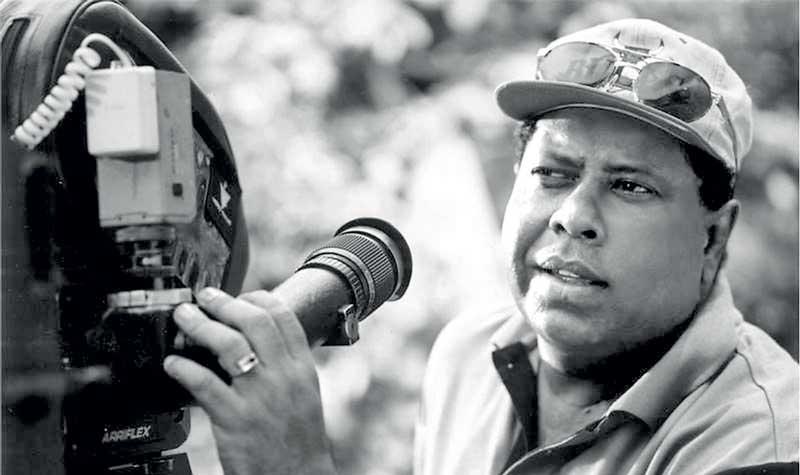
Film producer Bertram Nihal notes that Sri Lankan filmmakers often fail to conduct adequate research, a criticism echoed by viewers of ‘Rani’
Patrons who knew Richard and Manorani in real life have criticised how the film portrays these individuals
Richard worked briefly as a teacher at his alma mater, S. Thomas’ College, where he was reportedly well-regarded by students
The biographical treatment of celebrities often blurs fact and fiction, risking damage to the reputations of both the living and deceased
Theories suggest Premadasa’s regime targeted Richard for his plans to expose government-sponsored violence through his writing and drama
Richard never claimed to be a hero, but he was considered to be ‘brave’ in his work involving journalism and theatre
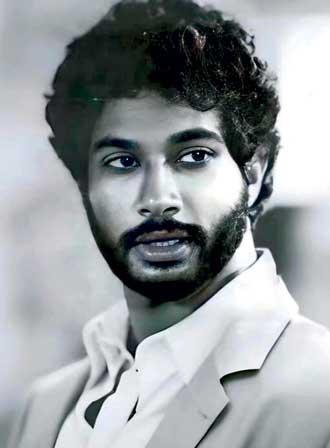
 If Richard de Zoysa’s life was associated with speculation during the best period of his life, a recent film made on him adds fuel to the fire of controversy that surrounds this character. Much has been written about this former media personality, rights activist, actor, scriptwriter and poet, but all those are first-person accounts of an individual, who no longer lives. As much as some of those facts do bring to light unknown titbits about Richard, some of them can be contested.
All who are interested in Richard de Zoysa’s life and times must first come to grips with the fact that he was a celebrity. The issue with celebrities is that their lives are associated with a good amount of cooked-up stories and a load of controversies. What’s important is that these controversies and what’s not very true mustn’t damage the character of those who are living and also the dead. As with the film, certain parts in the script harms the characters of Richard and his mother Manorani Saravanamuttu, who passed away in 2001.
|
The journalist and actor, Richard De Zoysa, who used his voice to speak up on behalf of the innocent lives lost during the political violence |
The film on Richard titled ‘Rani’ starts with the disclaimer that it is a story based on fiction. This is a good cover-up line to put when the director and scriptwriter of the film, Asoka Handagama, decides to dangerously ‘walk on a thin line’ which divides ridicule and praise. Much of the comments by patrons who saw the film and associated with these two characters in real life have rubbished how this cinematic production portrays these two individuals. This could be a good time for film producers and scriptwriters to think deeply as to whether they spend quality time on research.
Film/television producer, director, screenwriter and author Bertram Nihal, who appeared on Rupavahini’s programme titled ‘Nugasewana’ on Tuesday (February 25) maintained that Sri Lankan teledrama and film producers don’t spend sufficient time researching the topics that they use for their artistic creations. This complaint is echoed loudly by those who have watched Rani. There are so many facts about the two main characters in the film which is sure to anger those who closely associated with Richard and Manorani. But this is what happens when a filmmaker or author starts writing on a topic where sufficient literature about the chosen subject doesn’t actually exist. Then fiction starts setting foot in the area called the unknown. This is the likely explanation for feeding these two characters with questionable details which have no relationship to the actual people who lived. But when a scriptwriter of a film nurtures his own fantasies through characters in a film, it creates a world full of gremlins.
Richard died in 1990 when the media was not that sophisticated and advanced in technology. But still Richard was known then because of what he did and the dedication with which he set about his tasks. One appreciation penned on him in a recent newspaper states that Richard was a teacher for a short time at his alma mater, S.Thomas’ College Mount Lavinia. That piece on Richard goes on to state that he was loved by his students. Now that’s a lot!
So Richard had this skill to be loved by his close associates. Writers who have dedicated their pen to write about this fallen hero state that Richard was very concerned about the killing spree that took place during the Ranasinghe Premadasa era. He wanted it stopped and it eventually stopped, but not before his killing took place on February 18, 1990. In a short span of 32 years he had achieved so much that another talented person with his same interests might not have achieved in a lifetime.
Richard never claimed hero status, but he was ‘brave’ when he dedicated his writing and time for theatre and journalism. There is information that he was planning to expose Ranasinghe Premadasa (President of Sri Lanka from 1989 to 1993) through a drama for which he was penning the script. The script was drafted on the famous political catchphrase used by Premadasa which read ‘meh kawuda, monawada karanne’ which translated to English would read ‘Who is this and what is he doing’. Political critics state that Richard would have made Premadasa uneasy when the word got around that an anti-Premadasa drama was on the cards. There is another school of thought that Richard was bumped off by the regime because they feared he would expose the government-sponsored terror campaign which was in full swing at the time.
But Prof. Rajiva Wijesinghe, a close associate of Richard, states in a recent interview with the Daily Mirror that the latter had concerns about his life. According to Prof. Wijesinghe, ‘Richard knew he would be killed’. There is a prominent YouTuber in Sri Lanka who gets an interviewee on the show to talk about Richard and the family’s transition from Colombo 7 to less residential Welikadawatte in Rajagiriya. In one of these videos it is said how Premadasa moved from a middle-class environment to a highly residential Colombo, thanks to political power and ambition. Premadasa didn’t become any less aggressive or ambitious despite upgrading to a better location and Richard never stooped to low levels despite relocating to a location that didn’t match his ‘rich’ upbringing. In more raw terms, the relocation for Premadasa didn’t make him a good man and in the same line of thinking, Richard’s new environment didn’t make him a bad person.
Despite ‘moving on in life’ and repositioning themselves, the two never shed their original characteristics. Premadasa will be hated more because of this film and the name Richard de Zoysa is sure to be placed in a large audience that continues to grow with the advancement of technology and their pursuit of the truth.
14 Jun 2026 14 Jun 2026
14 Jun 2026 14 Jun 2026
14 Jun 2026 14 Jun 2026
14 Jun 2026 14 Jun 2026
14 Jun 2026 14 Jun 2026