05 Sep 2025 - {{hitsCtrl.values.hits}}
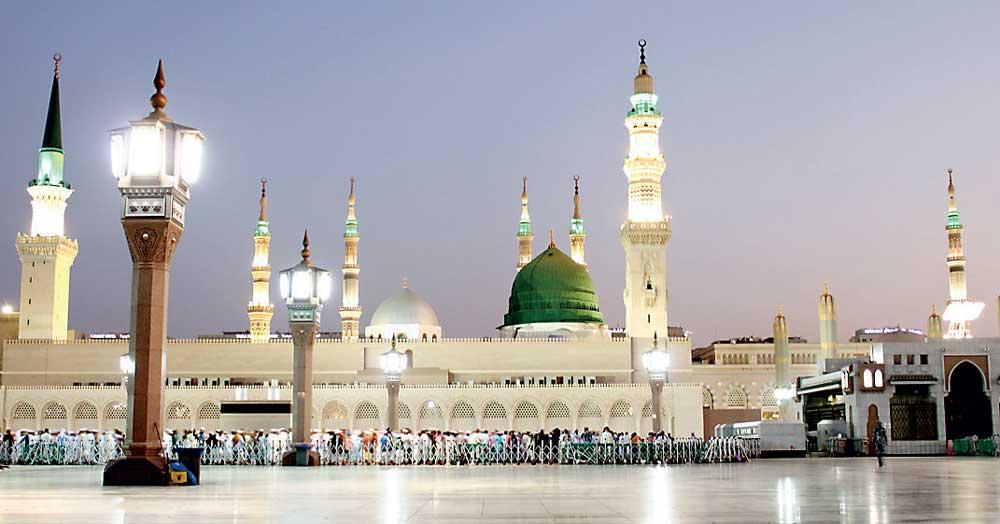
Pictured is the Green Dome of Al-Masjid an-Nabawi (The Prophet's Mosque) in Medina, Saudi Arabia. File Photo
By Dr. Zain Fayiz Saleem
Today marks the birth anniversary of Prophet Muhammad, the final Messenger of Almighty Allah and a transformative figure whose teachings brought profound moral, social, and spiritual reform. He is recognised as one of the greatest reformers in human history, inspiring billions across the world. The commemoration, known as Meelad-un-Nabi, falls on the twelfth day of Rabi-ul-Awwal, the third month in the Islamic lunar calendar. Nearly two billion Muslims worldwide observe this occasion, honouring his noble character, compassion, and enduring guidance to humanity.
In recognition of the significance of this day, September 5 has been declared a public and mercantile holiday in Sri Lanka.
Early life and Upbringing
Prophet Muhammad was born in 570 AD in the holy city of Makkah into the noble Quraysh tribe, a community renowned for its trade and influence. He was the son of Abdullah and Aminah. His father passed away before his birth, and his mother died when he was only six years old. Then he was raised by his grandfather, Abdul Muttalib, and later by his uncle, Abu Talib. Young Muhammad grew up with dignity, honesty, and integrity. These qualities earned him the titles ‘Al–Amin’ (the Trustworthy) and ‘As–Sadiq’ (the Truthful).
A Model of Integrity and Fairness
From an early age, Prophet Muhammad distinguished himself in a society marked by idolatry, dishonesty, and moral decline. He never engaged in corruption or injustice, earning respect across social, racial, and religious divides for his honesty and fairness. His reputation as a man of integrity became the cornerstone of his future leadership.
Noble Qualities and Compassionate Leadership
The prophet’s life was defined by humility, compassion, and generosity. He championed justice, mercy, equality and kindness. His concern for the poor, orphans, and women, his respect for other faiths and his emphasis on tolerance and peace made him a beloved figure in the city of Makkah and beyond.
Establishing Justice in Madinah
As the Governor of Madinah, Prophet Muhammad introduced one of history’s earliest constitutional frameworks, ensuring equal rights for all Muslims, Christians, Jews, Zoroastrians, and others. His governance prohibited bribery, exploitation, and oppression, creating a society based on dignity and justice. His ability to unite diverse tribes under a single inclusive system of governance remains a lesson for modern leadership.
Global Recognition of His Leadership
Leadership scholars across the world have admired Prophet Muhammad’s model of leadership. British scholar and leadership theorist Professor John Adair, in ‘The Leadership of Muhammad’, highlights his integrity, humility, and moral authority, which made him not only a religious leader but also an effective statesman.
Renowned playwright, George Bernard Shaw, described him as the “Saviour of Humanity” and he further remarked in his book ‘Genuine Islam’ published in 1936, “if a leader like Muhammad were to guide the modern world, he would bring peace and stability”. Mahatma Gandhi praised the Prophet’s simplicity and honesty, affirming that Islam’s strength lay not in the sword but in his character. Michael H. Hart, an American astrophysicist, historian, and author, ranked Prophet Muhammad as the most influential figure of all time in his landmark book ‘The 100: A
Ranking of the Most Influential Persons in History’, recognising the global impact of his mission. Leadership scholars state that if Prophet Muhammad’s model of leadership were applied today, it could provide solutions to many of the world’s challenges.
His Social and Family Life
Prophet Muhammad embodied simplicity in his personal life and compassion within his family. As a devoted husband and father, he raised four daughters with care and respect. He taught his followers: “The best among you are those who are best to their wives”. Generosity was a hallmark of his character. He encouraged feeding the poor, regardless of religion, and taught Muslims to greet others with warmth, reflecting his message of universal kindness.
The First Revelation
At the age of forty, during a period of meditation in the Cave of Hira on Mount Noor near Makkah, Prophet Muhammad received the first revelation of the Holy Qur’an through the Angel
Jibreel (Gabriel). This profound event marked the beginning of his twenty-three-year mission as a prophet, during which he guided humanity from ignorance and moral decline toward faith, justice, and spiritual enlightenment.
A Messenger of Humanity
Prophet Muhammad’s message transcended boundaries of time, culture, and geography. His call for peace, equality, justice, and compassion continues to inspire humanity. Leaders, intellectuals, and reformers across history have recognised his timeless contribution to moral and social upliftment.
His Final Days and Everlasting Legacy
On June 8, 632 AD, corresponding to the 12th of Rabi-ul–Awwal in the Islamic calendar, Prophet Muhammad passed away at the age of 63, as measured by lunar years. His mission transformed society, leaving a legacy of justice, mercy, and humanity that remains deeply relevant today.
More than a religious figure, he was a reformer, statesman, family man, and above all, a role model for all humanity. His example of equality, justice, and compassion continues to guide generations in building peaceful families, just societies, and ethical leadership.
In an era yearning for peace and harmony, Prophet Muhammad’s message endures as a timeless source of inspiration for the world.
08 Jun 2026 17 minute ago
08 Jun 2026 20 minute ago
08 Jun 2026 27 minute ago
08 Jun 2026 35 minute ago
08 Jun 2026 2 hours ago