18 Oct 2025 - {{hitsCtrl.values.hits}}
|
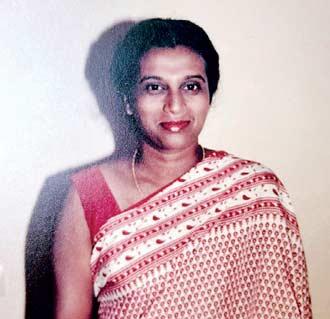
Mrs J: The architect of CIMA’s educational legacy |
Mrs Jayasinghe ran down the wooden stairs, making a louder noise than normal. They had begun this new exercise to conduct classes for ICMA candidates. The lecturer was at Mrs Jayasinghe’s table, having discovered the classroom empty. Nalis Rajendra, Council Member supervising education, shouted from downstairs that the students were crowding the lending desk and wanted her to shoo them away. Ovitige, the library assistant, ran up with the message.
Mrs Jayasinghe was the Manager of Education Affairs. That title, if anything, was very misleading. What did it really have to do with what she was doing? But I find I am not telling the story as it should be told. So I shall follow the advice of the King of Hearts to the White Rabbit in the Court in Alice in Wonderland. “Begin at the beginning”, the King said gravely, “and go on to the end, then stop.”
Mrs Jayasinghe joined ICMA (Institute of Cost and Management Accountants) mid-year 1985, when Lakshman Williams migrated to Canada. At this time, all affairs of ICMA were supervised by a Council. Mr Tissa Manakkara was the President, and Mr Muzzamil was the Secretary. They advertised, interviewed and selected. Of course, the Council told the staff that a new manager was coming. A new manager did come that week. She came in a Mitsubishi Lancer. The staff met her and led her to her table. She was pleasant and well-groomed. She was the only staff member who drove a car. Mrs Wijesuriya, the Librarian, was dropped off.
In the 1980s, ICMA was a small Management Accounting body belonging to the parent body in London, founded by a few members in 1965, interested in furthering the value of the qualification here. Membership was small, even though student numbers were a little higher. ICMA had been moving from address to address until they arrived at Skelton Road off Dickman Road. This was a large Bungalow, the colonial type, with several rooms and toilets. The downstairs occupied the library, Council room and two classrooms. Mrs Jayasinghe sat upstairs surrounded by the accountant and secretaries.
The staff called her Mrs Jayasinghe, while two members called her Mrs J. Only the Librarian, Mrs Kumudini Wijeysuriya, called her Nilanthi. But then, she had that special privilege, being her close friend. They confided in each other, and many office problems found solutions at their desks.
The term Education Services was stretched to its extreme in the work schedule of Mrs Jayasinghe. To begin with, the Institute’s main purpose was to provide services to students hoping to qualify as Management Accountants. There were independent educational bodies and colleges that provided tuition for Accountancy students and lectures, in competition with one another. There was the Colombo Business School, and later Wisdom Academy and Mercury. But at the Council meeting, members resolved that the quality of lectures had to be improved. That’s how ICMA involved itself in providing lectures.
It was easy for the Council to decide on tuition provision, but the work leading to it was enormous. The office had classrooms sufficient for 30 students. But accessing lecturers, collecting fees, co-ordinating lectures, keeping abreast of syllabus coverage, and revision were tasks in themselves.
Mrs Jayasinghe already had to look after student registration, continuation of exam success and fee payment. That was her component task with London. In London, they were focused on pass rates and new registrations. Students had to find internships because their studies were closely linked to work. Mrs Jayasinghe maintained files with employer needs and biodata. She was the go-between the employer and the student. She took every opportunity to see that her students were satisfactorily employed. It was she who managed the barometer of right remuneration, never allowing underemployment.
She also had to be in charge of the activities of the students. There was a very active Student Committee arranging events for students. The student organised an annual dance at a hotel. Mrs Jayasinghe would be overseeing the programme, ensuring all activities were within the bounds of accepted rules. Infact, she sat at every student committee meeting working closely with them. They arranged lectures and seminars for themselves. All meetings were held in the evenings and so Mrs Jayasinghe would spend longer hours during such days.
Her relationship with the students was cordial at all times but she wielded some hidden authority that ensured dignity and respect. Students were in fact reasonable and amenable. While there were so many student issues in many other organisations, Mrs Jayasinghe handled her responsibilities with grace, poise and charm. She was always with a smile and never had a bad word for anyone. While she handled student affairs, she also had to co-ordinate several seminars for members. The chief among them were the seminar on Accounting for Non-Financial Managers and the series on tax. The seminar on Accounting was popular and sometimes held twice a year. Mrs Jayasinghe had to advertise the seminar after arranging with a hotel. Usually, a hotel belonging to Prof. Furkhan, a Council member himself, was arranged. The seminar was held over a weekend. All coordination was done by Mrs Jayasinghe. Mr F.X.R. Pereira was the Council member in charge, and he conducted some of the sessions. It is to the credit of Mrs Jayasinghe that the seminar was well run. They were able to have repeated sessions only because managers found them well run. The Council also ran an annual tax course for members. Their Syllabus did not include Sri Lankan tax. Mrs Jayasinghe invited a tax Commissioner to conduct a course over ten Saturdays. She had to arrange a room, a whiteboard and refreshments. This was before computers arrived, which happened close to 2000.
She also handled programmes in 1987 when ICMA became CIMA (Chartered Institute of Management Accountants) and a delegation with the world President and staff arrived in Sri Lanka. At the same time, CIMA had built its own facility at Elvitigala Mawatha and was ready to move in. In the new premises, Mrs Jayasinghe was given a room of her own. The CIMA building was designed by Lakshman Alwis, and he spent valuable hours ensuring that it was a building worthy of CIMA that was eventually built. The President of the country and Minister Gamini Dissanayake declared the building open. Mrs Jayasinghe, of course, presented the student committee to the visitors.
In her own way, she shaped the future of many a student. She helped them with their studies and the examination process. Exams were held in large halls such as the BMICH. She had to liaise with the Government Examinations Department in conducting the exams. While the Department ran the sessions, Mrs Jayasinghe had to coordinate the process. It was she who managed the London side of things. Even though an officer came from London occasionally, Mrs Jayasinghe capably held the Sri Lanka front. Thus, when Mrs Jayasinghe moved to the Open University of Colombo in 1994, CIMA did shed a tear.
She was such a devoted person, never getting criticised in a very open occupation and working with an army of professionals. Well done, Mrs J, You certainly deserve rest.
Upali Ratnayake
07 Jun 2026 15 minute ago
07 Jun 2026 2 hours ago
07 Jun 2026 4 hours ago
07 Jun 2026 5 hours ago
07 Jun 2026 5 hours ago