18 Nov 2025 - {{hitsCtrl.values.hits}}
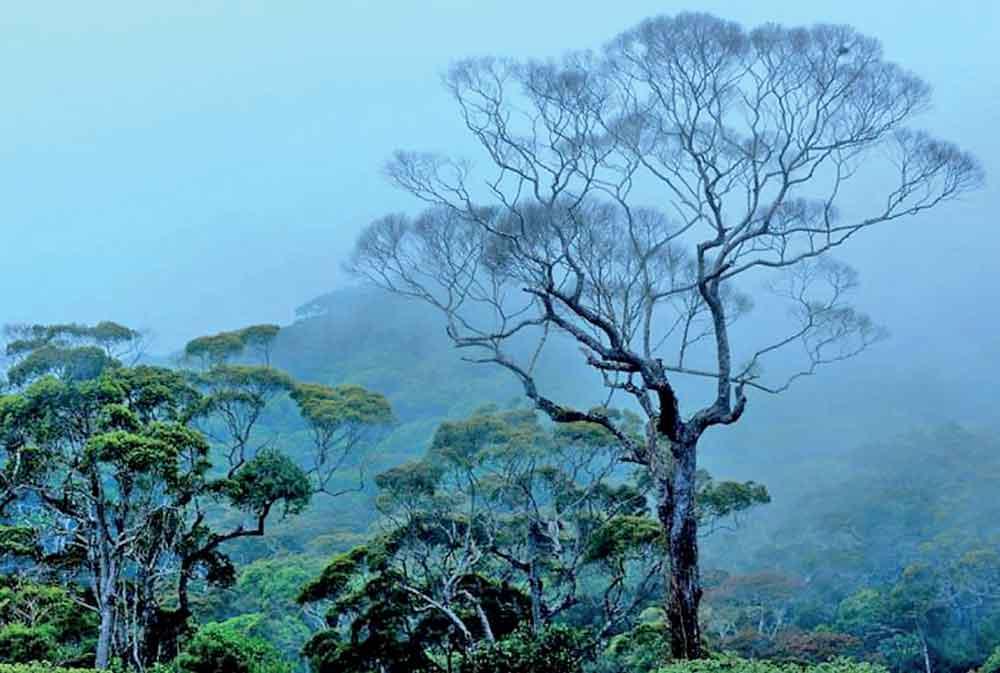
In 1958, Martin married in Kudawa village and began a new life at the edge of Sinharaja forest
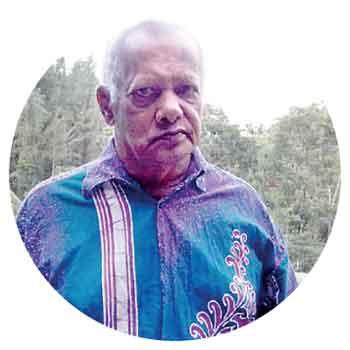 |
| Martin Wijesinghe storytelling spirit bloomed not in bookshelves, but beneath the emerald canopy of Sri Lanka’s last and ancient rainforest Sinharaja |
By Sugath Kulathunga
Who hasn’t heard of Martin Wickramasinghe? The nation reveres him as a literary giant. But few know of another Martin — Martin Wijesinghe of Sinharaja — whose storytelling spirit bloomed not in bookshelves, but beneath the emerald canopy of Sri Lanka’s last and ancient rainforest.
I first met him through Dr. Vajira Dharmawardena, a fellow nature enthusiast and Editorial colleague to Sri Lanka’s popular science publication Vidusara. Vajira invited me for one of his sudden forests expeditions, and that day I encountered Martin Wijesinghe for the first time. From then on, he became “Martin Aiyya” to me; he was a warm, wise companion whose tales painted vivid exhaustive picturesque image patterns in the mind of wildlife lovers.
Martin’s stories were born within the forest: folklore, legends and lived experiences woven into the rhythm of the jungle.
I urged him many a times to write them down, but his life was too deeply rooted in the forest — always walking its trails, always sought after by researchers for his encyclopedic knowledge of its flora and fauna.
Years later, long before the COVID-19 pandemic, Martin called me. “Aren’t you coming this way soon? I’ve written a book,” he said. I visited him with one of my editorial staff colleagues Hasantha Malli.
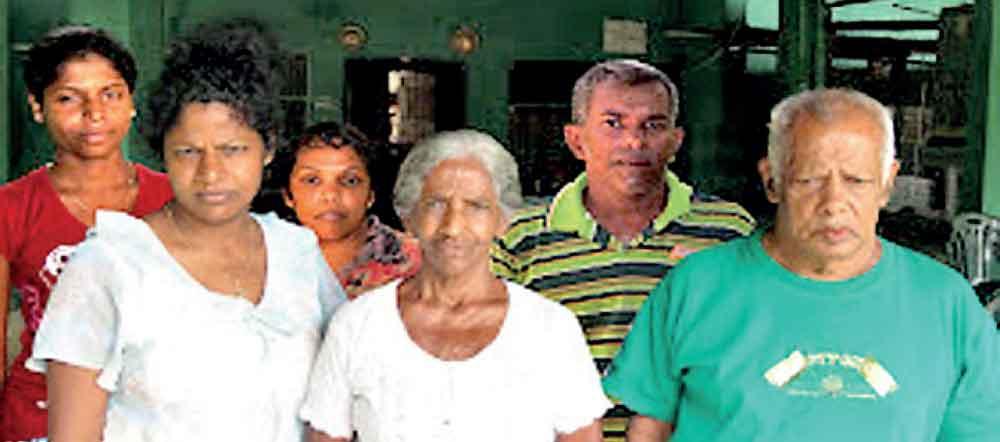
Martin (extreme right) pictured with his family
That day, from morning till dusk, he sat in front of his home and recited — with theatrical flair and vivid memory — his enchanting tale titled “Sudusiya of the Rajasingha Forest.” It was a forest adventure filled with hidden bandits, a young man they encounter, a treasure buried in a cave, a fleeing young couple, a sage-like elder, and two lives transformed forever. “Someone could easily turn this into a teledrama. If anyone’s interested, I’d gladly offer it,” he said with enthusiasm, gifting me a copy of his manuscript.
A life rooted in the wild
Martin Wijesinghe was born in 1939 in Petiyakanda, a village bordering Sinharaja. From childhood, his heart leaned toward nature more than school. At age 15, after completing Grade 8, he left formal education and entered the “University of the Forest.”
His life unfolded through rugged experiences — working as a labourer, carpenter, and rubber tapper — but none brought him true fulfillment. In 1958, he married in Kudawa village and began a new life at the forest’s edge.
His calling arrived when a timber extraction project began in Sinharaja to supply a plywood factory. Martin was hired as a field assistant in a reforestation programme initiated to mitigate the damage. He absorbed knowledge about ancient trees, medicinal plants, and wildlife behaviour, becoming a true forest scholar.
In 1972, the Wildlife and Nature Protection Society joined public protests against the destruction. Under Thilo Hoffmann’s leadership, a scientific investigation was launched. Martin became an indispensable guide. As a result, all logging in Sinharaja was halted by 1977, and in 1978, it was declared a UNESCO Biosphere Reserve.
The University of Peradeniya took over research efforts, and Martin was appointed as caretaker of the newly built research centre. For someone who had left school while in Grade 8, working alongside young researchers felt like returning to school. His rise began there.
Martin studied trees, animals, their behaviours, and interrelationships with unwavering curiosity. He conducted his own observations and began using books and journals. He shared his knowledge generously. Over time, he built an impressive library, enriched by donations from researchers around the world. He read them all and explained their contents with clarity and passion.
Scholar without a degree
Martin’s thirst for knowledge was insatiable. Once a Researcher Neela D. Soysa gifted him an English–Sinhala dictionary, and he taught himself English. He later studied Latin under a teacher from St. Thomas’ College, and became conversant in several languages including German.
Even in his final years, Martin retained vivid memory of the scientific names, behaviours, and life patterns of plants and animals. This was a natural gift — a mind attuned to learning.
He was a truly devoted student of the forest. I once stayed at his guesthouse “Disi-Thuruwa,” located near the Kudawa entrance to Sinharaja, and learned many forest secrets from him. One afternoon, after a short nap, I awoke to find Martin gazing meditatively toward the distant forest canopy. He was repeatedly tracing shapes in the air with his index finger. Curious, I asked what he was doing. Calmly, he replied that whenever he had a moment of rest, he would write letters in the sky to memorise the names of forest plants and animals. Such was his unwavering dedication to learning — a rare and remarkable human being.
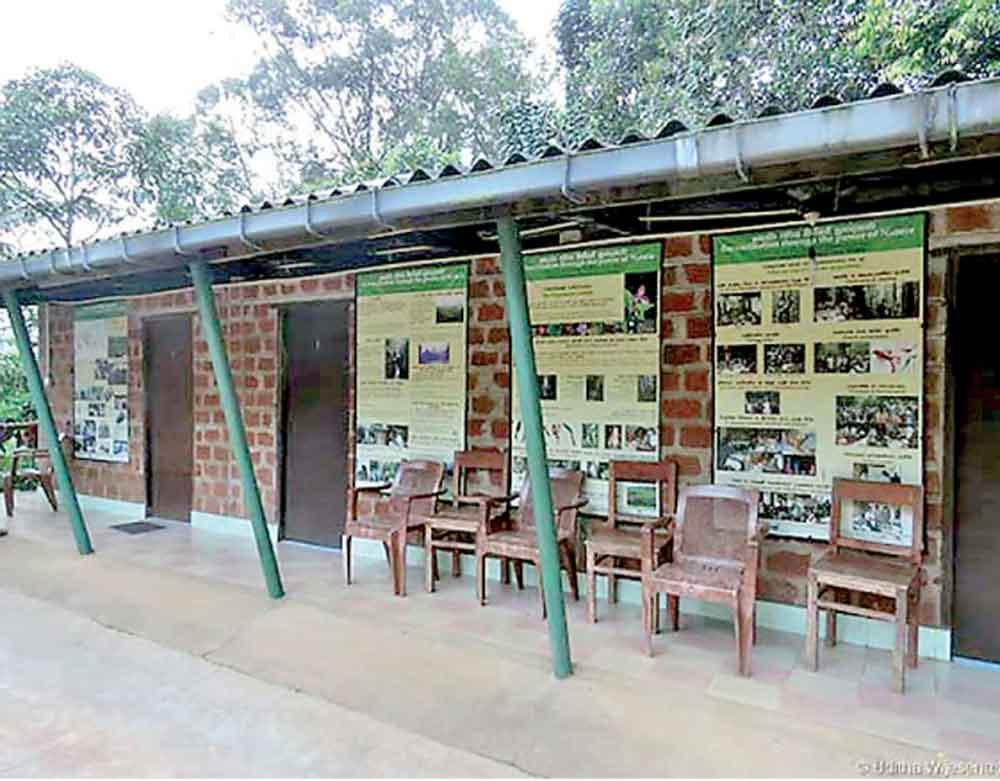
Martin’s wilderness retreat
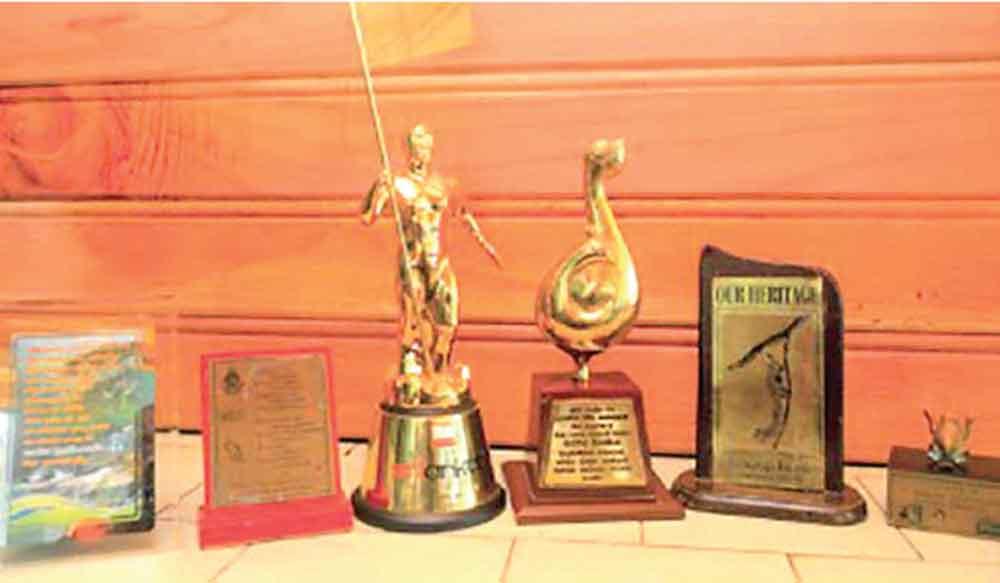
Awards received by Martin Wajesinghe
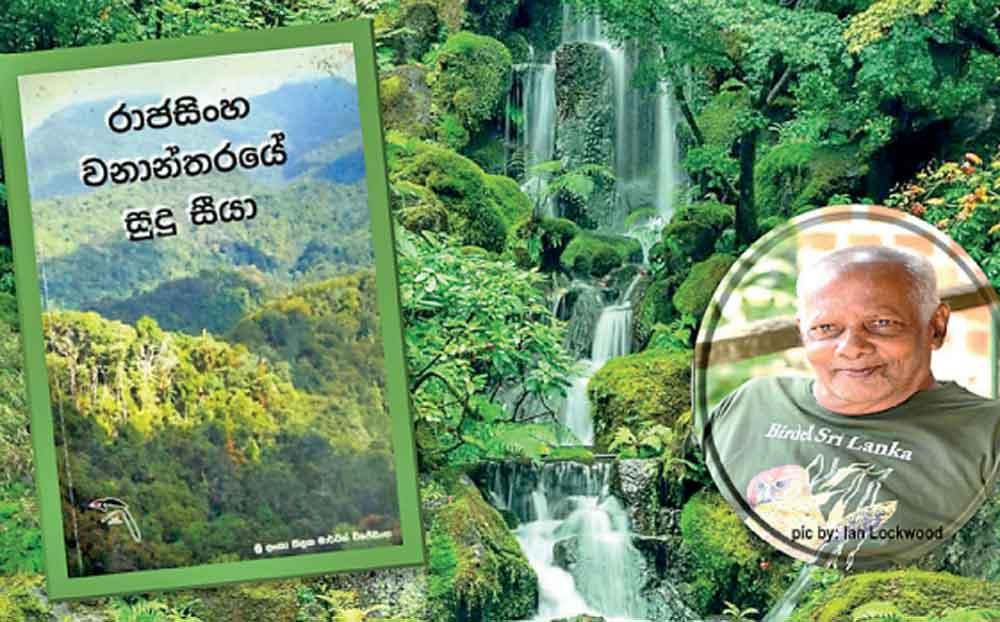
The book penned by Martin Wijesinghe
To all who came to study or simply enjoy the forest, both local and foreign, Martin was indispensable. He was a research assistant, advisor, guide, and a true friend — a rare soul who treated everyone with kindness and equality. In 1994, the Government of Sri Lanka awarded him the Sri Lanka Thilaka honour. His retirement years were devoted entirely to the forest. His humble home “Disi-Thuruwa,” became a haven for researchers from around the world.
He guided countless graduates, though he never held a university degree. Yet no institution that benefited from his service ever felt anything was lacking.
Martin remembered all who helped him — Professor Sarath W. Kotagama, Professor Nimal and Savitri Gunatilleke, Professor S. Balasubramaniam, G.P.B. Karunaratne, Neela D. Soysa, Rihana Raheem of March for Conservation, M.D. Dissanayake, Cyril Wijesundara, and Peter Ashton among them.
He possessed traditional knowledge gathered through observation — insights that were new yet essential to modern researchers. He documented the history, language, and cultural uniqueness of surrounding villages, and published a youth novel of his own.
Martin often said, “I protected the forest. The forest protected me.” Now, four years since his passing, the forest feels emptier. At the very least, it is time to reprint his youth novel — to honour the man who gave so much, and asked for so little.
07 Jun 2026 07 Jun 2026
07 Jun 2026 07 Jun 2026
07 Jun 2026 07 Jun 2026
07 Jun 2026 07 Jun 2026
07 Jun 2026 07 Jun 2026