15 Mar 2018 - {{hitsCtrl.values.hits}}

In Premaya Nam, Vishwa, played by Shyam Fernando, is disgusted by his urine and cringes at the act of passing it so much that he has to have a shower every time he goes to the lavatory. This impedes on his marriage and works so much that after he leaves his job and after his wife leaves him, he admits himself to the National Institute of Mental Health at Angoda.
 After a few encounters with the hospital staff and the other patients, he thinks he’s cured, casually dismisses the doctor’s concerns, procrastinates on his medication and treatments, and leaves the hospital before his term is over. But he is not cured: OCD (Obsessive Compulsive Disorder) usually is not, which is where he realises that his illness can be cured only by his free will.
The wife returns to him on condition that he tide himself over his mania, and in the end, with the two of them at a restaurant, we realise that he has tided over.
The English version of the title, Dirty, Yellow, Darkness, is a sleek summing up of the fears that beset Vishwa, who I personally think is the first solidly drawn up mental patient to be depicted in a local film.
The Sinhala original, on the other hand, emphasises on the romantic angle to the plot and the conflicts between Vishwa’s parents and his in-laws. When the latter realise, eventually, that Vishwa is not really mad and his illness is curable, the catharsis they reach is ours as well, since we are a part of the same audiences who treat mental illness as crudely and one-dimensionally as them.
The fact that the director of Premaya Nam himself suffered from OCD, and the fact that he researched well on the stereotypes sustained by the popular culture here with respect to those like him, thus helped in making his debut probably one of the most refreshingly novel contemporary movies I’ve seen in Sri Lanka. And that’s saying a lot.
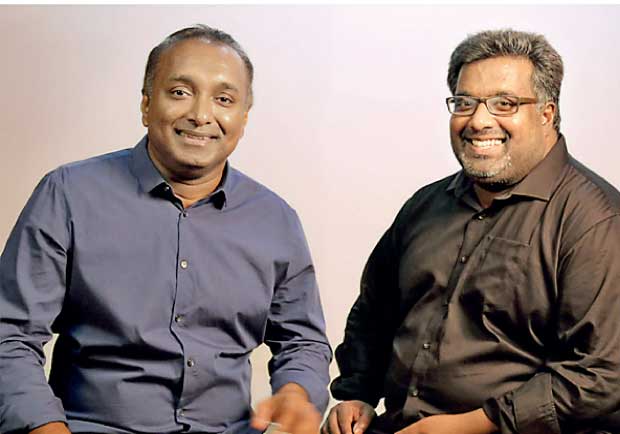
In an interview with Global Press Journal, Vindana (who co-directed the movie with his brother, Kalpana) contends that when compared with the horrendous resource-deficits characteristic of the public sector in general, the budget expended on meals, medicines, and everything else on more than 1,000 patients by the NIMH is astounding.
Part of the charm of Premaya Nam is how it raises our eyebrows in this respect, how it presents us with stereotypical freaks and then demolishes the stereotypes we’ve built up and pasted over them. The dramatisation of mental health has been one of the most sorely lamentable points about our popular culture, because the most frequently resorted to clichés and qualities by our filmmakers and television directors – the overdrawn drawl, the deliberately wrong accent, the apish look – have accentuated our fears of the typical mental patient, who at the hands of these directors display characteristics more in line with Down syndrome patients than with actual mental patients.
The typical “human interest” Sinhala movie almost always tends to portray, as the hero, the gangster, the outsider, the man or woman whose only strength is his or her sanity.
By questioning whether we need even that sanity, Vandana and Kalpana have provided us with a different hero, and barring the defects of the film, which aren’t apparent on a single viewing (you need to see Premaya Nam twice to infer what those defects are), that’s the biggest strength this film has.
It is edited and shot so rapidly, without losing track of the need to explicate, to elaborate, that it’s very nearly a perfect piece of work.
The acting, the script, the camerawork, even the cameo appearances by professionals from other fields, all add up so much that there’s hardly anything BAD that can be said of Premaya Nam.
In that sense, the first half of the film is what parses along really well.
If Vishwa’s visit to Angoda seems too quickly cut and too quickly done away with, it can mean either of two things: the director wants to carelessly rush over and considers the scenes at the hospital to be peripheral, or the director wants to concentrate on Vishwa so acutely that he wants us to go beyond our hero’s visit to Angoda with regard to his coalescence.
Vishwa is never truly rehabilitated during his tenure at Angoda, but that is only half the story; the main purpose for which he’s placed at the NIMH is for him, and us, gain an understanding of what it means to be a mental patient in the first place.
Neither the comical interludes between a hard done by a patient (Who looks aggressive, but has his reasons) and Vishwa nor the romantic interludes between Vishwa and the head nurse (played by Suranga Ranaweera) go anywhere.
Premaya Nam is realistic than idealistic, more a poignant anecdote than a mushy everyone’s-happy Hollywood homily
The truth is that they don’t have to because, by the time they end (for the time being), we know what they’re there for: to understand that those who suffer from schizophrenia, are bipolar, and have OCD aren’t unredeemable freaks by any stretch of the imagination.
As Himal Kotelawala aptly puts it in his review, though, Premaya Nam can’t be considered as Sri Lanka’s answer to Rain Man or A Beautiful Mind, because (for me, at least) in those two movies, tempered as they are by the eternal desire of the typical director to pander to popular audiences, the hero (the autistic savant in Rain Man, the schizophrenic economist in A Beautiful Mind) is redeemed by the outside world’s acceptance of his frailties.
Premaya Nam does not work out such a miracle, because our hero, at the instigation of his wife (played by Samanalee Fonseka), has to transcend those frailties by his own bootstraps.
When Samanalee tells him that she won’t return to him if he reverted to his earlier habits, for instance, we are with her, because while we understand Vishwa (as she does), we also know (again, as she does) that our society has not evolved so dramatically as to expect that it will accept him for who he is if he continues to behave the way he does.
In that respect, Premaya Nam is more realistic than idealistic, more a poignant anecdote, than a mushy everyone’s-happy Hollywood homily about those who are (considered to be) different from us.
And so, in that last scene, when Vishwa decides to stay with his wife instead of moving to another table after dropping his cutlery (which earlier to him would have meant eating with dirty forks), Vindana and Kalpana have it both ways: a resolution for our hero, and a resolution for us.
I fervently think that’s the real strength in Premaya Nam, apart from its honest, sincere, startling depiction of OCD.
Without conceding that Premaya Nam represents, and affirms, life as it actually is (it’s still a dramatisation, and at certain points it tends to engage in wishful thinking) – always a pitfall when it comes to reviewing movies like this, for the critic at least – I do realise and appreciate the fact that Vindana and Kalpana has done something different, with a refreshingly different cast and crew (the cameraman, Jaan Shenberger, has worked on a short film and a TV series before; Premaya Nam is his debut in film).
It is like watching a reworked Satyajit Ray or Jean Renoir movie because we identify with every character, even those who lack empathy, and when we do, there’s nothing more that we really want.
The innocence that envelopes the story is the same innocence that, in the end, envelopes us. You don’t feel cheated; the claps and the tears these two brothers have evinced from us are truly deserved, because they sum up just how intimate we grow, as the story progresses, with the material, the backdrop, of that story.
23 Jun 2026 14 minute ago
23 Jun 2026 43 minute ago
23 Jun 2026 2 hours ago
23 Jun 2026 2 hours ago
23 Jun 2026 2 hours ago