02 Jul 2025 - {{hitsCtrl.values.hits}}
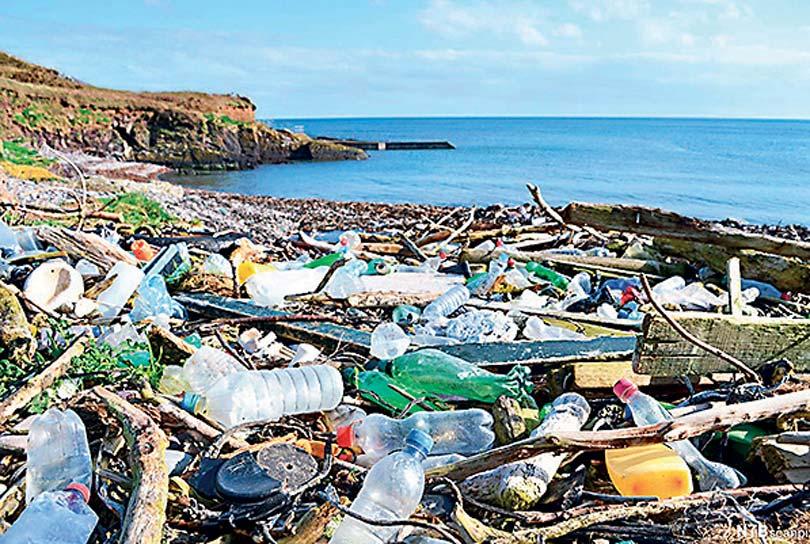
According to World Wildlife Fund right now, there are 150 million metric tonnes of plastic in our oceans
 Recent studies suggest that Sri Lanka generates about 938 metric tonnes of plastic waste every day
Plastic pollution has far-reaching environmental consequences, affecting ecosystems, wildlife and more particularly human health
In 2022, scientists from the Netherlands and the U.K. announced they had found tiny plastic particles in living humans
 Plastic waste is a growing issue worldwide. According to United Nations Environment Programme (UNEP) a truck load of plastic waste enters the ocean every minute we spend on this planet.
Recent studies suggest that Sri Lanka generates about 938 metric tonnes of plastic waste every single day. The same study has revealed that about 300 metric tonnes of this was collected daily by the local authorities. A majority of plastic waste metric tonnes per day are openly and illegally dumped. In addition, only 38 metric tonnes of this plastic had been recovered for recycling. At present, uncollected waste is estimated to account 638 metric tonnes per day, of which about 140 metric tonnes per day is self-disposed. As much as 419 metric tonnes of waste is openly and illegally burnt in individual premises.
Plastic pollution has far-reaching environmental consequences, affecting ecosystems, wildlife, and more particularly human health.
Plastics are made from a complex combination of chemicals, including additives that give them strength and flexibility. Both plastics and chemical additives can be toxic. Over time, plastic breaks down into tiny particles called microplastics. These infiltrate water sources, soil and even the food chain, posing risks to both animals and humans. Studies have found microplastics in fish, drinking water, and even human blood. In 2022, scientists from the Netherlands and the U.K. announced they had found tiny plastic particles in living humans, in two places where they hadn’t been seen before; deep inside the lungs of surgical patients, and in the blood of anonymous donors.
Janice Brahney, a biochemist at Utah State University of United States who studies how dust transports nutrients, pathogens, and contaminants, says she is concerned because plastic production continues to increase dramatically, while so much about microplastics remains unknown. In 2020, 367 million metric tons of plastics were manufactured, an amount that is forecast to triple by 2050. “It is alarming because we are far into this problem and we still don’t understand the consequences, and it is going to be very difficult to back out of it if we have to,” she says.
It is said that the manufacturing process of plastics involves over 16,000 different chemicals, with more than 4,200 classified as hazardous to human health and environmental safety.
Harmful effects on nature
According to World Wildlife Fund right now, there are 150 million metric tonnes of plastic in our oceans—and we’re releasing an additional 8 million metric tons each year. Plastic pollution exists almost everywhere in the ocean, from the remote seas of the Arctic to the floor of the deep sea.
Sea turtles mistakenly eat plastic bags that they confuse with jellyfish. Sea birds, whales, dolphins, and other marine animals often turn up dead with stomachs full of plastic or get caught in abandoned plastic fishing nets.
Even land animals are now forced to live among plastic pollution.
The Ministry of Environment in year 2021 has developed the ‘National Action Plan on Plastic Waste Management (2021-2030)’ to address this crisis, encouraging policies based on the ‘Reduce, Reuse, and Recycle (3R)’ principles.
According to the action plan Sri Lanka currently imports virgin plastic raw materials for varying applications which amounts to 300,000 MT/annum. Municipal solid waste generation of all solid waste is currently around 10,768 MT/D and collection by local authorities only 3,458 MT/D, in which over 50% of uncollected waste, containing valuable plastics, goes to open dumps and the surrounding environment. The inflow of plastic packaging including unaccounted packaging of other goods is increasing. Polythene bags and large amounts of single use plastics have become a key issue.
It is to be noted that the primary objective of the National Action Plan is to assist in achieving the National Waste Management policy’s vision – enabling a “Healthy life and Cleaner Environment for all”. Among other secondary objectives I believe it is important to highlight the need to make all citizens and institutions aware of the need to understand their legal and constitutional responsibility of engaging in plastic waste management.
According to Article 28 (f) of the Constitution of the Democratic Socialist Republic of Sri Lanka every citizen has an inseparable performance of fundamental duty to protect Nature and conserve its riches. This means every citizen is required to safeguard the environment and its natural resources for current and more importantly for future generations. It involves taking action to preserve ecosystems, wildlife, and biodiversity while ensuring that resources such as forests, water, and minerals are used sustainably.
On the other hand, institutions at national level such as Ministry of Environment (MOE), Central Environmental Authority (CEA), and the National Solid Waste Management Support Centre (NSWMSC) must play an active role in coordinating provincial, local and private parties such as district departments, Municipal Councils, Urban Councils, Pradeshiya Sabhas, and private waste management bodies to reduce plastic pollution as a mean to fulfil the State pledge to protect, preserve and improve the environment for the benefit of the community stipulated under Article 27 (14) of the Constitution.
One must not forget that the Supreme Court of Sri Lanka has already set judicial precedent in cases such as Ravindra Gunawardena Kariyawasam v Central Environment Authority and Others [Chunnakam Power Plant Case - 2019] highlighting the failures of national level environmental institutions could result breach of fundamental rights of people. This would mean that the citizens could seek relief from courts for the failures to fulfil statutory obligations by the State institutions.
In order to make the National Action Plan a reality education plays a vital role in reducing plastic pollution by fostering awareness, changing behaviours, and empowering communities to take meaningful action.
A commendable effort was piloted in the Southern Province in year 2022-23 within three selected schools. Although emerging sustainability topics have yet to be introduced into Sri Lankan school curriculum, this project developed a Teacher Resource Book and complementary Student Workbook detailing opportunities to realise a plastic waste-free future.
Therefore, Sri Lanka must press on such initiatives to shape the present and future generations to adopt lifelong sustainable habits and inspire others to do the same. We must act now. Reduce plastics coming to your home, think how you can reuse before you discard plastic, ensure all plastics reach recycle at the end of its lifespan.
(The author has been a lawyer, judicial officer and legal reformer in Sri Lanka, Republic of Fiji and Seychelles)
08 Jun 2026 7 hours ago
08 Jun 2026 7 hours ago
08 Jun 2026 7 hours ago
08 Jun 2026 7 hours ago
08 Jun 2026 9 hours ago