17 Sep 2025 - {{hitsCtrl.values.hits}}
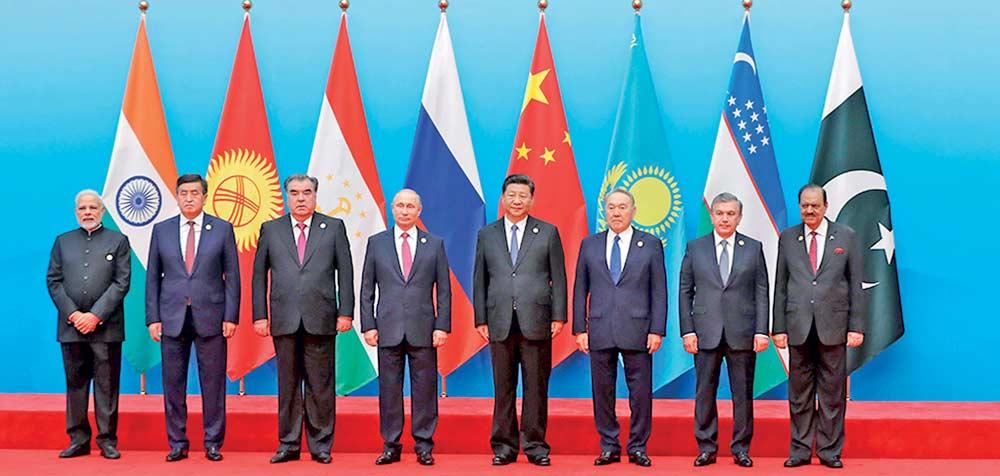
What Sri Lanka missed: The SCO summit
|
|
By Dr Kenneth de Zilwa
In a vast, lights-out factory on the outskirts of Shenzhen, the future of global economics is being assembled, not by human hands, but by a symphony of autonomous robots. VA component is designed by an AI, fabricated by a 3D printer, quality-checked by computer vision, packaged by a robotic arm, and loaded into a self-driving truck, all without a single coffee break.
This is Industrialisation 6.0: the complete, end-to-end automation of the supply chain from conception to shipping. And it is no longer a theoretical concept; it is an operational reality, and its epicenter is China. This technological leap is the hardware for a far more profound software shift: the “Asianization” of the global geopolitical and economic landscape.
This new order is being built on the digital pillars of Central Bank Digital Currencies (CBDCs), smart contracts, and the tokenization of assets, promising a world where trade settlement is instantaneous, contracts self-execute, and supply chains are fully transparent.
Yet, as this new axis of power consolidates, a stark contrast emerges some 4,000 kilometers away. Sri Lanka finds itself trapped in a time warp, struggling in the mud of a bygone era. While Asia forges the future, Sri Lanka is mired in the past, shackled to an antiquated IMF austerity framework. The nation’s response to its profound economic crisis has been to double down on the very system that constrains it: securing more foreign exchange-denominated debt under the stern conditionalities of Washington-based institutions.
This approach does not solve the crisis; it merely manages it, eroding sovereign fiscal space and dictating policy that prioritizes debt servitude over genuine, productive industrialisation. The nation’s monetary and financial systems remain under the effective control of these post-WWII institutions, the IMF, World Bank, and WTO, whose solutions often seem designed to preserve the existing financial architecture rather than empower nations to leapfrog into the new economy.
The irony is that a lifeline to a different future was offered. The BRICS coalition, representing the ascendant multipolar world, extended an invitation to Sri Lanka! This was a potential gateway to alternative development financing, access to new markets, and participation in the building of parallel financial institutions like the New Development Bank and the Asian Infrastructure Investment Bank (AIIB).
Yet, Sri Lanka shunned the many invitations and, in doing so, it consciously chose to remain sidelined, tethered to the institutions of the past whilst the economic gravity of the world shifts decisively eastward. The future of global trade and development finance is increasingly being shaped by AIIB projects and BRICS-led initiatives, which are more aligned with the Industrialisation 6.0 paradigm and its digital financial infrastructure.
The consequence of this choice is a nation muddling through, edging deeper into a debt spiral with little to show for it but social austerity and stalled potential. The path to true sovereignty and development in the 21st century no longer runs solely through Washington; it runs through the digital supply chains of Shenzhen and the new financial networks being woven across Asia. For Sri Lanka, the great divergence is not a future threat; it is the present reality.
A World Sri Lanka is Missing
To understand what Sri Lanka is sidelining itself from, one must look under the hood of China’s Industrialization 6.0. This is not mere automation; it is the “systemic integration” of every node in the economic chain. It begins with AI analysing global demand signals to predict what will be needed, where, and when.
Production occurs in hyper-flexible factories where 3D printing creates parts on demand, eliminating the need for costly warehousing. Every product has a digital twin, a virtual replica that tracks its physical counterpart throughout its lifecycle. The revolution continues in logistics. Blockchain provides an immutable record of every movement. Smart contracts automatically release payments upon verified delivery, slashing administrative costs. The financial layer is seamlessly integrated through CBDCs. Payments for goods could be made instantly via a digital yuan transfer, bypassing traditional banking delays and dollar conversion entirely.
This creates a closed-loop, data-rich economic ecosystem that is incredibly efficient and resilient. For nations integrated into this network, the benefits are immense. For those outside, like Sri Lanka, the cost of exclusion is becoming increasingly punitive, locking them into a slower, costlier, and less competitive system.
Data Justifies Financial Inability
Sri Lanka’s current path stands in direct opposition to this high-tech future. The IMF’s prescription, while providing essential short-term stabilisation, is fundamentally a framework from the last century that thrives on indebtedness rather than driving industrialisation and growth needed to repay external debt.
Its core tenets are designed to ensure creditors get paid, and the free market agenda is ruthlessly implemented at the dire expense of national competitive industries, and certainly not to foster capital formation or technological advancement.
This external structural vulnerability was deliberately amplified by the very framework designed to ensure stability. The IMF’s mandated prescription of the adoption of a flexible exchange rate, or free floating of LKR, ensures that the government’s debt servicing costs and fiscal space are directly and dramatically exposed to currency depreciation and fluctuations.
This is the central paradox of the programme: the “solution” systematically intensifies and becomes the core problem, thereby choking out any fiscal space needed for industrialisation.
Each depreciation of the Sri Lankan rupee has a guaranteed outcome due to the net negative FX reserve asset position of $ 54 billion making the prescribed free-floating system a time bomb.
Depreciation causes the local currency cost of repaying dollar debt to skyrocket, adding further burdens on tax collections in the guise of mismanagement of the economy. This vicious cycle not only drains national reserves and suffocates the economy, but it also systematically extracts the oxygen from investment, growth, and fiscal space needed for its economic expansion and recovery.
This is not an unforeseen side effect; it is the mechanical outcome of a 20th-century theory applied to a 21st-century dilemma.
Ironically, the IMF’s own Fourth Review of 3rd July 2025 on Sri Lanka highlights the immense pressure of debt service and the high risk factor of its programme. Even after a “so-called” successful restructuring. In fact, after all this, the gross external financing gap is projected to average over $4.9 billion USD annually between 2024 and 2030.
Therefore, the prevailing international response to Sri Lanka’s crisis is a structural trap that prioritises creditor repayment over national industrial development, crippling the country’s economic sovereignty and future revenue potential.
The $3 billion IMF Extended Fund Facility, while providing temporary stability, is fundamentally insufficient. This becomes starkly evident when compared to the nation’s obligation to repay its creditors over 1.5 times the bailout value.
Sadly, the IMF programmes (since 1965) are designed to drain financial resources and force economic policy to prioritize low-value commodity exports and tourism to generate quick dollars, systematically undermining the build-out of the complex, high-value export economy essential for Industrialisation 6.0.
Consequently, economic governance is effectively outsourced; the nation’s policy is co-authored by IMF review missions, whose archaic, pre-Internet rulebook of monetary and fiscal policy and quarterly performance criteria erodes Sri Lanka’s sovereign decision-making and render long-term, strategic industrial transformation nearly impossible, all to service a debt stock that extinguishes any incremental financial capacity to innovate.
BRICS invitation vs. IMF Reliance
This is why the BRICS invitation was a symbolic and strategic fork in the road of old institutions. BRICS, and its associated institutions like the AIIB, represent a different model. Their lending is often tied to specific infrastructure projects, namely, automation of ports, new AI power plants, fiber optic networks, without the same sweeping and intrusive macroeconomic conditionalities imposed by the IMF and other Western multilateral institutions. Membership would not have been a magic bullet, but it would have offered Sri Lanka options and leverage. Eventually it would have meant that Sri Lanka would have:
Alternative Financing: Access to capital for development projects without the stringent austerity strings attached, potentially easing the annual $6 billion drain.
New Market Access: Deeper integration into the massive consumer markets of the BRICS nations, which are at the forefront of adopting new Central Banking and currency tools and trade technologies.
Technological Transfer: Potential partnership and investment in the very technologies that define Industrialisation 6.0, from smart logistics to digital currency systems.
Unfortunately, Sri Lanka, by declining the BRICS invitation, signalled a commitment to the established old-world order. It chose to be a patient in the Washington Consensus hospital, following a strict diet of austerity to service its massive external debt, rather than a partner in building the new economic ecosystems of Asia.
Stuck in the Mud
The silence in Shenzhen’s fully automated factories speaks louder than the heated debates in our IMF austerity acceptance. There (i.e., in China), the future is being built by machines that never sleep, governed by algorithms that never doubt. Industrialisation 6.0 is now a glaring reality. In Sri Lanka, we remain locked in philosophical arguments about 1930s economic theories devised eighty-five years ago for a world that no longer exists.
There is a profound irony in watching Sri Lanka’s most brilliant entrepreneurs and tech minds - talents that could be architecting our digital future in the 21st century - instead devoting their energy to perfecting and debating the art of compliance with the IMF tax structures and regressive austerity program. They become masters of meeting IMF conditions set by institutions whose fundamental assumptions about development and sovereignty belong to a different century.
We have created what might be called a “development paradox” - using twenty-first-century intellect to solve twentieth-century problems created by nineteenth-century thinking.
The choice before us transcends economic policy; it represents a fundamental question of national identity and vision. Do we see ourselves as permanent students in a classroom where the curriculum never changes, where we are always being graded by the same old school professors? Or do we have the courage to become co-authors of a new economic narrative being written across our Asian continent?
The most dangerous assumption we might make is that our current path of compliance represents safety and prudence. True prudence might actually lie in recognising that the world’s economic center of gravity has moved towards “Asianization”, and that our future prosperity depends on engaging with the systems and technologies that will define tomorrow’s economy, not yesterday’s.
Final Thoughts and
Points to Ponder
Our moment of decision transcends simplistic East-West binaries and calls instead for a deeper reckoning. Will we cling to the fading orthodoxies of the past or embrace the transformative currents reshaping our world? It is a model that treats symptoms, not causes (the cause is lack of industrial capacity and tradable highly value-added products); that manages poverty instead of creating prosperity.
What we don’t realise is that Sri Lanka possesses an abundance of talent, exactly what a 21st-century economy requires: world-class tech talent and globally-connected entrepreneurs ready to compete. The question remains as to how we can retain and unleash them rather than lose them to other countries that create economic value.
Meanwhile, across Asia, a new paradigm is emerging, one that aligns naturally with our geographical and strategic context, namely, “Asianization”. This is not merely a shift in trade partners; it is the rise of a new development philosophy centered on partnership, Tech infrastructure-driven growth, smart monetary settlements, supply chain technological leapfrogging, and regional financial sovereignty. It is embodied by institutions like the BRICS and AIIB, which fund productivity-enhancing infrastructure projects, modern data centers, rather than enforcing austerity. And by the diffusion of Industrial Policy 6.0, where AI, automation, and smart contracts, tokenization of Real World Assets redefine value creation of the 21st century.
It is time to retire the idea that development must be dictated from afar through loan conditions and deficit targets. Instead, we must look to the revenue models and markets emerging within our own region, models that blend state facilitation with market innovation, models that push investment in digital and physical infrastructure, and models that see economic sovereignty as foundational and as non-negotiable.
Finally, the future belongs to nations that build new revenue sources and take market share (example-BYD, Huawei, and Xiaomi). The tool of choice is code that produces industrialisation 6.0 and monetises real-world assets, not those that perpetually focus on repayment of debt. Sri Lanka stands at a pivotal threshold, one path leads deeper into the debt-austerity loop; the other toward a reinvented economy aligned with Asia’s rise. The script of the 20th century has ended. It is ours now to write the first chapter of the next century.
08 Jun 2026 4 hours ago
08 Jun 2026 4 hours ago
08 Jun 2026 4 hours ago
08 Jun 2026 4 hours ago
08 Jun 2026 6 hours ago


 The path to sovereignty no longer runs through Washington but through Asia’s digital supply chains and financial networks