13 Mar 2018 - {{hitsCtrl.values.hits}}
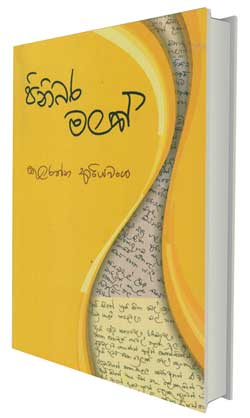
 ‘Pinibara Malak’, recognised as the Best Lyrics Collection at the State Literary Awards last year, contains 103 songs written by Kularatne Ariyawansa. ‘Pinibara Malak’ is a reference to the title of a song which brought Ariyawansa and Victor Ratnayake together, and it contains the following exquisite lines:
සිදාදියේ නපුරු සතුන්
රුවට නුබේ වසග වෙලා
නොයෙක වෙසින් නුඹ
බිලිගන්නට සැරසෙවි
 The tender feelings the narrator of these lines puts out, in the name of the woman he loves, is tempered by his fears that some inscrutable force will enrapture her and thus take her away from him. Ariyawansa’s songs in this sense are, like the songs of Ajantha Ranasinghe, about lovers who feel unfulfilled, with the caveat that Ranasinghe’s lovers can only hope for the day that they will meet those they wrote about, and idealised, in their poetry, while Ariyawansa’s lovers, while encountering and being with those they croon about, are fearful, if not nervous and tense, about the possibility of separation. Consequently, they pour out their feelings in gushes and torrents, as if to keep their lovers by their side.
In Ajantha Ranasinghe’s lyrics (‘Mage Lowata Oba Wadina Thura’) there is almost always a rift between hope and deep infatuation on the one hand and sorrow at the lack of fulfilment on the other. In Kularatne Ariyawansa’s lyrics (‘Mata Mulu Lovama Obayi’) though, there’s no sorrow, only repressed fear, if at all, and joyous excitement. If it’s difficult to choose between these two men it’s not because they were the only lyricists who worked during their time, or the only lyricists at that time who mattered, but because they taught us about love, in poem and song after poem and song, and its many facets, from two different angles, both of which appealed to us when we encountered those we cherished. Personally speaking, I have both loved and lost. Ranasinghe’s lyrics thus tend to excite and then sadden me, while Kularatne’s lyrics tend to embolden me.
Ariyawansa’s biography has been sketched out elsewhere, but never completely and recently. Perhaps a brief sketch might help us get to know him.
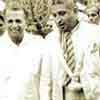
Kularatne Ariyawansa was born in the Southern village of Benthara.
A brief bio
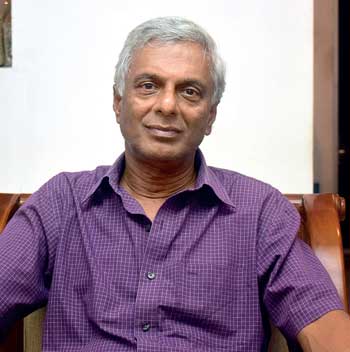
Kularatne Ariyawansa was born in the Southern village of Benthara. His family was domiciled in Colombo, so after he finished his O Levels at the game iskole, he was admitted to Ananda College for his A Levels. Ananda, at that time, was chock-a-block with artists who dabbled in everything and anything to do with the arts – drawing, drama, cinema, literature, and of course poetry – and soon enough he fell under the influence of two shapers of his destiny: Premakeerthi de Alwis and A. D. Ranjith Kumara. The one was a poet, the other a cineaste. It would be through the latter that he would be initiated into the music industry.
I asked him to name his primary influences at this point in his life. He readily obliged: “After I shifted to Ananda, I turned from poetry, the sivpada and the nisadas in vogue at the time, to the three minute sarala geeya. In that sense I was very much influenced by Chandrarathne Manawasinghe, Madawala Ratnayake, Mahagama Sekara, and Karunaratne Abeysekara, and in that order. It was through the vocalist who collaborated the most with these lyricists, Amaradeva, that I realised how the three minute song derived from our poetic tradition. Basically, the sarala gee was a combination of that tradition and the modernist revolution we were seeing in our cultural sphere. Whenever I listened to a song, I remembered this and made it a point to write down and study its lyrics.”
Kularatne’s name has passed by, unnoticed, because of the inscrutable way in which these films were ignored in later years (a fate that Ajantha Ranasinghe did not meet), which is why I think his anthology matters
Like-minded artistes
Ranjith Kumara had by this time got young Kularatne hooked up with a group of like-minded artistes and would-be artists, through a magazine edited at Ananda titled “Sevana” and later through Arthur Amarasena’s “Visithuru.” Because of the latter tabloid, he got to meet several poets and lyricists, and those encounters helped him get into various radio programs, including “Saraswathi Mandapaya” and “Yowun Samajayaya.” Through these programs, he met Abeywardena Balasooriya (back then a newcomer) and Sarath Dassanayake, with whom he teamed up to write his first song, “Adarayen Ma Hadawatha” (recorded at the SLBC as a “paryenshana geeyak”). “Pinibara Malak” was his second song.
“Sanda Horen Horen”, written for Amaradeva to a melody by the inimitable Premasiri Khemadasa, was his third. Recorded for Amaradeva’s 50th birthday, and included in an album titled “Aradhana”, “Sanda Horen Horen” was released in 1978, the same year that Kularatne waded into his second career: as one of the pioneers of the cassette industry in this country. By the time Aradhana was released, the industry had more or less “picked up”, but it still lacked a proper, cohesive framework and a set of determined professionals who could take it beyond just a fringe business and trade. Kularatne was a government servant at the time, and he left his job, eventually, to join Tharanga, firstly as a lyricist and later as a production coordinator. He abandoned his job in the civil service completely two years later, when he joined Singlanka at the invitation of his friend, Ananda Ganegoda. Sadly, while Tharanga continues to sell, Singlanka has passed away, a death that was anyway expected given the rise of the internet.
 Cassette industry
What compelled the man to join the cassette industry in the first place? “When you think of music cassettes today, you often think that it’s a business infested with commercialism and a lack of professional ethics. That wasn’t the case in our time. We started Singlanka because we felt that our artists needed an outlet through which they could sustain their lives. This applied, incidentally, to not just established performers, but also promising newcomers like Lakshman Wijesekara. We took them in without any hesitation because the only path they could carve for themselves lay in the SLBC, and even that had become a virtual monopoly. There was a way in which the private sector could help. We were in one sense I suppose experimenters, who wanted to see how it could help them.”
It was through Singlanka that the man met another future collaborator, Rohana Weerasinghe. “Rohana eventually became a good friend of mine. If I were to name my composers in the order of the frequency of my collaborations with them, he would come first.” This is borne out by a perusal of his collection: more than half the songs in Pinibara Malak have been composed by Weerasinghe. Among others, I spot out H. M. Jayawardhana, Khemadasa, and Victor. As for the vocalists, T. M. Jayaratne, Sunil Edirisinghe, Sanath Nandasiri, Amaradeva, and Nanda Malini crop up regularly. He’s worked with them all, simply put.
Buttressing all this were the directors who opted for him in their films: not just the mainstream classics we hear on the radio so often, like “Seetha Arane” and “Aradhana” from Aradhana, or “Hima Kandu Yahane” from Sasara Chethana, but even less popular tunes like “Eka Mawakage Diyaniyak Nowei” from Sumitra Peries’s Yahalu Yeheli or “Wadina Hiruta Mal Landun” from Anton Gregory’s Paramitha. Kularatne’s name has passed by, unnoticed, because of the inscrutable way in which these films were ignored in later years (a fate that Ajantha Ranasinghe did not meet), which is why I think his anthology matters: it includes songs which I had, until now, never associated with the man. There’s another as important point here: unlike Ranasinghe, he’s worked with recent producers, directors, vocalists, and composers as well, including Udayakantha Warnasuriya, Uresha Ravihari, Senesh Bandara, and Nawarathne Gamage.
By the time Aradhana was released, the industry had more or less “picked up”, but it still lacked a proper, cohesive framework and a set of determined professionals who could take it beyond just a fringe business and trade
Like Amarasiri Peiris, whom I talked with more than a year ago, Kularatne professes an interest in the present generation, and like Peiris, his reason for so doing is that there are reckonable talents from that generation working from the sidelines who, sadly, can’t enter the mainstream because of the vested interests and forces which are pitted against them. Working with them, for him and thus for us, is one way, in fact the best way, through which their talents (or “bright youngsters” as he calls them) can be legitimised. It’s interesting to note here that while several artists and vocalists from his time have personally told me that they have vowed to never work with my generation, the optimism which Kularatne puts out is a refreshing contrast to the deeply embedded conservatism and Puritanism of those other artists. Working from the past is the best method through which the present can be sustained. Perhaps that’s what Kularatne, whose own two sons, Vindana and Kalpana, have given us an objet d’art that’s so excitingly contemporary (Premaya Nam) has taught us. I’m no poet, only a writer, but the poet in me, if there’s one at all, can thus rest happily.
23 Jun 2026 27 minute ago
23 Jun 2026 44 minute ago
23 Jun 2026 53 minute ago
23 Jun 2026 57 minute ago
23 Jun 2026 59 minute ago