31 Mar 2026 - {{hitsCtrl.values.hits}}
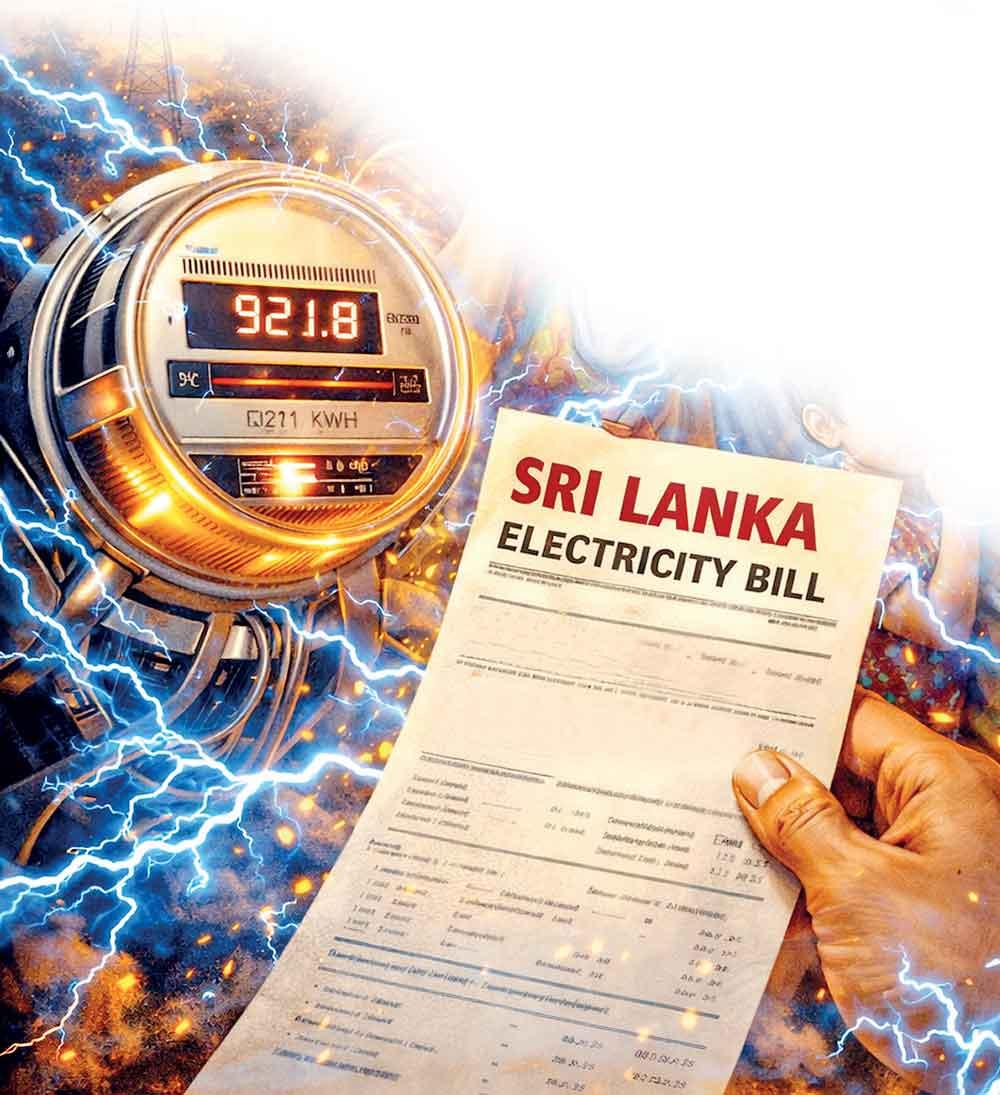
 10% electricity tariff increase from April 1, further increase possible if fuel prices increase due to war
No tariff revisions for religious and charitable purposes consuming below 180 units
The Public Utilities Commission of Sri Lanka (PUCSL) yesterday announced a 10 per cent electricity tariff revision under its Second Electricity Tariff Revision for 2026, with the new rates set to take effect from April 1, however, the Electricity Board has the opportunity to submit another proposal if fuel prices increase due to the ongoing situation in the Middle East.
PUCSL Chairman K. P. L. Chandralal said the commission is prepared to consider such a proposal, depending on the circumstances at that time.
The revision was approved following a review process, despite an earlier proposal by the Ceylon Electricity Board (CEB) seeking an overall tariff increase of 13.56% across all sectors for the second quarter of the year, the Chairman said. He said that while the revised tariffs have been finalised, a detailed breakdown across all consumer categories is yet to be fully disclosed.
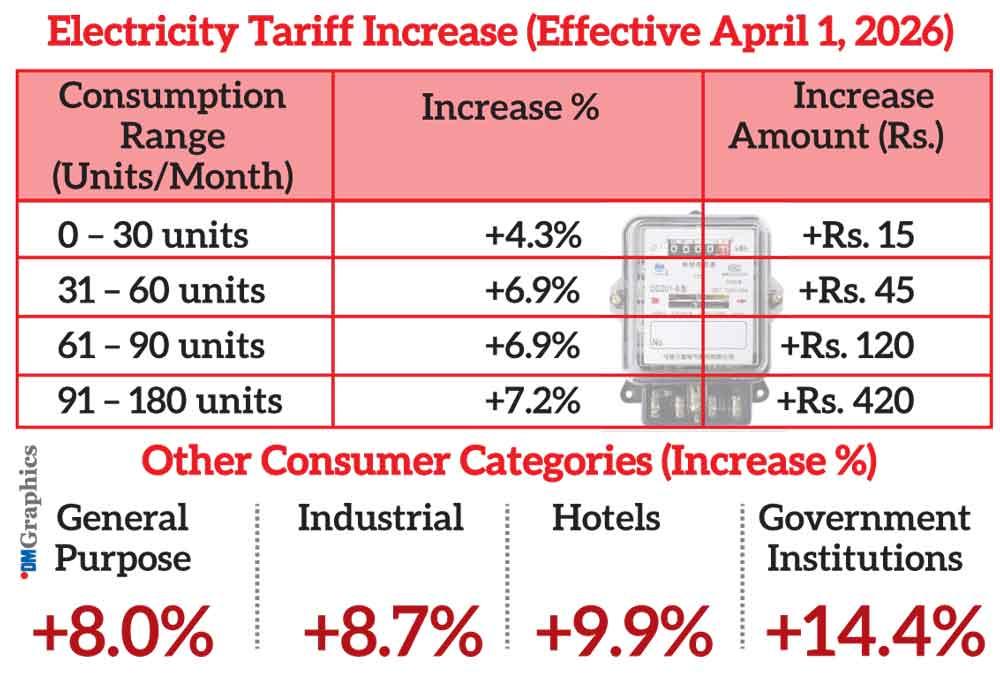
According to the new structure, domestic consumers using less than 30 units per month will face a 4.3% increase, amounting to Rs. 15. Consumption between 31 and 60 units will see a 6.9% increase (Rs. 45), while usage between 61 and 90 units will also be subject to a 6.9% rise (Rs. 120). Consumers using between 91 and 180 units will face a 7.2% increase, equivalent to Rs. 420.
The PUCSL said that no tariff revisions will be imposed on electricity used for religious and charitable purposes where monthly consumption remains below 180 units. However, a 9.6% increase will apply to religious institutions with usage exceeding 120 units per month.
Meanwhile, general-purpose consumers will see an 8% tariff increase, while government institutions will face a 14.4% hike. The hotel sector will experience a 9.9% increase, and industrial users will see tariffs rise by 8.7%.
The latest revision is expected to impact electricity consumers nationwide, as authorities continue efforts to balance rising energy costs with the financial sustainability of the power sector. Chandralal said the Commission has decided to introduce a new tariff category for Electric Vehicle (EV) charging stations to promote EV adoption and demand-side management (peak shifting). The tariff structure has been provided, while the Ministry of Energy has also submitted its own proposal in this regard.
A new tariff category for Electric Vehicle Charging Stations (EVCS) has been announced. Accordingly, consumers must obtain a dedicated electricity supply for EV charging stations and secure either an exemption certificate or a No Objection Letter issued by the PUCSL.
These rates will apply to each individual point of supply used solely for EV charging stations, metered at 400/230 V, with a contract demand less than or equal to 42 kVA.
Meanwhile, the CEB has proposed a uniform tariff increase of 13.56% across all consumer categories and blocks, to be effective from April 1, 2026. The Chairman requested consumers to be mindful of their electricity usage, particularly during peak hours from 6 p.m. to 10 p.m. He said that consumers typically incur higher charges when electricity is used during this peak period, while relatively lower tariffs are applied for usage during off-peak hours.
The Electricity Board has the opportunity to submit another proposal if fuel prices increase due to the ongoing situation in the Middle East. The PUCSL is prepared to consider such a proposal, depending on the circumstances at that time.
13 Jun 2026 4 hours ago
13 Jun 2026 4 hours ago
13 Jun 2026 6 hours ago
13 Jun 2026 6 hours ago
13 Jun 2026 7 hours ago