09 Jul 2026 - {{hitsCtrl.values.hits}}
By Sheain Fernandopulle
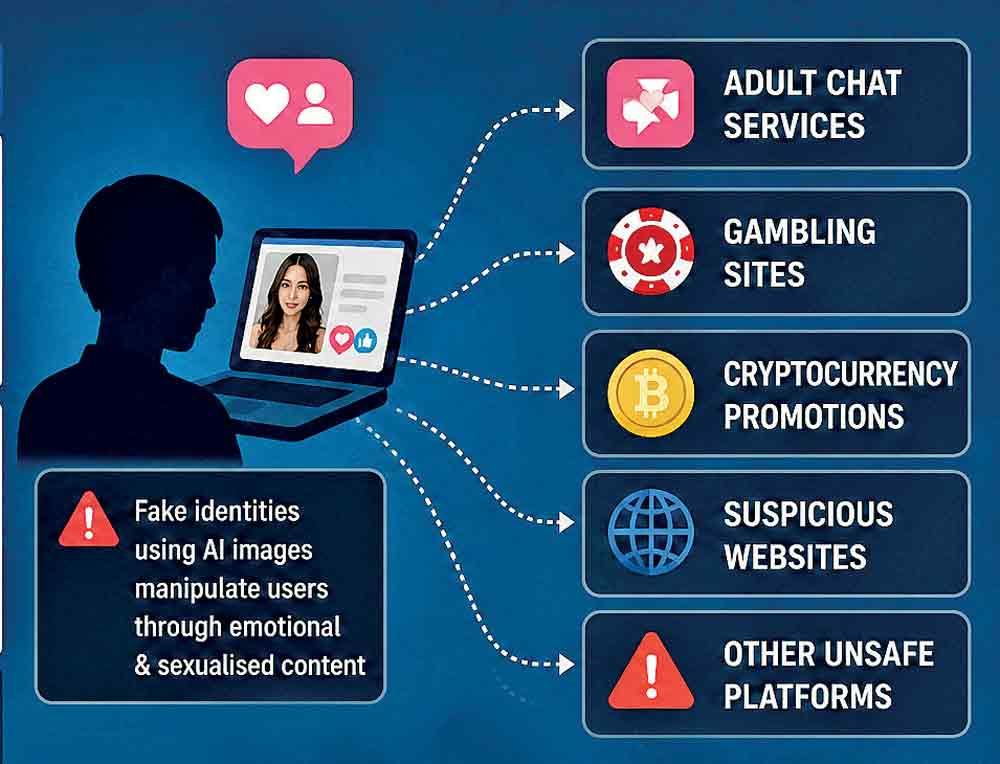
 A network of AI-generated female profiles on Facebook is being used to create fake identities, manipulate users through emotional and sexualised content, and redirect them to adult-chat services, gambling sites, cryptocurrency promotions and other suspicious online platforms, a new study has found.
The report, “AI profiles of women on Facebook: Identity deception, sexualised engagement, and platform accountability”, by senior researcher Dr. Sanjana Hattotuwa, reveals that none of the 10 Facebook accounts examined represented real women. Instead, the profiles relied on AI-generated images and fabricated identities to engage and attract users.
The study analysed 1,706 posts published between February 2025 and June 2026, which collectively received more than 890,000 engagements through reactions, comments and shares.
According to the report, at least five accounts showed signs of coordinated activity, with 113 clusters of identical captions and 676 near-duplicate posts appearing across different profiles. Some content was reportedly shared between accounts within minutes, indicating the use of common scripts or centralised management.
The profiles frequently used Sinhala-language posts portraying fictional women as lonely, divorced, widowed, financially vulnerable or seeking companionship. These posts were designed to encourage users to move conversations from public comments to private messaging platforms such as WhatsApp.
The study found that many AI-generated images followed a similar pattern, featuring idealised female appearances, exaggerated physical features and sexualised visuals carefully designed to remain within Facebook’s moderation limits.
Dr. Hattotuwa said several profiles used links placed in their biographies, comments and short URLs to redirect users towards adult-chat platforms, gambling registrations, cryptocurrency applications and advertising-driven websites.
The report also highlighted cases where online personas appeared to change identities when users moved beyond Facebook. One profile reportedly used a different name on linked platforms, making it difficult for users to determine whether they were interacting with a genuine person or part of a commercial operation.
While the research found no significant evidence linking the network to political influence campaigns, it identified the activity as coordinated commercial inauthentic behaviour aimed at generating revenue through deception.
The researcher warned that the same infrastructure could potentially be adapted for financial scams and other forms of online manipulation, as AI-generated identities can build trust and attract audiences without being connected to real individuals.
The report raised concerns over Facebook’s ability to provide users with clear information on whether profiles are operated by real people, AI-generated personas or monetised networks.
It called for stronger disclosure requirements for AI-generated content, improved profile transparency measures and closer monitoring of external links used to move users away from social media platforms.
09 Jul 2026 1 minute ago
09 Jul 2026 30 minute ago
09 Jul 2026 1 hours ago
09 Jul 2026 1 hours ago
09 Jul 2026 1 hours ago